

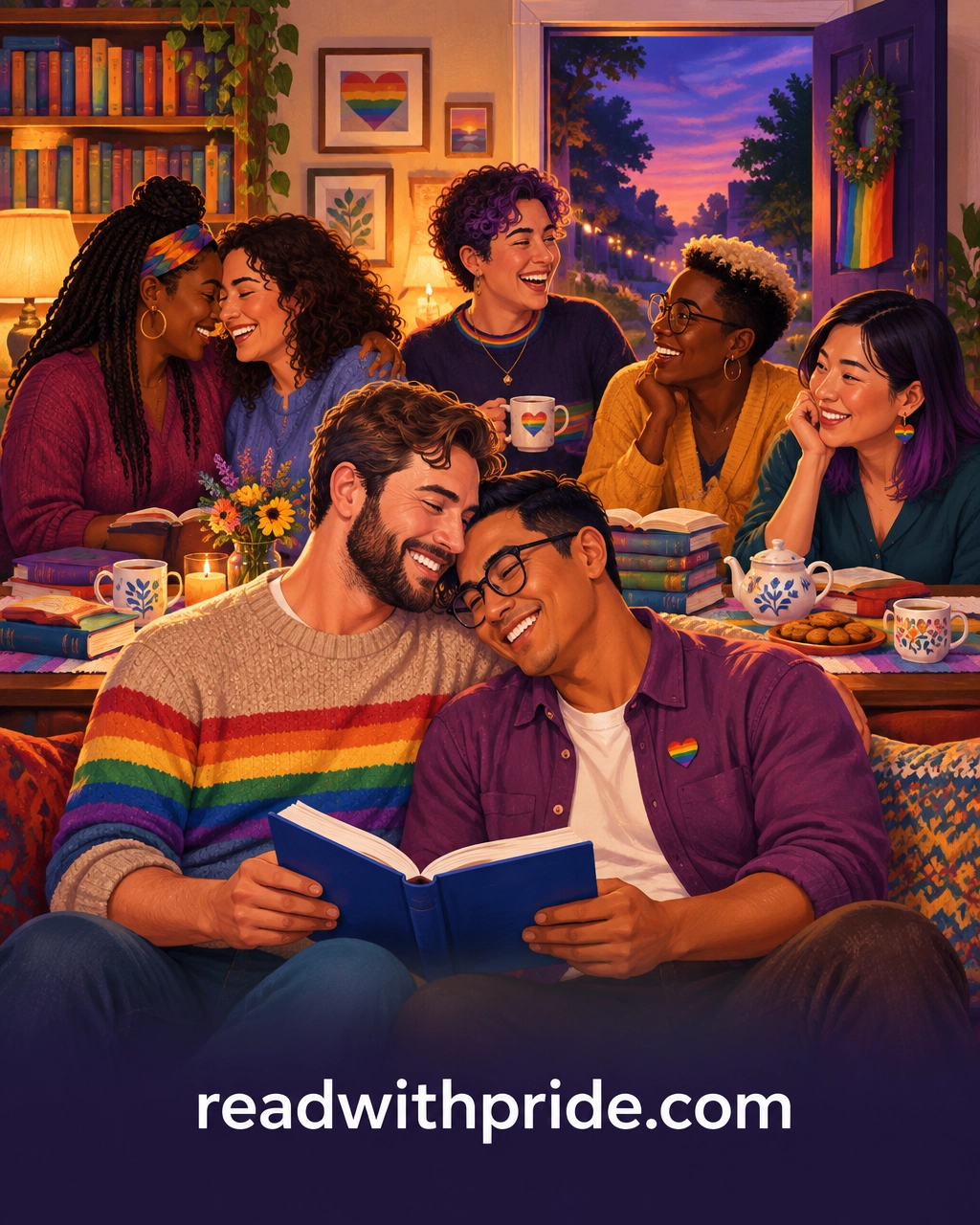
readwithpride.com
There is no single correct order for a queer life.
Some people come out in their teens. Others find the language for themselves much later. Some build long-term partnerships without marrying. Some choose marriage, children, shared homes, or elaborate commitment ceremonies. Others create lives centred on friends, community, creative work, pets, activism, or a beautifully chaotic group chat that somehow functions as emergency services.
The point is not that queer people reject milestones. It is that we often redefine them.
For many of us, life milestones are less about ticking boxes and more about asking: Does this life feel honest? Does it make room for care, safety, desire, joy and belonging?
That question sits at the heart of queer relationships. It also gives MM romance themes their emotional power, whether a story follows two men falling in love, two women building a future together, or a wider network of people creating family on their own terms.
Coming out is not one moment
Coming out is often described as a single dramatic event: a conversation at the kitchen table, a carefully written message, or a declaration delivered with trembling courage.
Sometimes it is exactly that.
But coming out can also be gradual, private and ongoing. It may happen first to a close friend, then to a sibling, then to a partner’s family. It may happen again when someone changes jobs, moves house, enters a new relationship or becomes a parent. Every new setting can bring a fresh decision about visibility, safety and trust.
That does not make someone inconsistent. It makes them human.
A coming out story can include relief, grief, humour, anger and uncertainty all at once. There may be people who respond beautifully and others who need time, education or distance. There may be relationships worth repairing and relationships that become safer when they are left behind.
In romance fiction, this emotional complexity creates space for characters to do more than simply “come out and get the guy”. A strong gay love story can explore what happens afterwards: learning to be known, accepting affection without suspicion, and discovering that intimacy is not just about revealing an identity. It is also about allowing someone to see the parts of you that fear has kept hidden.
For readers looking for coming out stories, representation matters because no single narrative can stand in for everyone. Some people need a tender first-love story. Others want late-blooming romance, second chances or a character who is already out but still learning how to live freely.
Chosen family makes belonging practical
Chosen family is not a consolation prize for people whose biological families are complicated. It is family in its own right.
It might include lifelong friends, partners, ex-partners, neighbours, mentors, queer elders, housemates, colleagues or online communities. What matters is not the paperwork or shared surname. It is the consistent practice of showing up.
Chosen family members may be the people who:
- Know which relatives are safe to call.
- Attend important appointments.
- Offer a spare room without making someone beg.
- Celebrate a new job, name, relationship or home.
- Remember difficult anniversaries.
- Bring food when life becomes too much.
- Tell you, firmly and lovingly, when your latest crush is a terrible idea.
These forms of care become milestones in themselves. The first time a partner is invited to the annual chosen-family dinner can carry the emotional weight of meeting someone’s parents. Being named as an emergency contact can feel more intimate than a grand romantic gesture. Finding a community that welcomes your whole self may be the moment your life finally begins to feel like home.
This is one reason MM romance books and lesbian romance can be so powerful. The romantic relationship does not have to exist in a vacuum. The friends, siblings, exes and queer communities around the couple can reveal what support looks like, and what happens when that support is missing.

Partnership does not come with one universal blueprint
A relationship milestone is not automatically meaningful because society recognises it.
Moving in together can be joyful, stressful or entirely unnecessary. Marriage can be a deeply personal commitment, a legal tool, a public celebration or simply not the right choice. Buying a home, adopting an animal, co-parenting, combining finances or sharing a library can all represent a major step forward.
What matters is intention.
For some couples, monogamy is the structure that helps them feel secure and connected. For others, an open relationship or polyamorous partnership offers a more honest way to understand love, desire and commitment. Neither model is automatically more progressive, romantic or emotionally mature.
The important work is communication.
Partners may need to talk about exclusivity, safer sex, emotional boundaries, time, privacy, jealousy and the difference between a fantasy and an agreement. In a polyamorous relationship, meeting a metamour, the partner of a partner, may be a significant milestone. In a monogamous relationship, discussing what commitment means beyond sexual exclusivity can be just as revealing.
A relationship structure should never be treated as a personality test. Monogamy is not proof of deeper love. Polyamory is not proof of greater openness. Both can be nourishing or unhealthy depending on whether everyone involved is informed, respected and genuinely free to consent.
That nuance gives queer romance room to breathe. The emotional climax does not always need to be “we become exclusive”. It might be “we tell the truth about what we need and build something that honours everyone involved”.
MM romance themes: intimacy beyond the grand gesture
Many gay romance novels focus on dramatic turning points: the first kiss, the public declaration, the reunion after separation. Those moments are satisfying, but queer relationships also thrive in the quieter milestones.
Think about:
- Introducing someone as your boyfriend for the first time.
- Leaving a toothbrush at their home.
- Combining two very different bookshelves.
- Attending Pride together.
- Handling an encounter with an ex without spiralling.
- Asking for reassurance instead of pretending not to need it.
- Being welcomed into a partner’s chosen family.
- Saying, “This is my home too.”
- Talking honestly about whether the future includes marriage, children or neither.
These moments are especially rich in MM romance themes because male characters are often taught to avoid vulnerability. A story about two men falling in love can become a story about learning to ask for comfort, express fear, apologise properly and accept care without treating it as weakness.
That is where a steamy MM romance can also become deeply emotional. Desire is not separate from tenderness. Physical intimacy can sit alongside conversations about identity, family, mental health, class, race, disability and the practical work of building a shared life.
The same is true in lesbian romance and other LGBTQ+ romance. The most affecting stories understand that love is not only the spark between two people. It is also the network of choices that makes staying possible.
Queer time allows a different kind of happily ever after
Heterosexual culture often presents a neat timeline: date, marry, buy a home, have children, retire. Real lives are messier, and queer lives have rarely fitted comfortably inside that sequence.
Someone may come out after a divorce. Someone else may find their first serious relationship at fifty. A couple may choose commitment without marriage. A group of friends may build a shared household that offers more stability than any traditional arrangement ever did.
There is no expiry date on belonging.
Queer time allows us to recognise milestones that may arrive later, repeat themselves or happen out of order. A first Pride at thirty-five can be just as significant as one at seventeen. Learning to feel safe in your body can be a milestone. Rebuilding trust after family rejection can be a milestone. Deciding not to become a parent can be a milestone. Choosing joy after years of survival can be one too.
Even the internet’s search bar reflects how many different needs people carry at once. Someone may be looking for “LGBTQ+ fiction 2026”, “C Section 2026”, relationship advice and a comforting romance all in the same afternoon. Human beings are gloriously incapable of organising their feelings into tidy categories.

Stories help us imagine the doors we can open
Reading cannot solve every relationship problem. A novel is not a substitute for support, therapy, legal advice or a safety plan.
But stories can give us language for what we want.
Gay fiction, LGBTQ+ novels and queer love stories can show characters choosing each other without abandoning themselves. They can make room for complicated families, found family, imperfect communication, late-in-life discovery and relationships that do not follow a conventional script.
At Read with Pride, readers can explore LGBTQ+ ebooks, gay books, queer fiction, lesbian romance, M/M books and emotionally rich romance across many different experiences. Browse the LGBTQ+ blogs and articles for more conversations about identity, relationships, community and queer culture, or explore the store listings for your next read.
If you are searching for the best MM romance, heartfelt gay fiction, new gay releases or a story with chosen family at its centre, let your own emotional needs guide you. You do not need to defend the kind of happy ending you want.
Maybe today you need a slow burn. Maybe you want a lesbian romance with a hard-won future. Maybe you want an emotional MM romance with two men learning how to trust. Maybe you want a queer thriller, a tender contemporary story or a messy, funny novel about people who love each other imperfectly.
There is room for all of it.
Your milestone, your meaning
A queer life is not incomplete because it does not resemble someone else’s.
Your first safe home matters. Your first honest relationship matters. The friend who stayed matters. The partner who listened matters. The boundaries you finally set matter. The family you built matters.
And if your version of commitment includes monogamy, polyamory, marriage, no marriage, children, no children, a shared flat, separate homes or a rotating Sunday dinner, it is still a valid way to create a future.
The open door is not an instruction to walk through it before you are ready. It is an invitation to imagine more possibilities.
Read more queer love stories and gay romance books at Read with Pride. Follow Read with Pride on Facebook and Instagram for LGBTQ+ reading recommendations, gay authors, queer authors and conversations for your next queer book club.
Your life does not need to follow a borrowed timeline. It needs to make space for the people, relationships and choices that help you feel fully alive.
#ReadWithPride #QueerRelationships #LifeMilestones #MMRomance #MMRomanceBooks #GayRomanceNovels #ComingOutStories #ChosenFamily #QueerLoveStories #GayFiction #LGBTQNovels #LGBTQFiction2026 #QueerBookClub #LesbianRomance #LGBTQBooks #QueerFiction #GayRomance #Readwithpride

Leave a Reply
You must be logged in to post a comment.