

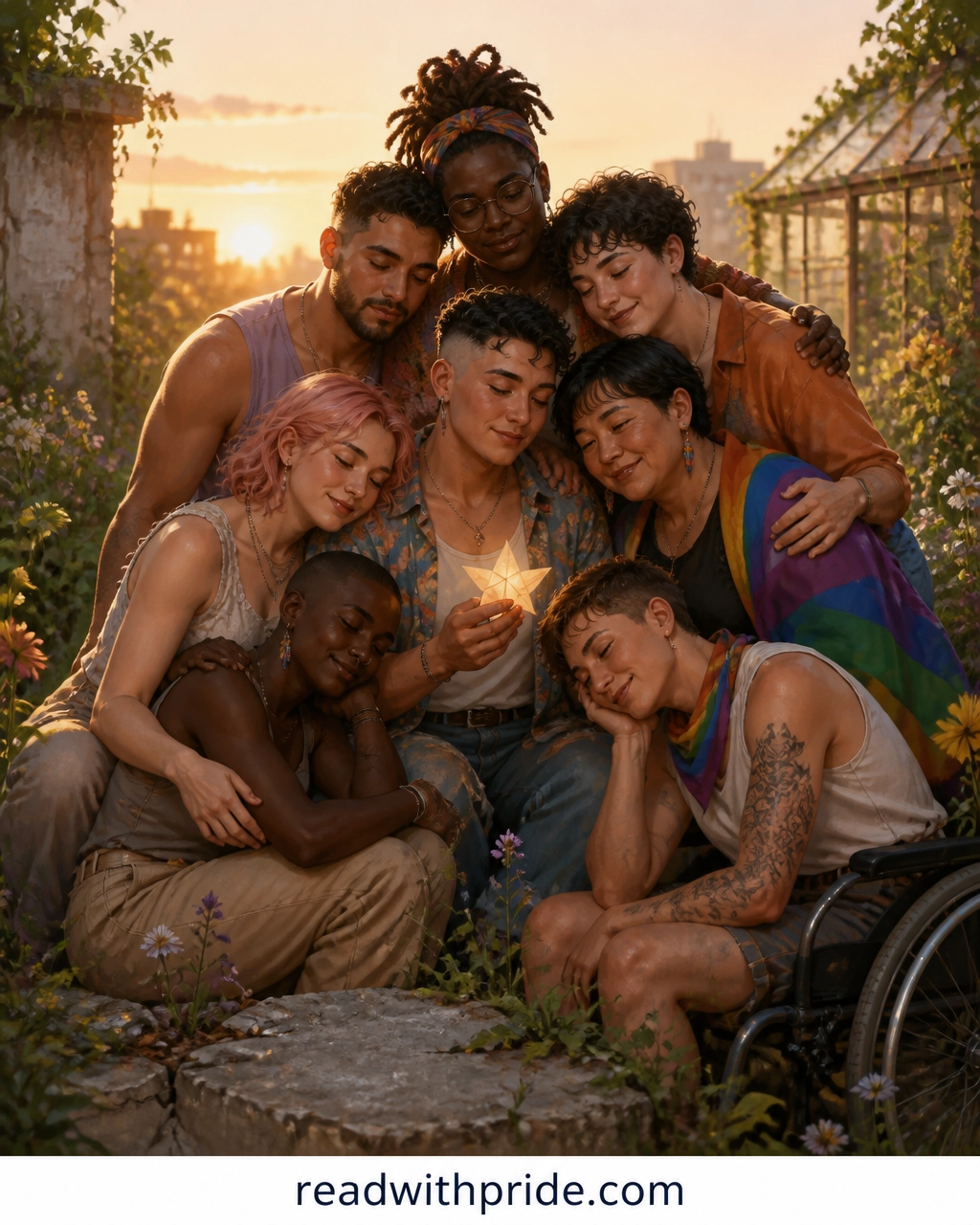
Content note: This article discusses grief, loss, family rejection, estrangement, community loss, and emotional healing. Please take what feels supportive and leave anything that feels too close today.
There is no tidy timeline for grief. It does not politely complete its paperwork and leave after a few weeks. Sometimes it arrives loudly. Sometimes it settles quietly into an ordinary Tuesday, turning up while you are making tea, answering an email, or searching the internet for something completely unrelated.
For LGBTQ+ people, grief can carry several layers at once. We may mourn a partner, friend, family member, queer elder, or chosen-family member. We may also grieve lost time, family relationships that changed after coming out, years spent hiding, or futures we were once told would never belong to us.
That is why queer healing is rarely about “getting over it”. It is about finding ways to carry what happened while making space for connection, pleasure, safety, and possibility.
It is about remembering that grief may be part of the story without becoming the whole story.
Queer grief deserves to be recognised
Some losses receive public rituals, sympathetic messages, and time away from work. Others are treated as awkward, inconvenient, or not quite real.
A partner may be described as “just a friend”. A chosen-family member may not be acknowledged by relatives. An estrangement may be dismissed because the person is still alive. A queer community space may close, taking with it friendships, routines, safety, and a sense of belonging.
These losses count.
LGBTQ+ people can also experience grief connected to childhoods shaped by secrecy, rejection, bullying, discrimination, or the fear of being discovered. Some people mourn the adolescence they might have had if they had felt safe enough to explore identity, desire, friendship, and self-expression openly.
Coming out stories often contain joy, relief, and freedom. They can also include loneliness, conflict, financial uncertainty, or the complicated process of rebuilding relationships. Two truths can share the same room. You can be glad to know yourself and still grieve what it cost to arrive there.
You do not need family approval, a public ceremony, or anyone else’s definition of legitimacy to prove that a relationship mattered.
You are allowed to say: This was real. This changed me. I am allowed to mourn it.
Healing is not a performance
Marginalised communities are often praised for resilience when what we actually need is rest, safety, practical support, and fewer barriers.
You do not have to turn every painful experience into an inspirational lesson. You do not have to be endlessly strong, productive, grateful, or emotionally articulate. Healing does not need to look impressive from the outside.
Sometimes it looks like therapy, a support group, journalling, or speaking honestly with someone you trust. Sometimes it looks like cancelling plans, eating something warm, muting notifications, taking medication, or reading a few pages of gay fiction until your nervous system remembers that not every moment is an emergency.
Small acts of care might include:
- Asking someone to sit with you without trying to fix the feeling.
- Setting a boundary without writing a three-page apology.
- Letting yourself laugh without deciding that joy means you are “over it”.
- Creating a home environment that feels safer and more like you.
- Marking an anniversary in a way that feels meaningful, private, or not at all.
- Finding a therapist or support service that understands LGBTQ+ lives.
- Reading a story that gives language to something you have not yet been able to say.
The British Psychological Society’s discussion of queer-affirming therapeutic tools explores why grief support should make room for diverse identities, relationships, rituals, and experiences. If you need immediate support, The Trevor Project’s LGBTQ+ resources may also be useful. If you are in immediate danger, contact emergency services or a crisis service available where you live.
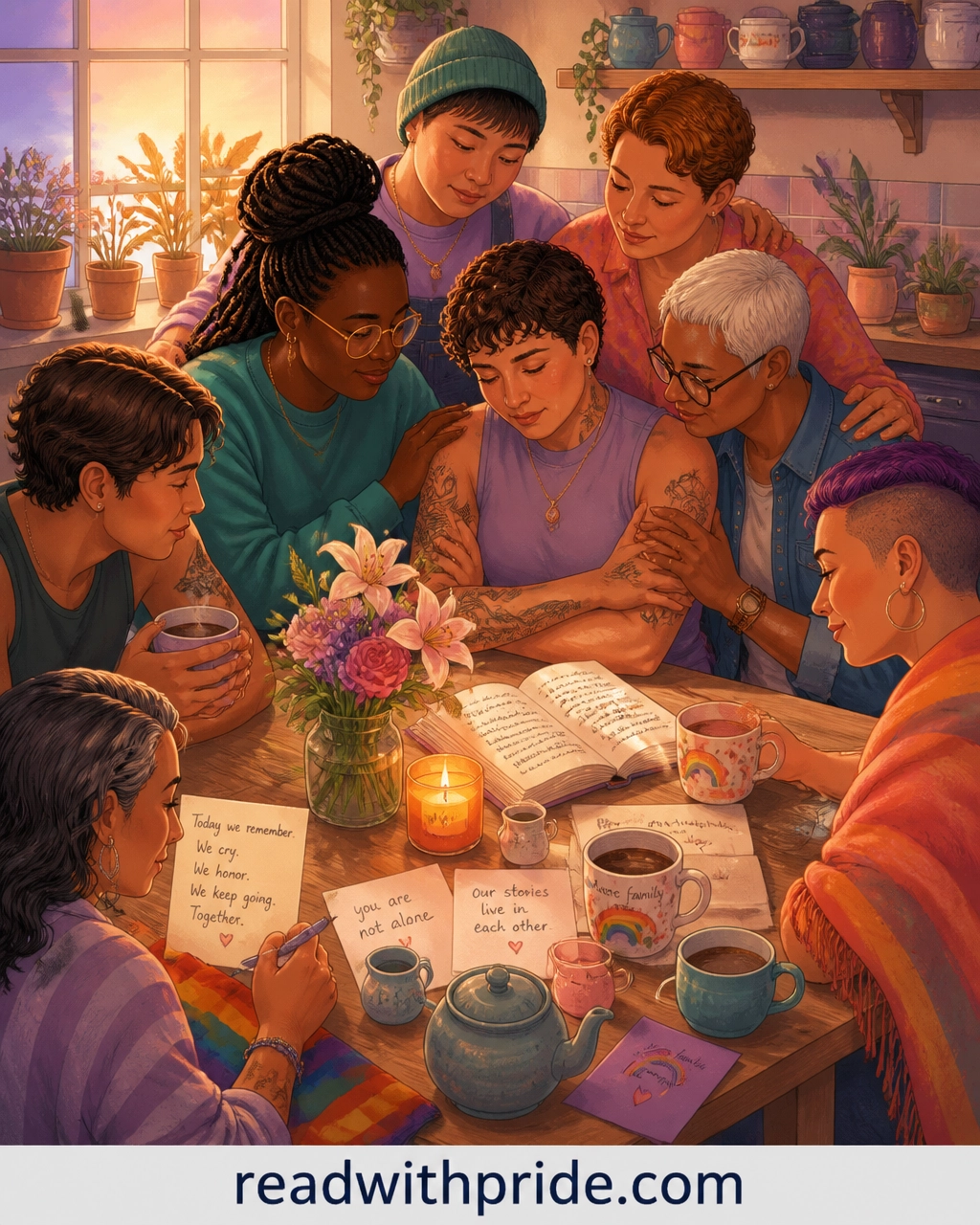
LGBTQ+ resilience is collective
The phrase LGBTQ+ resilience can be meaningful, but it should never become another demand placed on queer people.
Resilience does not mean being unaffected. It does not mean coping alone or recovering quickly. It does not mean smiling through discrimination so other people can feel inspired.
Queer resilience can be soft.
It can look like accepting a meal from a friend. It can be the person who uses your name correctly, remembers your boundaries, or sends a message saying, “You do not have to reply. I’m thinking of you.”
It can be a neighbour offering a lift, a queer elder sharing a story, a community organiser keeping a space open, or a friend accompanying you to an appointment. It can be a group chat full of practical advice, emotional honesty, and one meme so perfectly timed that it becomes a minor medical intervention.
We have never survived through individual effort alone. LGBTQ+ communities have built resilience through chosen family, mutual aid, creativity, activism, humour, friendship, storytelling, and the stubborn refusal to disappear.
Honouring that history does not mean romanticising hardship. The goal is not to become better at enduring mistreatment. The goal is to build conditions where fewer people are expected to endure it.
Chosen family makes hope practical
Hope can sound abstract until it has a face, a phone number, or a spare key.
Chosen family turns care into something practical. It may include partners, close friends, ex-partners, neighbours, colleagues, mentors, queer elders, online friends, or the person who knows you need food before you have worked out how to ask.
Chosen family can offer:
- Witnessing: remembering what you have survived and why it mattered.
- Affirmation: treating your identity, relationships, and grief as real.
- Practical support: meals, lifts, childcare, appointment companionship, or somewhere to rest.
- Emotional safety: making room to cry, be quiet, vent, or change the subject.
- Joy and ritual: shared meals, birthdays, reading nights, celebrations, and ordinary Sundays.
- Continuity: helping you imagine growing older while remaining connected and valued.
A queer book club can become part of this ecosystem. So can a community garden, online reading circle, creative group, or monthly dinner where everyone brings something and someone inevitably forgets the cutlery.
Repeated care becomes culture.
For more reflections on belonging, explore the Read with Pride LGBTQ+ blogs and articles, including Queer Healing and Future Visions: The Futures We Are Building Together.
Future visions begin with ordinary days
When life has required constant vigilance, imagining the future can feel risky.
What if we hope for something and lose it? What if the world changes again? What if the life we want feels too far away?
You do not need a perfect ten-year plan. Start with one gentle question:
What would make tomorrow feel a little more like home?
The answer might be significant: secure housing, affirming healthcare, legal protection, family acceptance, financial stability, or freedom from violence.
It might also be wonderfully ordinary:
- Waking up without bracing yourself before checking your phone.
- Sharing a home with people who understand your boundaries.
- Reading openly in a public place.
- Seeing queer elders treated with dignity.
- Growing up knowing your identity is not a problem to solve.
- Building a bookshelf full of LGBTQ+ novels that make you feel seen.
- Having friends who arrive without needing a special occasion.
These are not small ambitions. They are the details that make safety feel like a life rather than a slogan.
Try writing a future postcard to yourself. Describe one ordinary day in a future where you feel safe enough to relax. Who is nearby? What can you hear? What are you reading? What no longer occupies your thoughts?
It does not have to be poetic. “I have a kitchen where everyone is welcome and nobody comments on my mugs” is a perfectly valid utopia.
Stories help us practise possibility
Books cannot erase grief, and they are not a replacement for professional support. But stories can offer language, recognition, company, and somewhere for hope to stretch its legs.
A coming-of-age story can remind us that identity unfolds differently for everyone. Lesbian and sapphic romance can offer tenderness, desire, humour, and complexity between women. MM romance books can show men learning to trust, communicate, ask for reassurance, and build a life beyond survival.
The best gay romance novels can hold grief alongside desire, fear alongside intimacy, and history alongside hope. A slow burn can remind us that closeness does not need to happen instantly. A found-family story can help us recognise the people already showing up for us.
At Read with Pride, LGBTQ+ ebooks make room for gay books, M/M books, queer fiction, gay love stories, lesbian romance, and wider LGBTQ+ literature. Browse the Read with Pride store listing for stories from queer authors and publishers.
Whether you are searching for LGBTQ+ fiction 2026, heartfelt gay fiction, new releases, or even a wonderfully random phrase such as “C Section 2026” before returning to your reading list, there is room here for curiosity, comfort, and unexpected discoveries.

Hope does not erase grief
It is possible to miss someone and still build a beautiful life.
It is possible to feel furious about injustice and still laugh with your friends. It is possible to carry complicated memories and still fall in love, make art, start a family, change careers, join a queer book club, or discover one of the gay romance novels you cannot put down.
Hope is not denial. It is a decision not to let the present remain unchanged.
Every boundary plants honesty. Every shared meal plants belonging. Every carefully told coming out story gives someone else more language. Every queer love story that allows its characters to be ordinary, complicated, funny, ambitious, and loved expands the map of what is possible.
The future we deserve is not merely one where LGBTQ+ people are allowed to survive. It is one where we have time to be curious, rested, creative, ridiculous, ambitious, ordinary, and free.

A gentle invitation for today
Take a moment to name:
- One thing you are grieving.
- One person, practice, or story helping you carry it.
- One future possibility you are brave enough to imagine.
You do not have to solve everything today. You do not have to feel hopeful every minute. Just make a little room for the possibility that your life can contain more than what hurt you.
Explore the LGBTQ+ ebook collection at Read with Pride for MM romance books, gay romance novels, lesbian romance, queer fiction, coming out stories, and queer love stories. Follow Read with Pride on Instagram and join the conversation on Facebook.
Your future does not have to look like anyone else’s. It only has to feel more like yours.
#ReadWithPride #Readwithpride #QueerHealing #FutureVisions #LGBTQResilience #MMRomanceBooks #GayRomanceNovels #ComingOutStories #QueerBookClub #LGBTQFiction2026 #CSection2026 #GayFiction #LGBTQNovels #QueerLoveStories #QueerFiction #LGBTQReading #ChosenFamily #QueerJoy

Leave a Reply
You must be logged in to post a comment.