

readwithpride.com
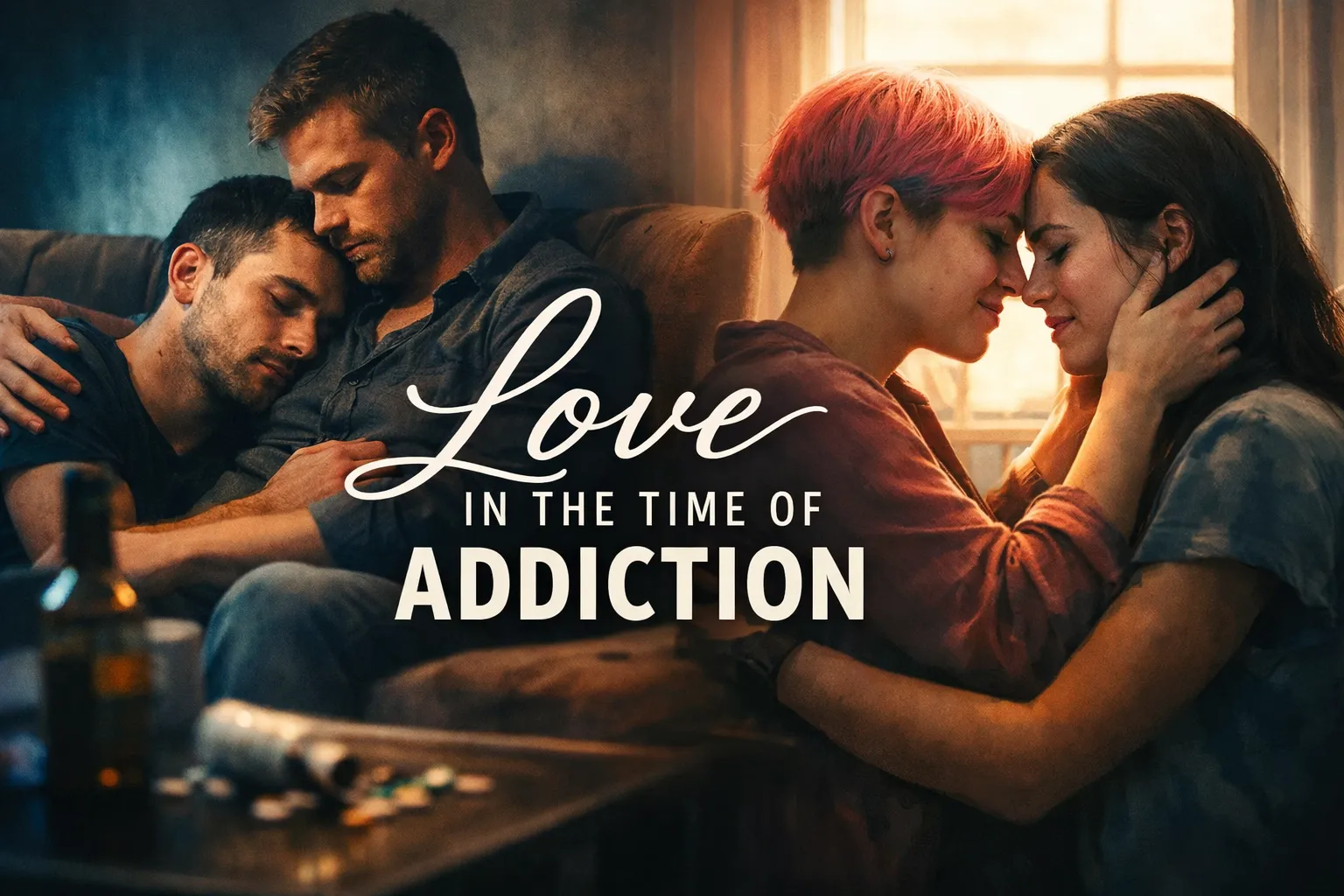
The strobe lights in the club don't show the truth. They flicker fast enough to hide the dilated pupils, the trembling hands, and the graying skin. In the gay scene, we often talk about liberation, about the party that never ends, and the "good vibes only" mantra that plasters our social media feeds. But at Read with Pride, we know that not every story ends with a sunset and a wedding ring. Sometimes, the most authentic stories are the ones that break your heart into jagged pieces and leave you standing in the cold.
When we talk about MM romance books, we usually look for that "Happily Ever After" (HEA). We want the guy to get the guy, for the trauma to be healed by a kiss, and for the credits to roll on a high note. But addiction: real, gritty, bone-deep addiction: doesn't care about tropes. It doesn't care about "enemies to lovers" or "slow burn." It only cares about the next hit, the next high, and the slow, agonizing erasure of the person you used to be.
The Illusion of Connection
It usually starts as a "party thing." Maybe it’s a weekend in Berlin or a circuit party in London. You’re with the man of your dreams. He’s beautiful, he’s funny, and when you’re both high, the connection feels cosmic. This is the "Pink Cloud" of addiction, where the drug mimics the feeling of falling in love. The dopamine spike makes you feel like you’ve found your soulmate in a crowded room of a thousand men.
But as any reader of gay romance novels knows, a foundation built on sand won't hold. In the real world, that chemical bond is a lie. Addiction fundamentally undermines a person's capacity for healthy love. It rewires the brain, shifting the priority from the partner to the substance. Slowly, the man who used to send you "good morning" texts starts disappearing for days. The man who promised to grow old with you starts looking at you like you’re just an obstacle between him and his dealer.

The Erosion of Trust
In many emotional MM books, the conflict comes from a misunderstanding or a meddling ex. In the world of addiction, the conflict is a parasite. It’s the sound of a phone buzzing at 3 AM and the blatant lie that follows. It’s the missing twenty dollars from your wallet. It’s the "I’m working late" that really means "I’m in a bathroom stall somewhere losing my mind."
Trust doesn't just break; it erodes. It’s a slow, painful process where the person watching the addiction: the partner: starts to feel like a ghost in their own home. You try to help. You try to be the "savior" trope we see so often in queer fiction. You think if you just love him enough, if you’re just patient enough, he’ll choose you.
But he can't. The addiction has hijacked his empathy. He sees your tears not as a reason to stop, but as a source of stress that makes him want to use even more. This is the dark cycle that isn't often captured in mainstream gay fiction, but it’s a reality for so many in our community.
The Science of the Disconnect
Research shows that addiction impairs the brain’s ability to experience emotional intimacy. The mood swings, the irritability, and the unpredictable behavior make it impossible to sustain a stable relationship. When someone is deep in the throes of substance abuse, they aren't just "making bad choices": their neurological capacity for love has been dampened.
The financial strain follows quickly. Money meant for rent, for dinner dates, or for that vacation you planned together disappears into the void. Communication breakdowns become the norm. You stop talking about your future and start arguing about why the electricity was cut off. This isn't the "steamy MM romance" people look for; it’s a psychological thriller where the villain is a white powder or a clear crystal.

When Love Isn't Enough
We’ve all read those best MM romance books where love conquers all. But in the gritty reality of the gay scene, love is often the first casualty. There is a specific kind of grief that comes with losing someone who is still alive. You watch the light leave their eyes. You watch their body waste away. You watch them become a stranger wearing your boyfriend's skin.
In these stories, there is no "forced proximity" that leads to a breakthrough. There is only the distance that grows even when you’re sleeping in the same bed. The stress of living with an addict can lead to secondary trauma for the partner: anxiety, depression, and a loss of self-worth. You start to wonder: Am I not enough? Why doesn't he love me more than the drug?
The answer is brutal: It was never about you. Addiction is a thief that takes everything and leaves nothing behind.
The Lack of Happy Endings
At Read with Pride, we believe in the power of all stories, including the ones that end in silence. Not everyone makes it to rehab. Not everyone finds "The One" and stays sober for fifty years. In the gay community, we have lost an entire generation to the AIDS crisis, and now, we are losing another to the quiet epidemic of addiction.
The "lost life" isn't always a physical death, though that happens far too often. It’s the loss of potential. It’s the loss of the artist who stops painting, the lawyer who loses his firm, the kind soul who becomes bitter and violent. It’s the loss of a love story that could have been beautiful but ended in a police report or a cold hospital room.

Why We Tell These Stories
You might ask why a publisher focused on LGBTQ+ fiction would want to highlight such darkness. Why not stick to the fluffy, feel-good MM contemporary stories?
Because authenticity matters. If we only tell the stories of perfect lives, we leave those who are struggling in the shadows. By acknowledging the stress, the loss, and the "not happy moments," we create a space where the truth can breathe. We recognize that for many, the "gay life" isn't a parade; it’s a struggle for survival.
If you are looking for more realistic and high-stakes narratives, you might find resonance in titles like The Transaction of Self, which dives into the complexities of identity and survival.
Finding a Way Out (Or Moving On)
If you are the one watching the man you love slip away, know that you are not a failure for being unable to save him. You cannot love someone into sobriety. Sometimes, the most "romantic" thing you can do: the most self-loving thing: is to walk away before you go down with the ship.
Addiction is treatable, but the path to recovery is long, ugly, and requires a total rebuilding of the self. It requires more than a "happily ever after" ending; it requires a "happily ever after… one day at a time" mindset.
For those who have lost love to this battle, your story is valid. Your grief is real. You don't have to pretend everything is "fabulous" when your world has been shattered.

Explore More Authentic Voices
At Read with Pride, we are committed to bringing you the best in M/M books, from the sweetest romances to the grittiest dramas. Whether you’re looking for 2026 gay books or timeless classics, we have something that will speak to your soul.
Check out our full catalog and support queer authors who aren't afraid to tell the hard truths:
Stay connected with us for the latest releases, book recommendations, and community discussions:
- Follow us on Facebook
- Join the conversation on X (Twitter)
- See our latest visuals on Instagram
Addiction thrives in isolation, but stories thrive in community. Let’s keep telling them: all of them.
#ReadWithPride #MMRomance #GayFiction #AddictionAwareness #QueerStories #GayLiterature #RealisticFiction #MMBooks2026 #LGBTQCommunity #LoveAndLoss

Leave a Reply
You must be logged in to post a comment.