

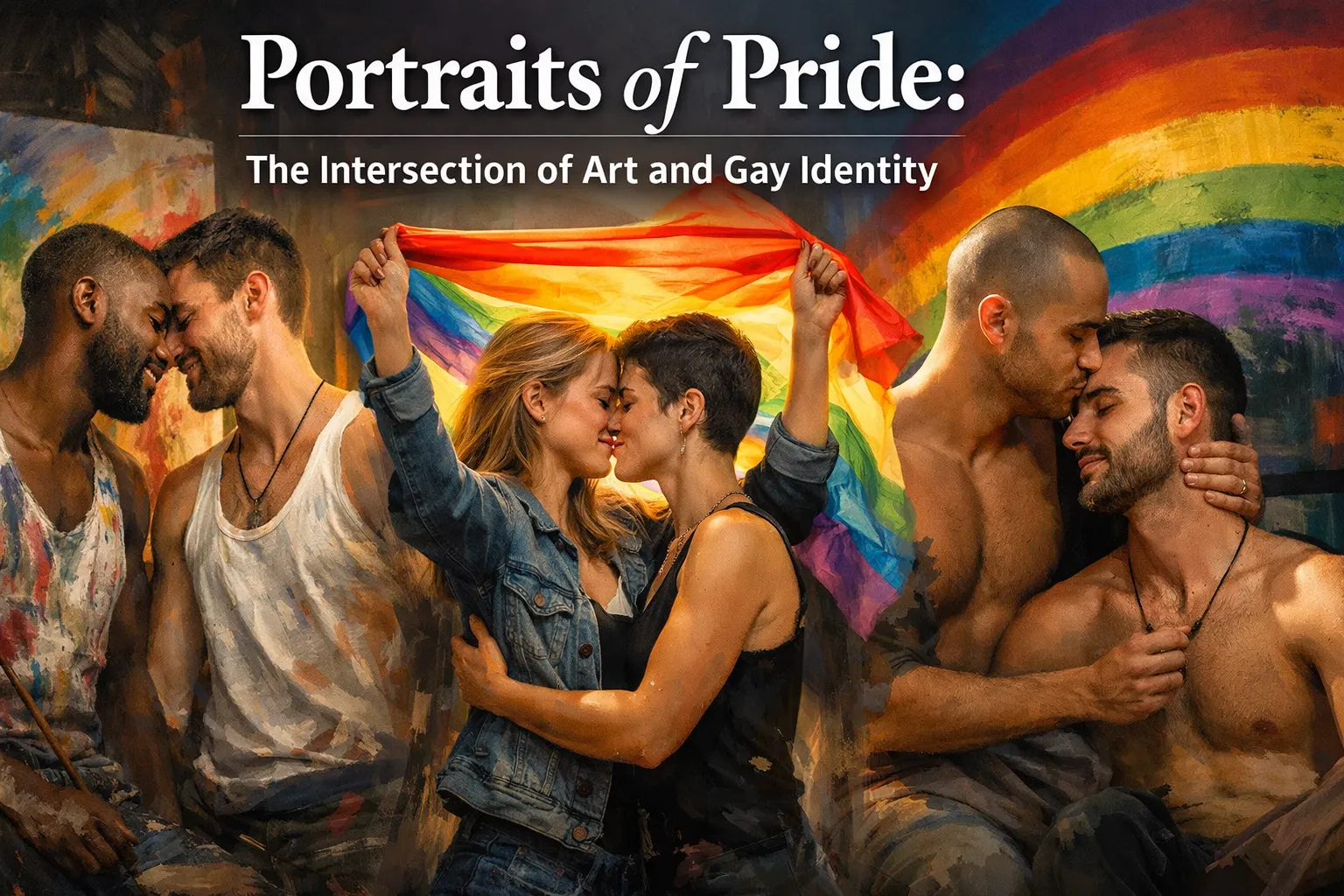
readwithpride.com
Let’s be real: for centuries, the gay community has been playing a very high-stakes game of "I Spy" in the world's most famous galleries. You know the vibe. You’re standing in the Louvre or the Met, looking at a painting of two "very close friends" sharing a suspiciously intimate grape-peeling session, and you think, I see you.
Art has always been our sanctuary. Long before we had the vocabulary of "queer," "non-binary," or even "homosexual," we had the image. Specifically, we had the naked gay body. At Read with Pride, we believe that representation doesn't just happen on the pages of our favorite MM romance books; it started on the canvas and in the marble of the masters.
Today, we’re diving deep into the history, the controversy, and the sheer beauty of the naked male form in art. From the hallowed halls of universities to the "explicit" corners of modern photography, let’s explore how the naked body remains the ultimate portrait of pride.
The Original "Coming Out": Renaissance Coding
Before the term "homosexual" was even a glimmer in a linguist's eye in 1869, same-sex desire was something people did, not necessarily who they were. But artists? They knew better. They used the visual language of the naked body to say the things that would have gotten them burned at the stake if they’d said them out loud.
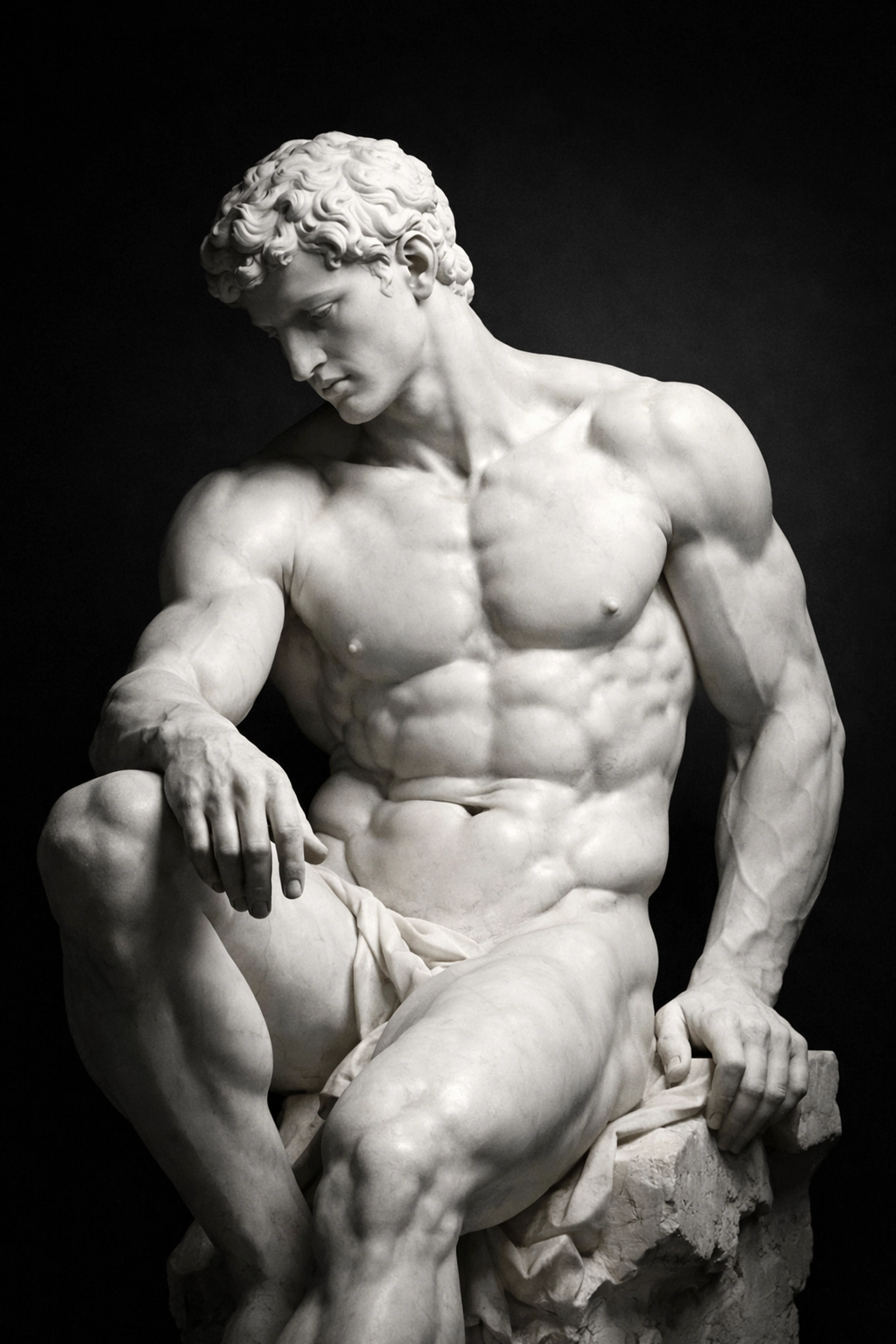
Take Michelangelo, for example. The man was a powerhouse in the Vatican, which is basically the ultimate "don’t ask, don’t tell" environment. Yet, he didn't exactly hide his leanings. His statue Victory wasn't just a triumph of technique; it was modeled after his lover, Tommaso Cavalieri. When you look at the muscular tension and the raw vulnerability of his male figures, you’re looking at a love letter in stone.
Other Renaissance painters, like Fra Carnevale, were even cheekier. In his 1467 work "Presentation of the Virgin in the Temple," he tucked two men in the background who are clearly… well, let's just say they weren't there for the temple architecture. This "second-glance" queer content allowed our ancestors to see themselves reflected in a world that officially denied their existence.
The Golden Age of the "Hunk": Leyendecker and Beyond
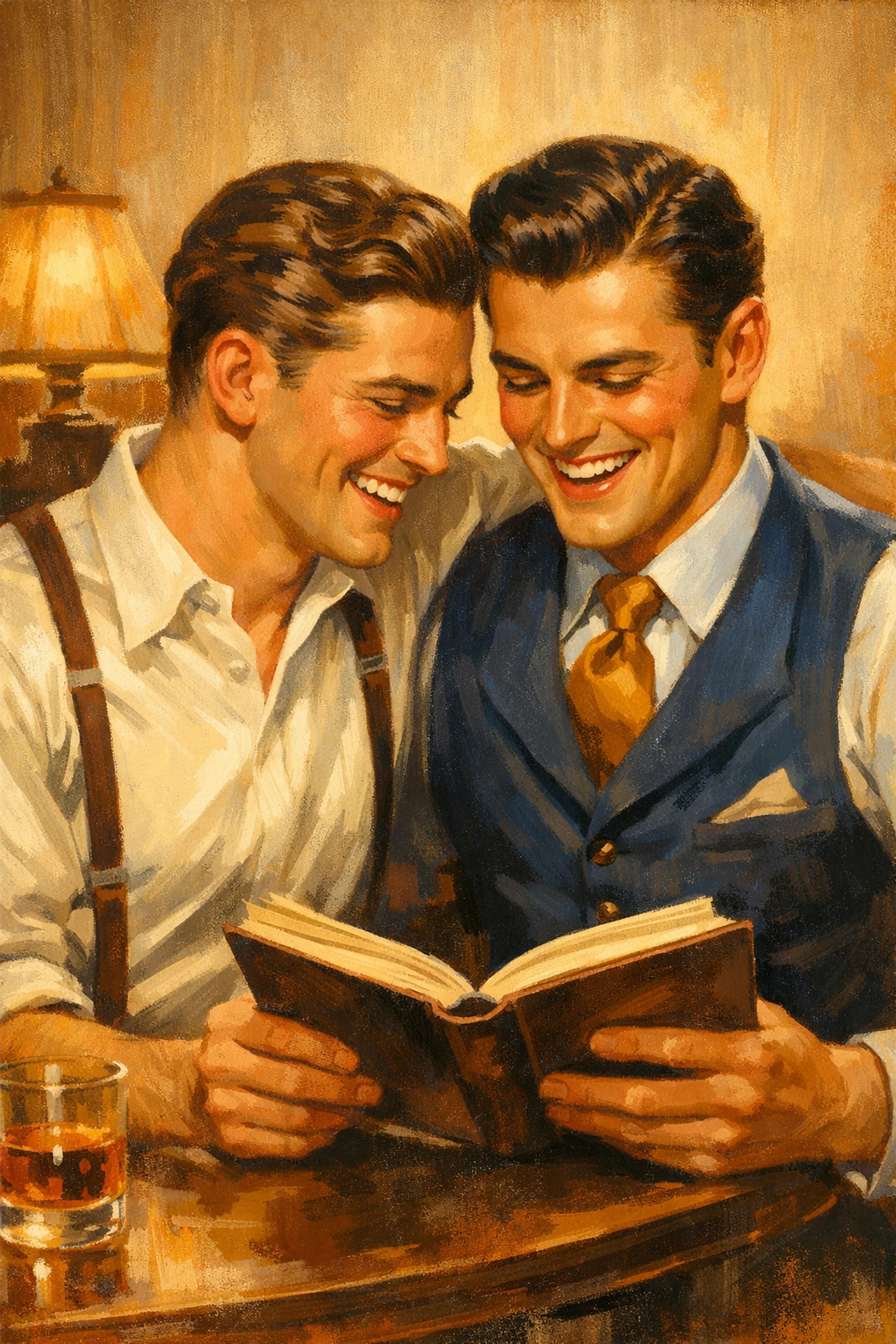
Fast forward to the early 20th century. If you’ve ever scrolled through a list of popular gay books and admired a cover featuring a dapper, jaw-lined man, you owe a debt to J.C. Leyendecker. He was the king of the "Arrow Collar Man" and basically invented the aesthetic of the modern masculine man.
Leyendecker lived openly with his partner, Charles Beach, for nearly 50 years. His art was overtly homoerotic, draped in the thin veil of "advertising." He managed to put gay desire on the cover of the Saturday Evening Post, and most of America was none the wiser. It was a masterclass in hiding in plain sight while celebrating the beauty of the male form.
David Hockney and Art as "Propaganda"
By the 1960s, the veil was starting to tear. David Hockney didn't want to hide. Before homosexuality was even decriminalized in the UK in 1967, Hockney was painting men in showers and pools, capturing the domestic and sexual reality of gay life. He famously described his work as "homosexual propaganda."
It wasn’t just about the sex; it was about the normalcy. By showing the naked gay body in a mundane, beautiful, and non-shameful way, Hockney helped pave the way for the kind of gay fiction and gay love stories we enjoy today. He proved that our bodies weren't just objects of "sin": they were subjects of high art.
The Body as a Political Battlefield
Then came the photography of the late 20th century. This is where things got gritty. During the AIDS crisis, the naked gay body shifted from a symbol of beauty to a site of political resistance. Photographers like Robert Mapplethorpe used the naked form to challenge the status quo, forcing the public to look at the bodies they were trying to ignore or erase.
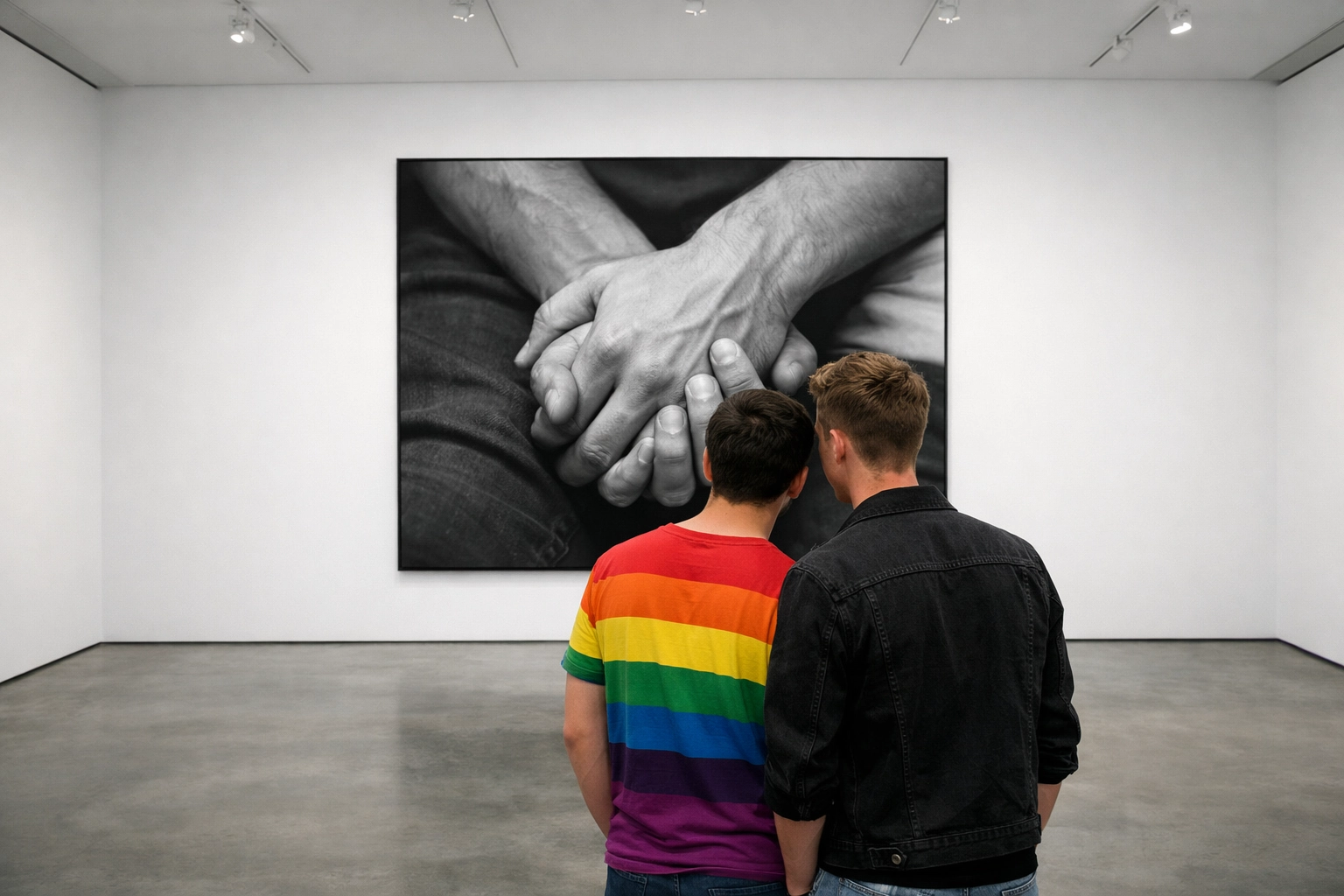
Museums and exhibitions became battlegrounds. When a university gallery or a major museum hosts a show featuring naked gay bodies today, it’s still often met with protests or "age-restricted" warnings. But why? Because there is power in the flesh. To show the naked gay body in its entirety: unapologetic and unashamed: is one of the most radical acts of pride possible.
From Canvas to Kindle: The Artistic Influence on MM Romance
You might be wondering, Penny, this is a lot of art history. What does this have to do with my late-night Kindle habit?
Everything, darling.
The visual history of the naked gay body informs every gay romance novel written in 2026. When an author describes the line of a hero’s hip or the vulnerability in his gaze, they are drawing from a lineage that started with the Greeks and the Renaissance masters. The covers of the best MM romance books are, in many ways, modern-day portraits of pride. They use the male form to signal safety, desire, and identity to a community that spent centuries looking for those signals in the shadows.
Whether it’s a gay historical romance that captures the longing of a hidden era or a steamy MM romance that celebrates the physical connection between two men, art is the heartbeat of these stories.
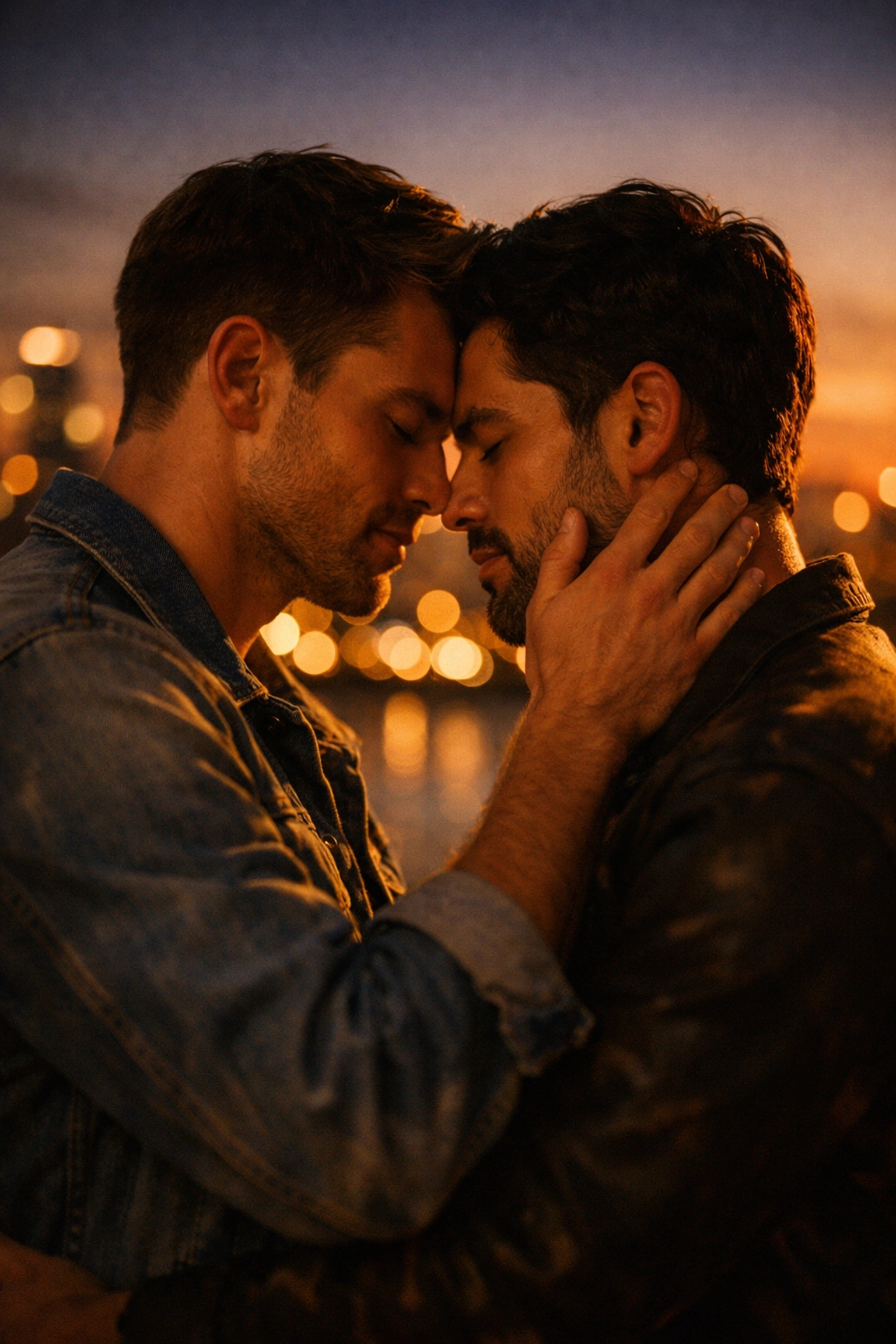
Why Naked Art Still Matters in 2026
In an era of digital censorship and "shadow-banning," the physical presence of gay art in museums and universities is more important than ever. It’s about taking up space. It’s about saying that our bodies are worthy of being studied, admired, and preserved.
Nudism in art isn't just about "looking at naked guys" (though, let’s be honest, that’s a perk). It’s about stripping away the societal labels and looking at the raw humanity of the LGBTQ+ experience. When we look at a photograph of a naked man in an exhibition, we see the vulnerability we all feel. We see the strength we’ve had to build. We see pride.
Join the Conversation
Art is a dialogue, and we want to hear your voice. Whether you’re a fan of award-winning gay fiction or you’re just here for the top LGBTQ+ books of the year, we invite you to explore the intersection of art and identity with us.
Check out our curated collections of MM romance books and discover stories that are as beautiful and complex as any masterpiece in a gallery.
- Explore our library: Readwithpride.com
- Browse Categories: Click here for our latest sitemap
- Support Gay Authors: Check out Dick Ferguson on our store
Stay connected with us for the latest in queer fiction and gay literature:
- Facebook: Follow us here
- X (Twitter): @Read_With_Pride
- Instagram: @read.withpride
The naked body remains one of the most powerful tools for expressing gay pride and identity. It is our history, our present, and our future. Let’s keep reading, keep looking, and keep being proud.
#ReadWithPride #LGBTQArt #GayFiction #MMRomance #QueerHistory #NakedArt #GayNovels #2026GayBooks #GayRomanceBooks #GayLiterature


Leave a Reply
You must be logged in to post a comment.