

readwithpride.com
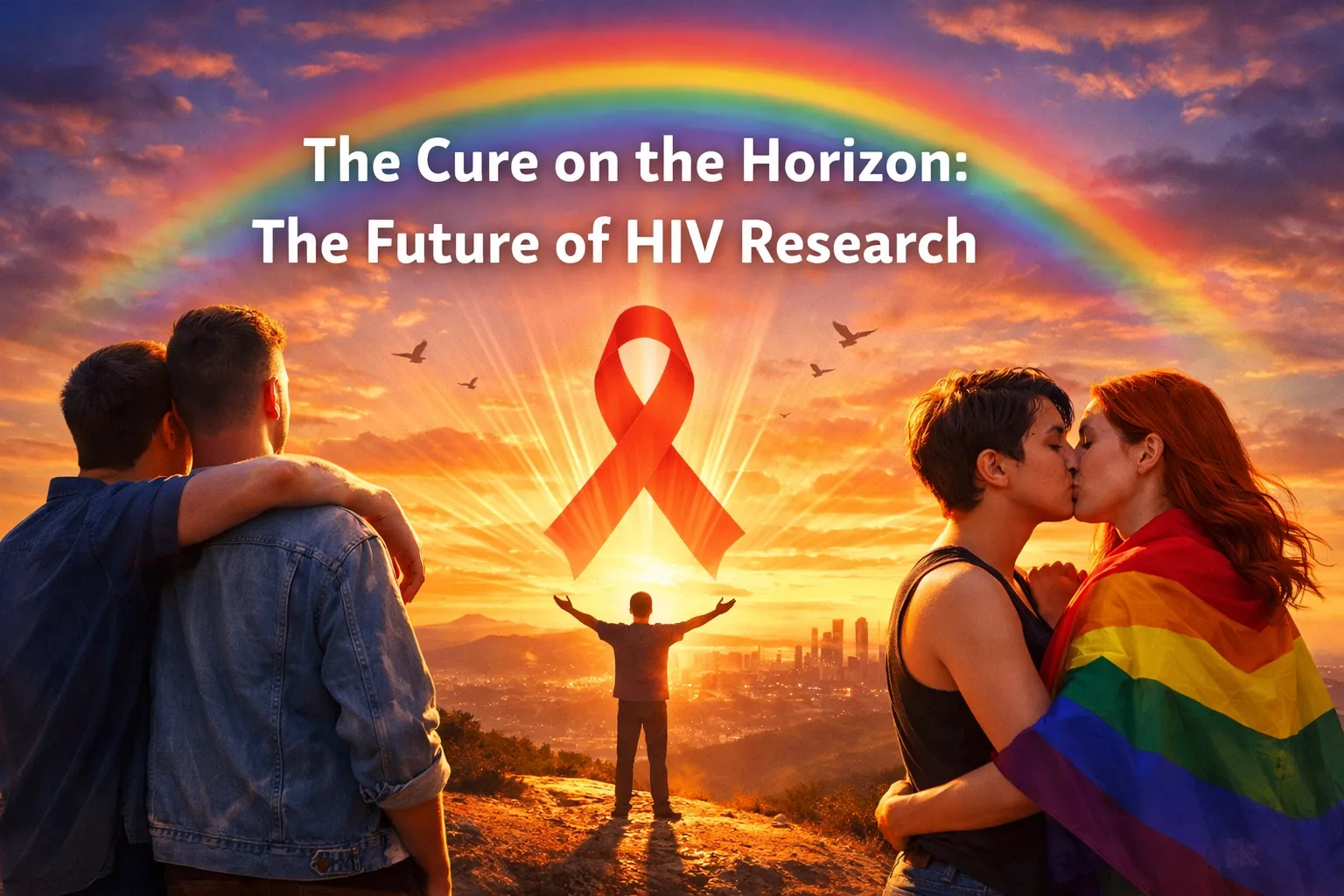
If you’ve been part of the LGBTQ+ community for any length of time, you know that our history is inextricably linked with the history of HIV and AIDS. It’s a story of loss, yes, but more importantly, it’s a story of incredible resilience, activism, and a refusal to be silenced. For decades, the "cure" felt like a distant, shimmering mirage: something we talked about in hushed, hopeful tones but never quite expected to see in our lifetime.
But here we are in March 2026, and the conversation has shifted. We aren't just talking about "managing" a condition anymore; we are looking at the actual mechanics of a functional cure. At Read with Pride, we’ve seen this reflected in the stories we publish. Our gay romance novels have evolved from the "trauma-only" narratives of the 90s to stories where characters living with HIV find love, heat, and happily-ever-afters. Now, science is catching up to the happy endings we’ve been writing for years.
The mRNA Revolution: Teaching the Body to Fight Back
Remember the speed at which the world developed COVID-19 vaccines? That same mRNA technology is now being turned toward the "holy grail" of HIV research: the viral reservoir.
The biggest hurdle in curing HIV has always been its ability to hide. The virus doesn't just circulate in the blood; it tucks itself away into "latent reservoirs": dormant cells where standard antiretroviral therapy (ART) can’t reach it. For years, the strategy was "shock and kill." We tried to wake the virus up so we could blast it, but the "shock" was often too hard on the body.
In early 2026, researchers in Australia made headlines by repurposing mRNA delivery systems. By using lipid nanoparticles (the same little fatty envelopes used in recent vaccines), they can now deliver genetic instructions directly into those hiding HIV-infected cells. These instructions essentially force the cells to "give up" the virus, making it visible to the immune system. This is a game-changer. It’s like turning on the lights in a dark room where the virus has been hiding for decades.

CRISPR: Snipping Away at the Problem
If mRNA is the messenger, CRISPR is the scissors. Gene editing has moved from the realm of science fiction into serious clinical trials. The goal? To literally snip the HIV DNA out of human cells.
Recent breakthroughs in 2026 have focused on "CRISPR-based activation." Instead of just cutting, scientists are using these molecular tools to precisely target the latent virus and boost the body’s immune-mediated control. We are seeing a future where a single treatment might do what a lifetime of daily pills currently does.
For many in the community, especially those who grew up in the shadow of the epidemic, this feels like a monumental shift. It’s the kind of hope that fuels the soul and finds its way into the most emotional MM romance books. Imagine a world where the fear of transmission is not just "undetectable," but non-existent because the virus is physically gone.
The End of the "Daily Pill" Era
While we wait for the absolute cure, the way we live with HIV is undergoing a radical transformation. The era of the daily pill is slowly being eclipsed by long-acting injectables.
ViiV Healthcare has been leading the charge with VH184, a third-generation integrase inhibitor. Phase 1 and 2 studies published recently show that a single injection can maintain therapeutic levels in the body for up to six months.
Think about that for a second. Twice-yearly dosing.
This isn't just a medical convenience; it’s a liberation from the daily reminder of the virus. For a protagonist in one of our gay love stories, this means more time focusing on the romance and less time worrying about pharmacy runs. It reduces the stigma, eases the mental load, and makes living with the virus a minor footnote rather than a defining chapter. You can check out some of our more contemporary gay novels to see how our authors are already integrating these medical realities into their plots.

Why Representation in Queer Fiction Matters Now More Than Ever
You might wonder why a publisher of LGBTQ+ fiction and MM romance is so invested in HIV research. The answer is simple: our books are a mirror of our lives.
For a long time, HIV in literature was a death sentence. It was a trope used to elicit "tragedy" in "sad gay books." But at Read with Pride, we believe in the power of the The Transaction of Self. We believe in showing the full spectrum of the queer experience.
As we move toward a cure, our stories are changing. We see characters who are "Elite Controllers" (people who naturally suppress the virus), characters who are navigating the world of PrEP, and characters who are participating in the very trials we’re discussing today. This isn't just "medical fiction": it’s heartfelt gay fiction that reflects the reality of 2026.
The Challenge of Global Access
Despite the excitement, we have to stay grounded. A cure is only a cure if people can actually get it.
Currently, there are approximately 40 million people globally living with HIV. While we celebrate the breakthroughs in CRISPR and mRNA, researchers and advocates are rightfully concerned about scalability. Any breakthrough needs to be accessible in the Global South, where the burden of the epidemic is highest and access to even basic ART can still be a struggle.
In our gay historical romance and contemporary adventures, we often explore the themes of inequality and the fight for justice. The search for an HIV cure is the ultimate modern-day quest for justice. It’s not just a lab problem; it’s a political and economic one.

The "Berlin Patient" Legacy and the Future
Every time we talk about a cure, we remember Timothy Ray Brown, the "Berlin Patient," who was the first person cured of HIV. His legacy paved the way for the "Düsseldorf Patient," the "City of Hope Patient," and others. These outliers proved that a cure was possible.
In 2026, we are moving away from the "outlier" model (which usually involved risky bone marrow transplants for cancer) toward therapies that can be administered to the general population. We are seeing Broadly Neutralizing Antibodies (bnAbs) being used in combination therapies to keep the virus in check without traditional drugs.
It’s an incredible time to be part of this community. We are the generation that might finally see the end of this chapter.
Stay Connected with the Community
At Read with Pride, we are committed to bringing you the best in 2026 gay books, from steamy MM romance to deep, emotional MM books that tackle the big issues. Our library is growing every day, now standing at over 1,820 stories that celebrate queer life in all its complexity.
If you’re looking for your next great read, or want to stay updated on how queer culture is evolving alongside science, make sure to follow us on our social platforms:
- Facebook: Follow our updates
- Twitter/X: @Read_With_Pride
- Instagram: @read.withpride
Check out our sitemaps to discover new authors and gay book recommendations. Whether you’re into gay fantasy romance like The Swordsman's Compass or contemporary gay romantic fiction, we have something that will speak to your heart.

The horizon is looking brighter than ever. Let’s keep reading, keep fighting, and keep loving. The cure isn't just a scientific goal; it’s a promise we’re making to the future.
#ReadWithPride #HIVResearch #GayLiterature #MMRomance #LGBTQHealth #QueerBooks2026 #EndHIV #GayFiction #MMRomanceBooks #PrideInScience

Leave a Reply
You must be logged in to post a comment.