

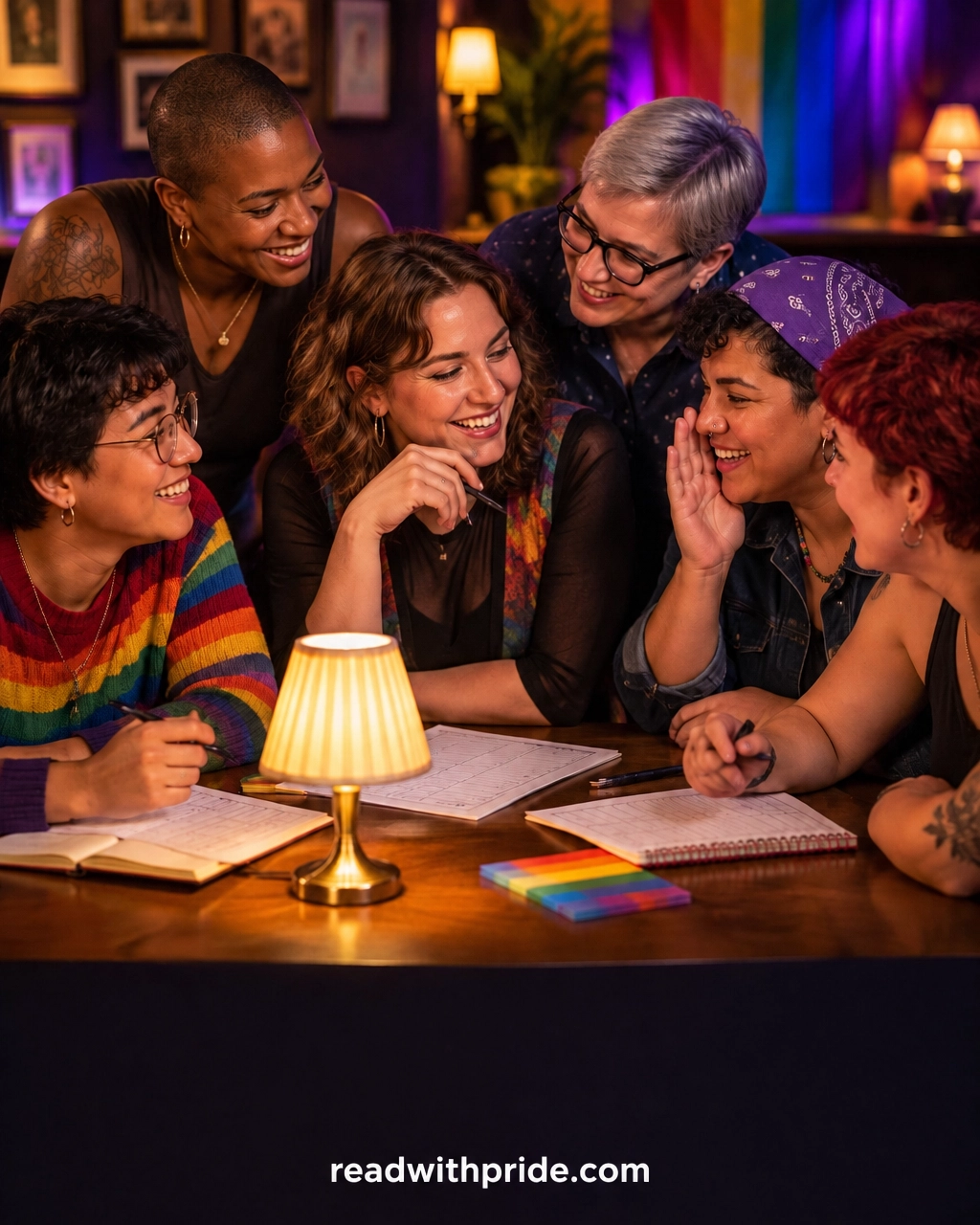
Trivia night is a social cheat code: you have a shared task, so nobody has to perform a dazzling personality for two hours. You can be the quiet person who knows one useful thing about 1990s soundtracks and still become the team MVP.
For queer hobbies that make meeting people feel a little less like networking, quiz night is a lovely place to start. Drop in once, join a team, and see if you fancy coming back. Community building can begin with one answer sheet and a borrowed pen.
Turning up solo? There’s room for one more
Most pub quizzes run several rounds, often six to eight, with teams capped at around six to eight players. There may be a small entry fee, usually easy to split between teammates. Check the event details for team limits, phone-free rules and start time.
Walking up to a table can feel like the hardest question of the night. Try: “Hey, is there any space for one more?” If you’re organising, make that question unnecessary: mark a first-timers table or have a host ready to welcome solo players and pairs.

Be the teammate you’d want to sit beside. Say your answer aloud, even if you’re not certain. Don’t sulk over a wrong one, and keep the pen moving. A quiz is a team sport, not a referendum on your intelligence. Let everyone contribute, including the person who prefers listening before jumping in.
Hosting a quiz with a queer point of view
A community centre, library, bookshop or bar back room can all work. Start monthly, find a host with a mic and a knack for pacing, and try six rounds of ten questions. Mix general knowledge with picture and audio rounds, and keep questions varied enough that no one needs a specialist degree in one particular pop-culture decade.
Queer-flavoured rounds could include queer film and TV, ballroom and drag history, LGBTQ+ music icons, sapphic fiction, coming out stories in literature, local queer history or banned books. A round on MM romance tropes could ask teams to name that trope: forced proximity, enemies-to-lovers, slow burn. Think of it as a playful gateway to MM romance books, gay romance novels and more queer love stories on Read with Pride.
Keep the questions curious, not tokenising. Don’t turn anyone’s identity into a category or rely on stereotypes for a punchline. And no, an unrelated search phrase like “C Section 2026” doesn’t need to become a question. People first, keyword soup last.

Make the event work for more people: offer seated tables and clear wheelchair routes, check whether the venue has a hearing loop, and provide captions or written alternatives for audio questions. Keep it sober-friendly, skip the shout-it-out chaos, and make pronoun badges optional. Say when the quiz starts and finishes, offer a first-timers table, and keep costs low or provide a no-cost option. Prizes can be as simple as bragging rights.
Let the team become the community
A quiz team is basically forced proximity with a score sheet. You might even get enemies-to-lovers energy when a rival captain disputes your answer. Or maybe it’s a slow burn: three months before your team finally gels, then suddenly you’re a little found family on a Tuesday night.
Keep the connection going with a regular table, a group chat, newcomer-host pairings or a once-a-month rival league. And if your quiz inspires a queer book club, Read with Pride has a curated catalogue of LGBTQ+ novels, gay fiction and queer fiction to explore, alongside LGBTQ+ fiction 2026 and plenty more LGBTQ+ reading.
Find your next queer read with Read with Pride, and connect with us on Instagram and Facebook.
#QueerHobbies #CommunityBuilding #QueerTrivia #LGBTQPlusFiction #MMRomance #ReadWithPride #QueerCommunity

Leave a Reply
You must be logged in to post a comment.