

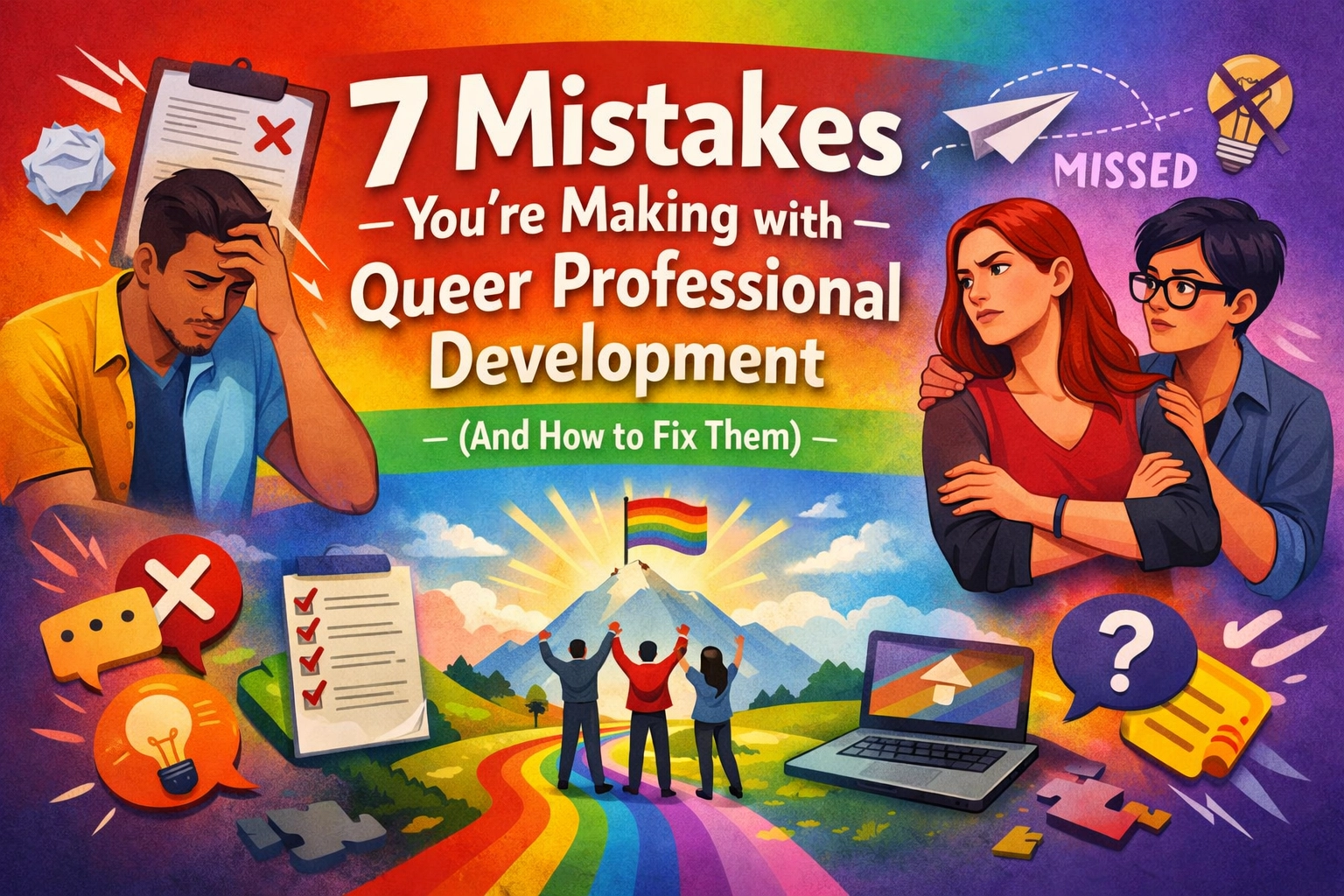
readwithpride.com
Let’s be real for a second. Navigating the professional world as an LGBTQ+ person in 2026 feels a bit like trying to solve a Rubik’s cube while riding a unicycle. Whether you’re climbing the corporate ladder, navigating the labyrinth of academia, or trying to lead a team in a creative field, the rules often feel like they were written for someone else.
At Read with Pride, we spend a lot of time talking about stories, the ones we read in MM romance books and the ones we tell ourselves. But your career is a story, too. And just like a draft of a great queer fiction novel, sometimes your professional development strategy needs a serious edit.
If you feel like your career growth has hit a plateau, or you’re exhausted from "performing" a version of yourself that doesn't quite fit, you might be falling into these common traps. Here are seven mistakes you’re likely making with your queer professional development and exactly how to fix them.
1. The "Safety First" Ceiling
We’ve all been there. You enter a new workplace or a fresh academic department, and you subconsciously dial back your "queerness." You keep your weekend plans vague, you dress a little more "neutral," and you wait to see if it’s safe.
While self-preservation is a valid instinct, staying in the "safety zone" for too long can become a ceiling. When you hide parts of your identity, you’re using valuable cognitive energy that should be going toward your actual work and queer leadership skills.
The Fix: Start small. Authenticity is a muscle. Bring your full self to the table in increments. When you lead with your genuine identity, you attract the right kind of mentors and opportunities. Plus, being "out" in your professional life is often the first step to becoming the role model you wish you had.

2. Neglecting the "Queer Mentor" Search
One of the biggest hurdles for LGBTQ+ young professionals is the lack of visible role models. If you’re looking at your bosses and none of them share your lived experience, it’s easy to think there’s no path for you.
Research shows that LGBTQ+ professionals often struggle with workplace etiquette and "norms" because they haven't had mentors to show them the ropes. You might be waiting for a mentor to find you, but in the queer community, we often have to build our own "chosen families" in the workplace.
The Fix: Don’t wait for a formal mentorship program. Reach out to queer leaders in your industry via LinkedIn or professional networks. If you’re in academia, look for queer faculty who are doing the work. Sometimes, the best mentorship comes from reading a biography or autobiography of someone who blazed the trail before you.
3. Falling for the "DEI Tax"
Are you the go-to person for every Pride month panel, every diversity committee, and every "inclusive" initiative, all while keeping up with your actual job? This is the "DEI Tax", the unpaid, often unrecognised emotional labor that queer people are expected to perform.
While it feels good to contribute to queer education within your company, doing too much of it without compensation or a title change can actually stall your career growth. You become the "Pride Person" instead of the "Senior Developer" or "Lead Researcher."
The Fix: Set boundaries. If you’re asked to lead a DEI initiative, ask how it will be reflected in your performance review or if there’s a budget involved. If it doesn't align with your long-term career goals, it’s okay to say no. Focus on your core professional skills first. You can’t change the system if you’re burnt out.
4. Only Networking in the "Safe" Bubbles
It’s tempting to only attend queer-specific networking events. They’re comfortable, the drinks are better, and you don’t have to explain your pronouns five times. However, focusing only on queer spaces can sometimes limit your exposure to the broader industry trends and decision-makers.
On the flip side, some people avoid queer networking entirely because they don't want to be "pigeonholed." Both are mistakes.
The Fix: Aim for a hybrid approach. Use queer professional groups for support and internal industry secrets, but make sure you’re also visible in general professional spaces. Think of it like a good action-adventure plot, you need your core team, but you also have to navigate the wider world to win.

5. Treating Your Career Like a "Slow Burn" with No Payoff
In the world of MM romance books, we love a slow burn. The tension, the yearning, the 300 pages of waiting for a kiss, it’s chef’s kiss. But in your career? A slow burn without a clear trajectory is just stagnation.
Many LGBTQ+ professionals wait for permission to lead. We wait for someone to notice our hard work and hand us the promotion. But the "meritocracy" often has a blind spot for marginalized voices.
The Fix: Adopt "Main Character Energy." Document your wins, ask for the raise, and be clear about your ambitions. If your current environment feels like a "friends to lovers" trope where you’re stuck in the "friend" (junior) zone forever, it might be time to find a new "love interest" (employer).
6. Settling for "Tolerant" Instead of "Affirming"
There’s a massive difference between a workplace that tolerates you and one that affirms you. Tolerance is "we don't care who you love as long as you do your work." Affirmation is "we value your unique perspective as a queer person and ensure our benefits packages reflect your needs."
Settling for tolerance leads to long-term dissatisfaction and a feeling of being a "guest" in your own career.
The Fix: Audit your environment. Does your health insurance cover gender-affirming care? Does your company support alternative family structures in their leave policies? If the answer is no, you’re not in an affirming space. Use your professional development time to build a portfolio that lets you move to a company that actually celebrates you.
7. Forgetting to Feed Your Soul (The Reading Mistake)
You can’t be a leader if your cup is empty. If your only "professional development" is reading dry industry journals and corporate newsletters, you’re going to lose your spark.
Queer leadership requires imagination and empathy: traits that are best nurtured through storytelling. We often see professionals who are so focused on the grind that they stop consuming the very queer fiction and gay romance novels that keep them connected to their community and their joy.
The Fix: Make "joyful reading" a part of your development plan. Whether it’s the best MM romance books of 2026 or a gritty gay thriller, engaging with queer narratives reminds you that our stories matter. It keeps your creative brain sharp and your heart connected to the "why" behind your work.

Why Professional Development is a Queer Act
In a world that often tries to push us to the margins, choosing to grow, lead, and succeed is an act of defiance. Queer leadership isn't just about getting a better title; it's about changing the culture of the spaces we inhabit so the next generation doesn't have to deal with the same seven mistakes.
At Read with Pride, we believe that the stories we read shape the lives we lead. Whether you’re looking for a historical romance to escape a stressful work week or a bisexual romance that makes you feel seen, we’ve got your back.
Your 2026 Career Checklist:
- Update your LinkedIn with a bio that reflects your authentic self.
- Identify one queer leader you admire and send them a "cold" (but warm!) message.
- Audit your "DEI Tax": is it helping your career or holding you back?
- Buy a new book. Seriously. Check out our latest MM romance books to recharge your batteries.
Don't let these mistakes hold you back from being the powerhouse you were born to be. The professional world needs your perspective, your talent, and your pride.
Want more tips on navigating life and career with a queer lens?
Follow us on social media for daily inspiration and the best book recommendations:
Keep reading, keep leading, and always Read with Pride.
#QueerLeadership #ProfessionalDevelopment #LGBTQCareer #ReadWithPride #MMRomanceBooks2026 #QueerEducation #GayFiction #CareerGrowth #InclusiveWorkplace
readwithpride.com

Leave a Reply
You must be logged in to post a comment.