

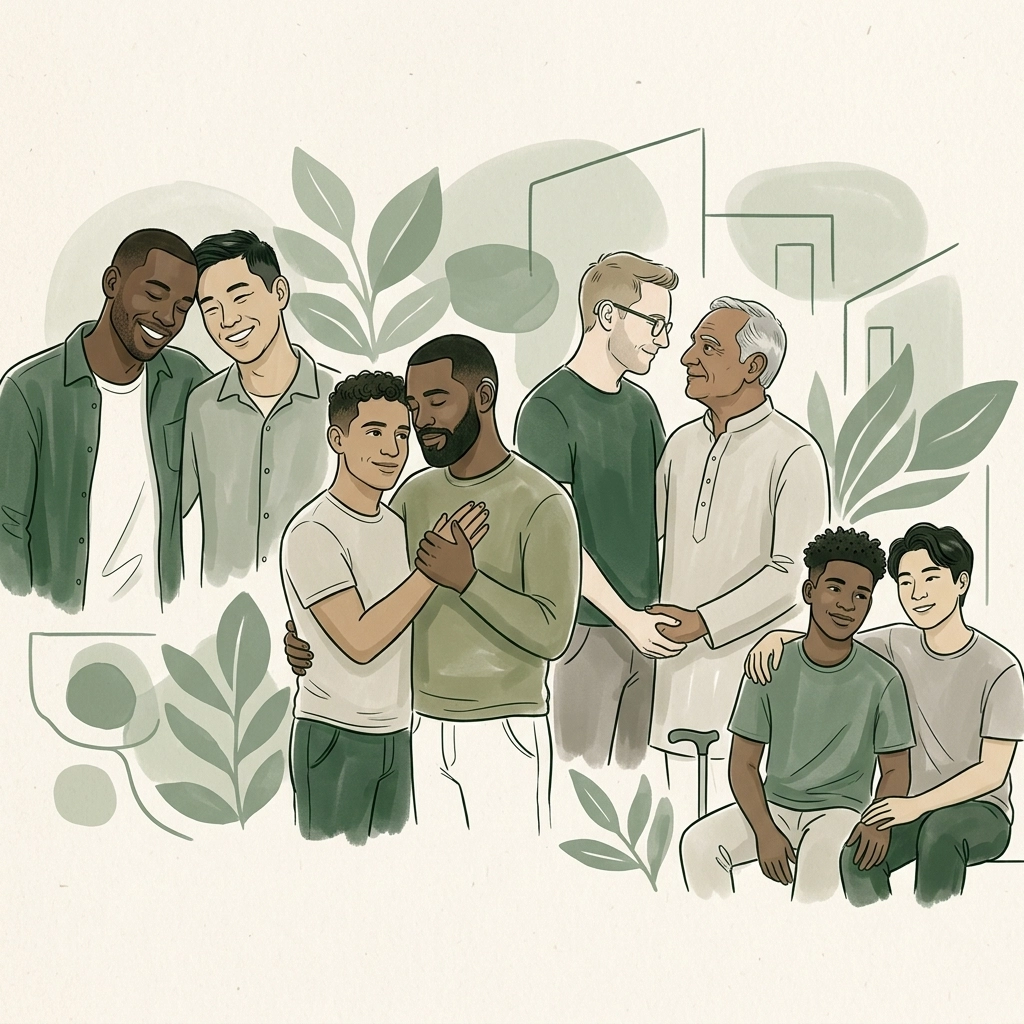
Hey there, fellow book lovers and advocates! It’s Friday, April 17, 2026, and today we’re diving into something that is the very heartbeat of what we do here at Read with Pride. We’re talking about intersectionality.
You’ve probably heard the word tossed around in academic circles or on social media, but at its core, intersectionality is about recognizing that none of us are just "one thing." We aren't just gay, or just Black, or just disabled. We are a beautiful, complex mosaic of identities. When we talk about the queer community, we have to talk about how these identities overlap, because that is where our true strength lies.
To kick things off, let’s look at a group that is often misunderstood, even within our own rainbow bubble.
A Guide to Understanding Asexuality and Aromanticism for Allies
If we want to build a truly inclusive community, we have to start by listening to those whose experiences differ from the "mainstream" queer narrative. For many allies (and even some folks within the LGBTQ+ community), the concepts of asexuality and aromanticism can feel like a bit of a puzzle. But don't worry, we’re here to break it down.
Asexuality (Ace) refers to individuals who experience little to no sexual attraction to others. Aromanticism (Aro) refers to those who experience little to no romantic attraction. It is vital to understand the Split Attraction Model: the idea that who you want to go to bed with (sexual attraction) and who you want to fall in love with (romantic attraction) aren’t always the same thing.
In the world of MM romance and gay fiction, we are seeing a wonderful rise in Ace-spectrum protagonists. These stories prove that a deep, soul-shattering connection between two men doesn't always have to be defined by physical intimacy. Sometimes, the most heartfelt gay fiction comes from the emotional bond, the shared silence, and the unwavering loyalty between partners.
Being an ally to Ace and Aro folks means validating their identity without trying to "fix" them. It means recognizing that a life without sexual or romantic attraction is just as full, vibrant, and valid as any other. When we include these voices in our gay book recommendations, we broaden the definition of what it means to love and be loved.
Why Diverse Voices are Our Secret Superpower
When we talk about LGBTQ+ fiction, it’s easy to fall into the trap of the "monolith." For a long time, the most popular gay novels featured a very specific type of lead: usually white, cisgender, able-bodied, and middle-class. While those stories are valid, they only represent a tiny slice of our reality.
Intersectionality matters because it acknowledges that a Black gay man’s experience in the world is vastly different from a white gay man’s. A trans man navigating the healthcare system faces hurdles that a cis gay man might never encounter. When we amplify diverse voices, we aren't just being "politically correct", we are enriching our collective narrative.
Diverse voices strengthen us by:
- Challenging our biases: They force us to look outside our own bubbles.
- Building empathy: Reading a gay psychological thriller or an MM contemporary novel from a perspective different from our own allows us to walk in someone else’s shoes.
- Fostering real solidarity: We can't fight for "equality" if we aren't fighting for the most marginalized among us.
At Read with Pride, we believe that gay literature should reflect the world we actually live in. That’s why we’re so passionate about promoting queer authors who bring their unique intersectional identities to the page.
The Intersection of Race and Queer Identity
It’s impossible to talk about intersectionality without talking about race. History shows us that the LGBTQ+ movement was built on the backs of trans women of color, yet they are often the most marginalized today. Within the gay community, racism still exists.
Studies have shown that BIPOC (Black, Indigenous, and People of Color) individuals often experience a "double whammy" of discrimination, racism from the outside world and homophobia from within their own cultural communities, or racism within predominantly white queer spaces.
When we read M/M books that feature diverse leads, like those found in the eBooks by Dick Ferguson collection, we see the nuance of these lives. We see the struggle, yes, but we also see the joy, the culture, and the resilience. This is why MM romance books that feature interracial couples or men of color are so vital. They remind us that love doesn't exist in a vacuum; it exists in a world filled with systemic pressures that we must navigate together.
Spotlight: Emotional Depth in MM Romance
For the emotionally invested reader, there is nothing quite like a story that handles intersectionality with grace and grit. Take, for example, the works available at our store, like Dust and Bone or the deeply personal The King of Spades. These aren't just "gay love stories"; they are explorations of identity, memory, and the human condition.
If you’re looking for your next obsession, check out the full collection here: Read with Pride Store.
Whether it's a gay historical romance that looks at the hidden lives of queer men in the past, or a gay adventure romance set in the modern day, the focus remains on the profound emotional journey of men loving men. By centering these stories, we provide a space for readers to find themselves: or to find a world they never knew existed.
How to Be an Intersectional Reader
So, how can you support a more diverse queer community through your reading habits?
- Read outside your "type": If you usually read steamy MM romance, try a gay thriller with a disabled lead.
- Support indie authors: Many queer authors from marginalized backgrounds find their homes in independent publishing where they have more creative freedom.
- Join a gay book club: Discussing these themes with others helps solidify your understanding of intersectional issues.
- Demand more: Tell publishers you want to see more gay fantasy romance and MM contemporary stories featuring diverse voices!
Moving Forward Together
Intersectionality isn't about dividing us into smaller and smaller groups. It’s about recognizing the specific ways we are held back so that we can tear those barriers down for everyone. When we celebrate diverse voices, we aren't just checking a box. We are making our community stronger, smarter, and much more interesting.
The queer community is a tapestry. Every thread: regardless of its color, texture, or strength: is necessary to make the whole thing hold together. Let’s keep reading, keep learning, and keep supporting the authors who tell the stories that need to be heard.
Read with pride, stay curious, and let’s keep making the world a little more inclusive, one page at a time.
#LGBTQ #MMRomance #Intersectionality #GayBooks #QueerFiction #ReadWithPride #DiverseVoices #GayLiterature #AceAlly #AroVisibility
Follow us on social media:
- Instagram: https://www.instagram.com/dickfergusonwriter
- X (Twitter): https://www.x.com/DickFergus94902
- Facebook: https://www.facebook.com/profile.php?id=61572869844598
- Website: www.readwithpride.com
- Store: Shop the Collection
Three New Blog Post Options for Dick:
- The Evolution of the "Grumpy x Sunshine" Trope in MM Romance: A deep dive into why this dynamic remains a fan favorite and how modern authors are subverting expectations.
- Writing Resilience: How Trauma and Healing Shape Our Favorite Gay Protagonists: An exploration of "high-angst" themes and the importance of the "Happily Ever After" (HEA) for readers who invest emotionally in their characters.
- Beyond the Regency: Why Gay Historical Romance is Expanding into New Eras: Looking at the rise of 20th-century queer history in fiction, from the Jazz Age to the 1980s.

Leave a Reply
You must be logged in to post a comment.