

There's something deeply intimate about sculpture. Unlike a painting that keeps you at arm's length, sculpture invites you to walk around it, to see it from every angle, to understand the human form in three dimensions. And when it comes to gay sculptors throughout history, that intimacy becomes even more profound, because these artists weren't just capturing bodies, they were telling stories that often couldn't be spoken aloud.
At Read with Pride, we celebrate all forms of LGBTQ+ storytelling, from MM romance books to gay fiction and beyond. But today, we're stepping beyond the written word to explore how gay sculptors have been crafting narratives in marble, bronze, and clay for centuries, often hiding their truth in plain sight.
The Revolutionary Bronze: Donatello's David
Let's rewind to 1428. Florence, Italy. A young sculptor named Donatello just unveiled something the art world hadn't seen in over a thousand years: a free-standing bronze nude. His David wasn't just technically impressive, it was revolutionary, and quietly, subversively queer.
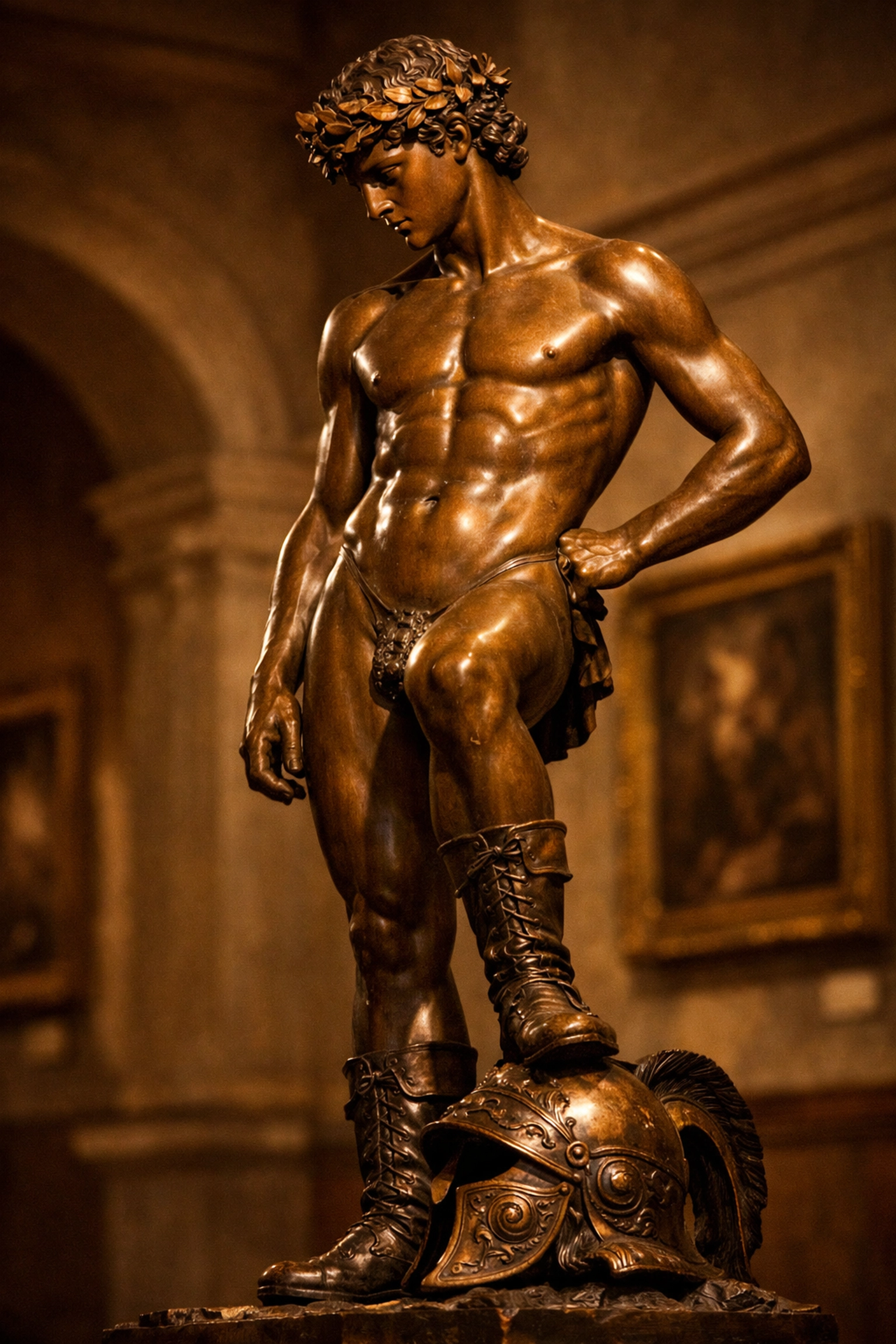
This wasn't your typical heroic warrior. Donatello's David was slender, almost delicate, wearing nothing but a hat and boots (yes, really). The sculpture depicted the biblical hero standing over Goliath's severed head, but art historians have long noted the homoerotic undertones that pulse through the work. Look closely at Goliath's helmet, and you'll spot cupids symbolizing the "Triumph of Love": a detail that whispers Donatello's personal narrative into the bronze.
Anecdotes from the period describe Donatello's attraction to his male models and apprentices. His David became more than a religious commission; it was a coded love letter, a celebration of male beauty that wouldn't be seen again until Michelangelo picked up his chisel decades later.
Michelangelo: The Man Who Made Marble Breathe
Speaking of Michelangelo Buonarroti: the man needs no introduction, but his sexuality often gets glossed over in art history classes. Between 1501 and 1504, he carved what would become perhaps the most famous sculpture in human history: his towering marble David.
Unlike Donatello's youthful interpretation, Michelangelo's David was pure muscle and masculine power: a 17-foot testament to the idealized male form. But this wasn't just about Biblical heroism. Michelangelo's personal letters and poetry reveal a man deeply moved by male beauty, writing love sonnets to young men throughout his life.
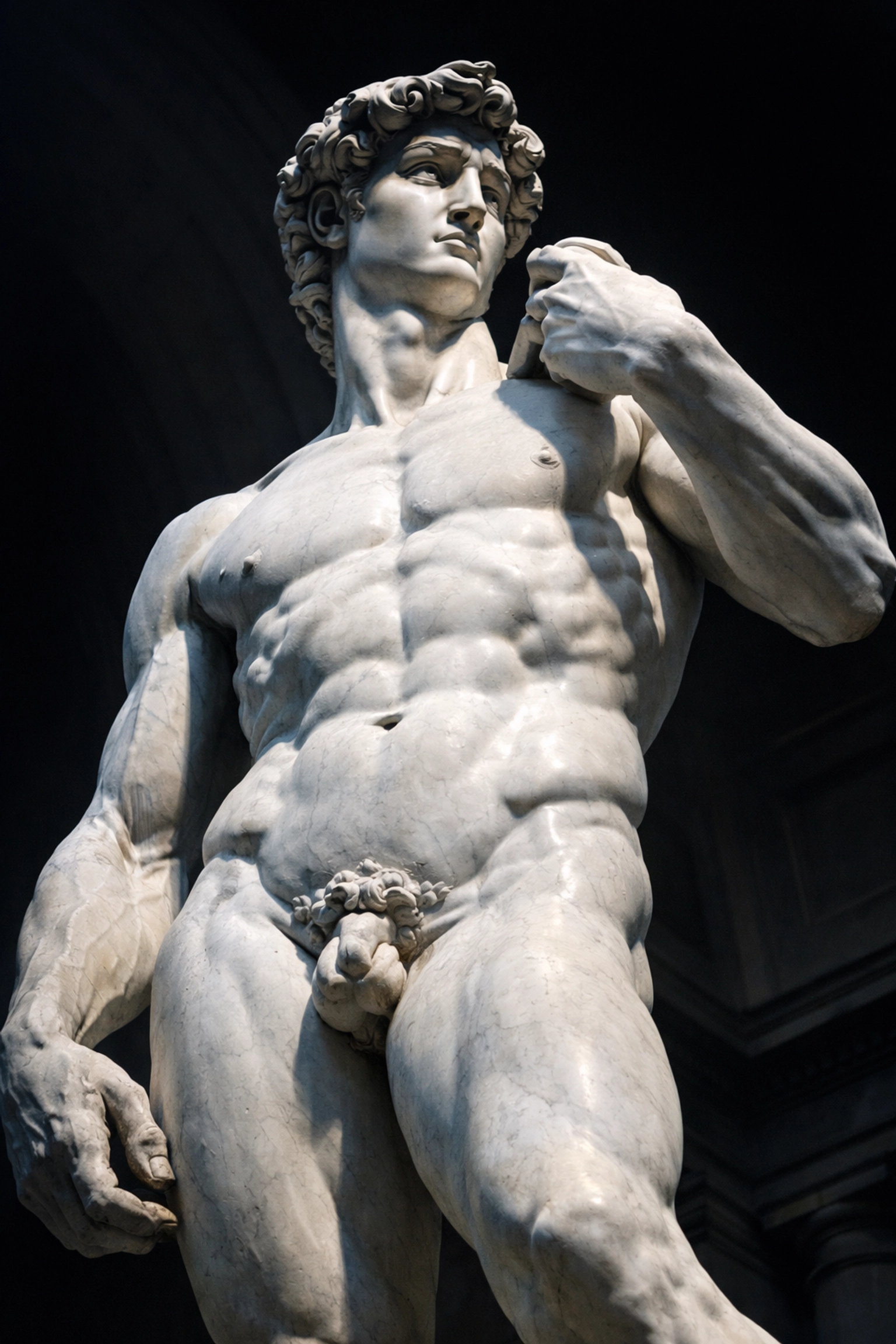
The way Michelangelo captured the human body: every sinew, every curve, the weight distribution, the contrapposto stance: came from an artist who didn't just study the male form academically. He worshipped it. His queer gaze gave us sculptures that feel impossibly alive, as if the marble might start breathing at any moment.
This tradition of gay sculptors reshaping how we view the human body didn't stop in the Renaissance. It evolved, adapted, and continued to challenge conventions right up to today.
Opening Doors: From Canova to Contemporary Voices
Antonio Canova carried the torch forward, creating neoclassical works that celebrated sensuality and form. Then came Harriet Hosmer, breaking gender barriers in a field dominated by men, proving that queer artists of all identities could reshape the sculptural landscape.
Fast forward to the 20th century, and we find Robert Indiana's iconic stacked-letter LOVE sculpture: a work so ubiquitous now that we forget its origins. Indiana created this piece shortly after his relationship with artist Ellsworth Kelly ended, transforming heartbreak into one of the most recognizable public artworks in the world. Love, loss, and queer experience immortalized in bold letters.

Robert Pruitt contributed a notable statue of Andy Warhol, another queer icon who revolutionized art in his own way. These modern sculptors continue the tradition of infusing personal truth into public art, creating works that speak to both LGBTQ+ experiences and universal human emotions.
The Body as Canvas, The Form as Truth
What makes gay sculptors' work so compelling isn't just technical skill: it's vulnerability. Throughout history, many gay artists couldn't openly express their sexuality. Sculpture became a safe space to explore desire, beauty, and connection without words.
The human form, particularly the male nude, became a language of its own. Every curve, every angle, every intimate detail was a way to say, "This is what I see. This is what moves me. This is love."
This tradition echoes through to ancient Greece, where a sculpture depicting Harmodius and Aristogeiton: male Athenian warrior lovers: became the first upright statue in a city plaza honoring mortal heroes rather than gods. Even in antiquity, queer love was deemed worthy of public commemoration.
Why Sculpture Matters in LGBTQ+ Storytelling
Just as we champion gay romance books and MM fiction at Readwithpride.com, sculpture offers another essential form of queer storytelling. These three-dimensional narratives exist in public spaces, museums, and galleries: impossible to ignore, demanding to be seen.
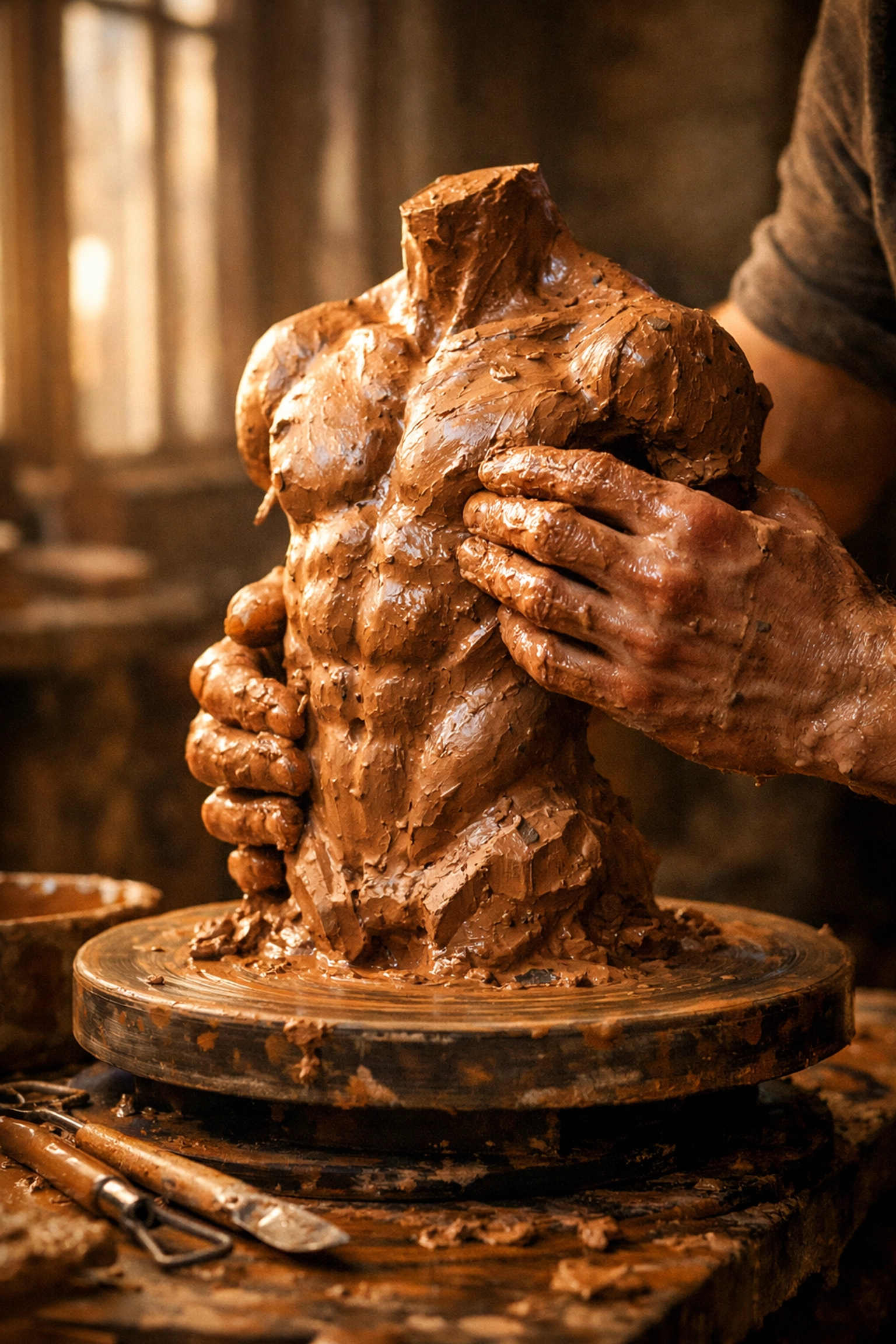
Gay sculptors transformed art from civic duty and religious obligation into deeply personal expression. They showed that individual genius and emotional authenticity could be carved into stone and cast in bronze. Their work reminds us that LGBTQ+ voices have always been here, shaping culture, challenging norms, and creating beauty: even when they had to do it in code.
The Legacy Continues
Today's queer sculptors stand on the shoulders of giants like Donatello and Michelangelo, but they're also carving out entirely new territory. Contemporary artists are free to be explicit about their identities and intentions in ways Renaissance masters could only dream of.
The human form remains central to much of this work: not because gay artists are obsessed with bodies, but because the body is where identity, desire, politics, and art intersect. It's where we live our truths, where we experience love and rejection, where we exist as both vulnerable and powerful.
For readers who love MM romance and gay fiction, think of sculpture as the visual equivalent of your favorite slow-burn love story. It's about tension, revelation, and the ways we communicate when words aren't enough. It's about capturing a moment, a feeling, a connection: and making it last forever.
Final Thoughts
The next time you encounter a sculpture: whether it's a Renaissance masterpiece or a contemporary installation: ask yourself: what story is this telling? Who made it, and what might they have been feeling? Gay sculptors have been answering these questions for centuries, turning personal experience into public art, transforming stone and metal into poetry.
Their legacy reminds us that LGBTQ+ artists have always been essential to culture, even when history tried to erase them. From Donatello's revolutionary bronze to Robert Indiana's modern declarations of love, gay sculptors have shaped how we see beauty, humanity, and ourselves.
Want to explore more LGBTQ+ stories and creative voices? Check out our collection of gay romance novels, MM fiction, and queer literature at Read with Pride. Because every story deserves to be told: whether it's written in words or carved in stone.
Follow Read with Pride:
- Facebook: facebook.com/profile.php?id=61586883027069
- Instagram: @read.withpride
- Twitter: @Read_With_Pride
#ReadWithPride #GaySculptors #LGBTQArt #QueerArtHistory #MMRomance #GayRomanceBooks #LGBTQFiction #QueerLiterature #GayArtists #ArtHistory #Michelangelo #Donatello #RobertIndiana #QueerRepresentation #GayLiterature #LGBTQReading #GayBookClub #MMRomanceBooks #GayFiction #2026Reading

Leave a Reply
You must be logged in to post a comment.