

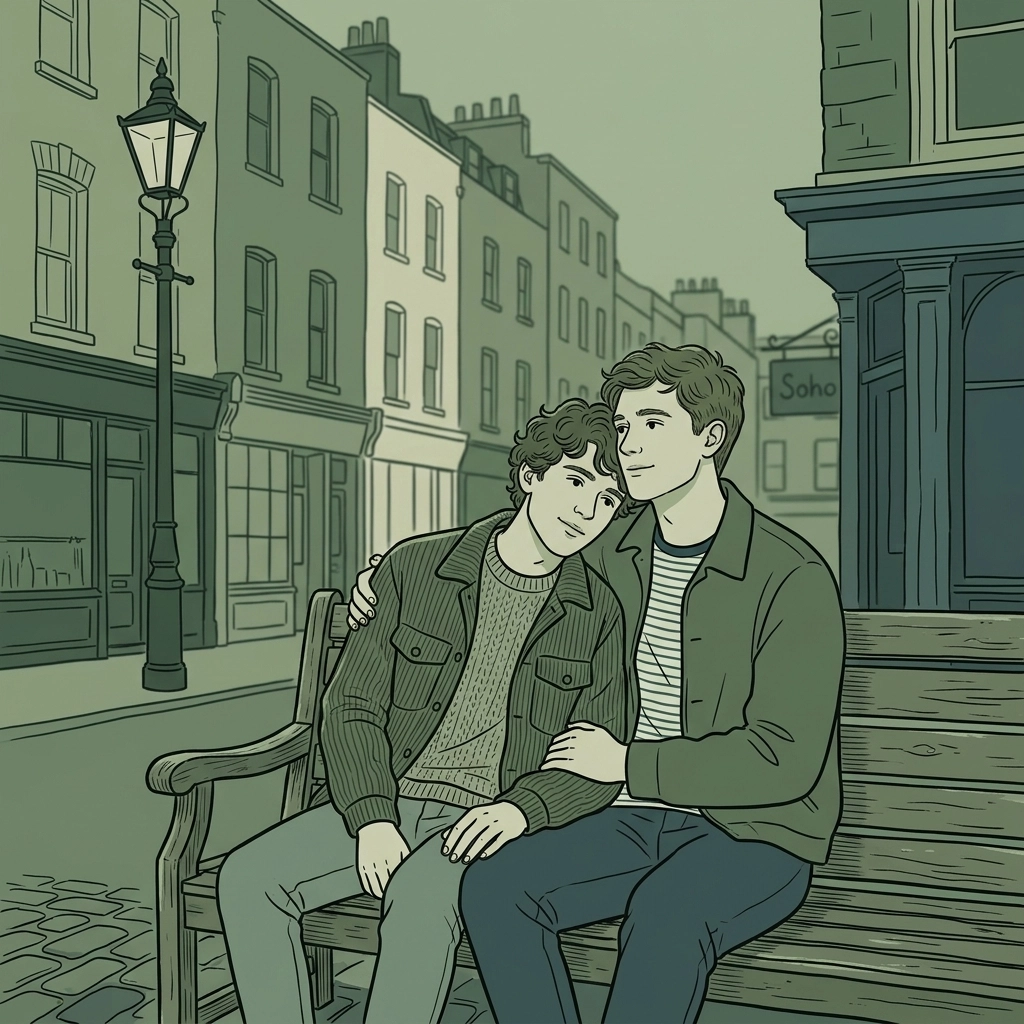
If you’ve ever walked down Old Compton Street on a Friday night, you know that Soho isn’t just a neighborhood in London: it’s a feeling. It’s the neon lights reflecting off rain-slicked pavement, the muffled bass from a basement club, and the sense that, for a few blocks at least, you can be exactly who you are.
But lately, there’s been a lot more chatter about Soho than usual. From walking tours to documentaries and a surge in gay historical romance novels set in its winding alleys, everyone is looking backward. Why? Because Soho’s queer history is under threat, and in fighting to remember it, we are actually defining what it means to be queer in 2026.
At eBooks by Dick Ferguson, we believe that stories: whether they happened in 1920 or are being written today: are the heartbeat of our community. So, let’s take a stroll through the past and see how it’s shaping our modern identity, from the high-drama world of MM romance to the essential understanding of every letter in the LGBTQ+ acronym.
The Ghost of the Cave of the Golden Calf
Soho has been a "queer space" long before the term even existed. Back in the 1700s, it was home to "molly houses," but things really kicked off in the early 20th century. In 1912, the Cave of the Golden Calf opened its doors. It was underground (literally and figuratively), and it was one of the first places where gay men could interact without the immediate fear of a police baton: though that threat was never far away.
Throughout the decades, Soho became a refuge. While the rest of London was buttoned up and heteronormative, Soho was where you went to find "the others." It’s the setting for some of the most compelling gay fiction because the stakes were always so high. A kiss in a Soho doorway in 1950 could mean a prison sentence, yet men took that risk every single night.
That resilience is part of our modern DNA. When we read MM historical romance, we aren't just looking for a "happily ever after"; we’re looking for the roots of our courage.

A Guide to Understanding Asexuality and Aromanticism for Allies
As our community evolves, Soho’s history reminds us that "queer" has always been a big, messy, beautiful tent. However, being a good ally: and a good member of the community: means constantly learning. One of the most talked-about topics in modern queer circles right now is the visibility of the "A" in LGBTQ+.
To understand why everyone is talking about identity today, we have to look at the spectrums of asexuality and aromanticism.
What is Asexuality?
Asexuality (often shortened to "Ace") is a sexual orientation where a person experiences little to no sexual attraction to others. It’s important to remember that:
- It’s a spectrum: Some people are "Gray-Ace" (experiencing attraction rarely) or "Demisexual" (only feeling attraction after a deep emotional bond).
- It’s not about libido: An ace person can have a high libido but simply doesn't feel that "pull" toward a specific person.
- Ace men exist: In the world of gay novels and MM fiction, we are seeing more "Ace-spec" male leads who find deep, romantic, and fulfilling male/male relationships that don't center on sex.
What is Aromanticism?
Aromanticism (shortened to "Aro") refers to people who experience little to no romantic attraction.
- Aro is not Ace: Someone can be aromantic but still experience sexual attraction, or they can be both (AroAce).
- Squishes over Crushes: Aro people often value "squishes": intense platonic desires for a friendship: just as much as others value romantic partners.
Why does this matter for Soho? Because Soho has always been about breaking the "norm." Just as gay men fought for the right to love who they wanted, the Ace and Aro communities are fighting for the right to define their relationships on their own terms. When we read with pride, we read to understand all our brothers and siblings.
Resilience in the Face of Change: The 1999 Admiral Duncan Bombing
You can't talk about Soho without talking about the Admiral Duncan. In 1999, a neo-Nazi nail bomb targeted the pub, killing three people and injuring dozens. It was a moment meant to shatter the community. Instead, it fused it together.
The image of thousands of people holding candles in Soho Square became a defining moment of modern queer identity. It proved that Soho wasn't just a place to party: it was a home worth defending. This spirit of standing tall against those who wish us gone is a major theme in gay thrillers and gay psychological thrillers. We see our heroes facing the darkest parts of humanity and coming out stronger, much like Soho did.

Gentrification: The New Battle for Soho
Today, the threat isn't just bombs or raids; it’s skyrocketing rent and luxury flats. Iconic venues like the Astoria and Madame Jojo’s have vanished, replaced by glass-fronted offices and chain coffee shops.
This is why the conversation about Soho is so loud right now. We are terrified of losing our history. If the physical buildings disappear, do the stories disappear too?
This is where LGBTQ+ ebooks and gay literature come in. By writing and reading stories set in these locations, we are archiving our culture. We are building a "Digital Soho" that no developer can tear down. Whether it’s a steamy MM romance set in a fictionalized version of a famous club or a heartfelt gay fiction piece about a group of friends living in a cramped Soho flat in the 80s, we are keeping the spirit alive.
Why We Continue to Read with Pride
The reason we are all still obsessed with Soho is that it represents the journey from the shadows into the light. It’s the backdrop for the best MM romance because it provides the perfect contrast: the grit of the city versus the tenderness of a private moment between two men.
Modern identity is about honoring that history while making room for new voices. It’s about celebrating the MM historical romance of the 1920s and the gay contemporary romance that explores asexuality in 2026.
If you're looking to dive deeper into these worlds, check out our latest releases at the Read with Pride Store. We specialize in stories that make you feel, think, and: most importantly: see yourself on the page.
Soho might change, the buildings might turn into expensive lofts, but as long as we keep writing and reading our truth, the heart of the neighborhood remains exactly where it belongs: with us.

Follow us on social media for more queer history, book recs, and updates!
- Instagram: https://www.instagram.com/dickfergusonwriter
- X (Twitter): https://www.x.com/DickFergus94902
- Facebook: https://www.facebook.com/profile.php?id=61572869844598
- Website: www.readwithpride.com
Three Blog Post Options for Dick:
- The Evolution of the 'Bodyguard Romance' Trope in MM Fiction: Exploring why we love protective heroes and the best new releases in this category.
- Beyond the Binary: Exploring Non-Binary Characters in Modern Gay Novels: A look at how contemporary authors are expanding the definition of M/M relationships.
- From Secret Letters to Encrypted Apps: How Gay Spy Romance Has Changed Since the Cold War: A deep dive into the high-stakes world of LGBTQ+ thrillers.
#ReadWithPride #LGBTQBooks #MMRomance #GayHistory #SohoQueer #GayFiction #AsexualAwareness #AromanticSpectrum #QueerLiterature #GayLoveStories #MMHistoricalRomance #GayContemporaryRomance

Leave a Reply
You must be logged in to post a comment.