

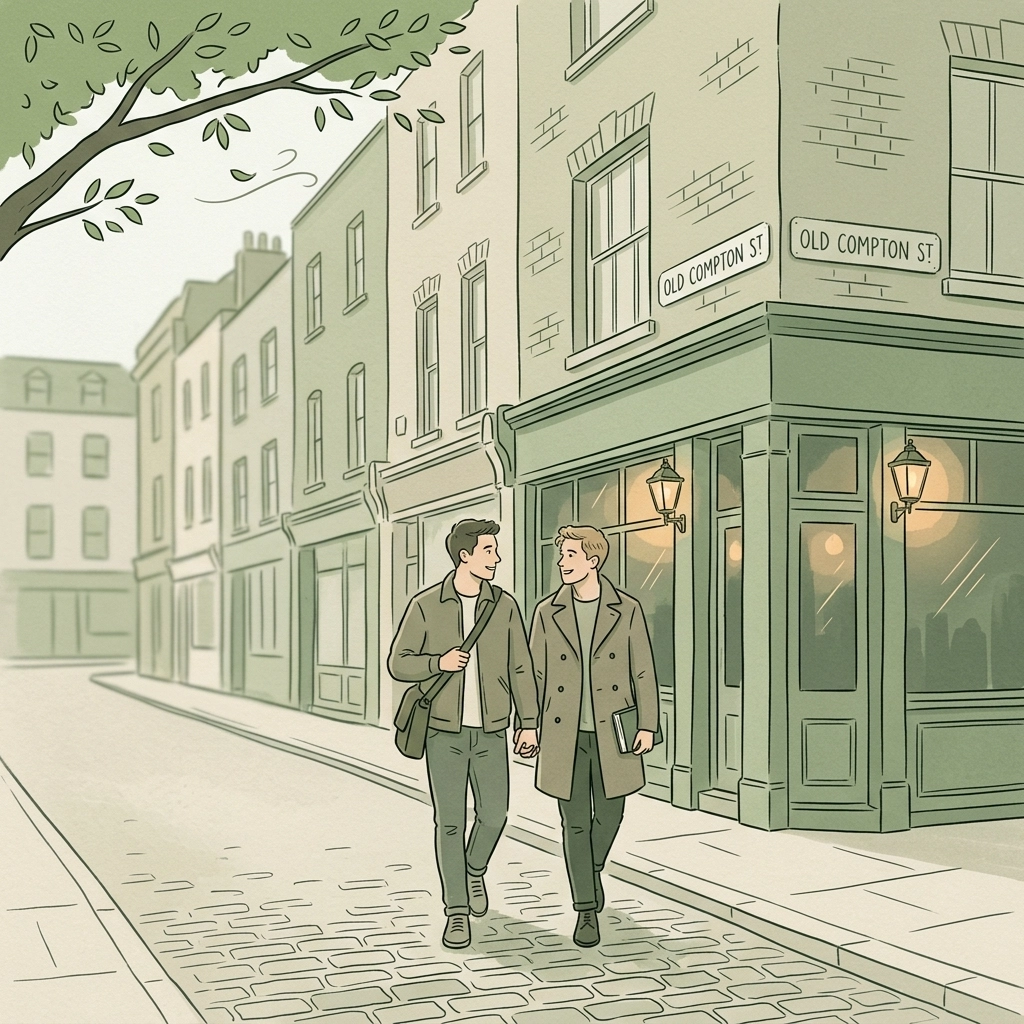
If you’ve ever walked down Old Compton Street on a Friday night, you’ve felt it. That electric buzz, the neon lights reflecting off the pavement, and the sense that you are standing in the middle of something truly special. Soho isn't just a district in London; for the LGBTQ+ community, it is a sanctuary, a battlefield, and a home.
At eBooks by Dick Ferguson, we are obsessed with stories: especially the ones that involve resilience, passion, and the long road to finding love. Whether you’re a fan of MM romance or deep-dive gay historical romance, understanding the soil these stories grow from is vital. Soho’s queer history is as layered as a classic MM novel, filled with drama, secret meetings, and ultimate triumph.
Here are 10 things you absolutely need to know about the queer heart of London.
1. It All Started with the Molly Houses in the 1720s
Long before the rainbow flags were flying, the queer scene in Soho was underground, literally. In the 1720s, London saw the rise of "molly houses." These were private rooms in taverns or private homes where men could meet, socialize, and express their identity in a world that was aggressively hostile.
Soho’s reputation for being "different" started here. These houses weren't just about romance; they were about community. Men from all walks of life would gather to dance, drink, and even hold mock weddings. It’s the kind of high-stakes, secret-society atmosphere that makes for an incredible gay thriller or M/M historical romance.
2. Geography Created the Opportunity
Why Soho? Why not Mayfair or Westminster? It comes down to a bit of a historical accident. After the Great Fire of London and a devastating cholera outbreak, the wealthy elite fled the area. Landlords were desperate and dropped rents to floor-level prices.
This vacuum was filled by the people the rest of society didn't want: artists, immigrants, and the LGBTQ+ community. This "outsider" status turned Soho into a bohemian melting pot. It became a place where you could disappear into the crowd, a theme we see often in gay contemporary romance where characters find freedom in the urban sprawl.
3. Oscar Wilde and the Kettners Connection
You can’t talk about gay literature or Soho without mentioning the G.O.A.T., Oscar Wilde. In the late 19th century, Wilde was a frequent visitor to Soho’s finest establishments. One of his favorite haunts was Kettners, a restaurant on Romilly Street.
During his infamous trials in 1895, it was revealed that Wilde used Soho as his playground, hosting lavish dinners and meeting young men in the area’s secluded corners. While his story ended in tragedy, his presence in Soho cemented the district as a hub for gay fiction and intellectual queer life. If you love a steamy MM romance with a touch of historical gravity, Wilde’s life is the ultimate blueprint.

4. The Cave of the Golden Calf was a Pioneer
In 1913, Heddon Street became home to what many historians consider the first "gay bar" in the modern sense: The Cave of the Golden Calf. Located in a basement beneath a draper's shop, it was a riot of avant-garde art and late-night revelry.
It was a place "given up to gaiety," providing a rare safe space for queer men and women to mingle with the artistic elite. It set the stage for the nightclub culture that would eventually define the district in the 1980s and 90s.
5. The Shim Sham Club: London’s Miniature Harlem
During the 1930s, Soho was the place to find jazz, and with jazz came a blurring of social lines. The Shim Sham Club was legendary. Described as London’s "miniature Harlem," it was one of the few places where Black and white queer people could socialize freely.
This intersectionality is a huge part of LGBTQ+ fiction today. The Shim Sham Club proved that Soho was always a place of rebellion against the status quo, where the music was loud and the love stories were even louder.
6. Constant Police Pressure and Resistance
It wasn't all glitter and jazz. For much of the 20th century, Soho was under constant surveillance. Police raids were common, and many iconic venues were shut down under the guise of "social control."
However, this pressure only made the community tighter. It forced the creation of private members' clubs like the Colony Room, where the queer elite could drink away from the prying eyes of the law. This era of "forbidden love" is a staple in MM historical romance, highlighting the bravery required just to exist.
7. 1986: The Modern Turning Point
The Soho we recognize today: visible, proud, and loud: really began in 1986. This was the year the Swiss Tavern on Old Compton Street transformed into Comptons. It wasn't a "hidden" bar; it was an explicitly queer venue with large windows, signaling that the community was no longer going to hide in basements.
Following Comptons, other legends like The Village, Halfway II Heaven, and Rupert Street opened their doors. This shift from secret to public is a powerful narrative arc we often explore in our e-book store, where characters finally step into the light.

8. The 90s: Establishing the Gay Capital
By the 1990s, Soho had officially become the "Gay Capital of Europe." Events like the Valentine’s Day "Queer Street" festival turned Old Compton Street into a pedestrianized party zone. This was the era of peak visibility, where gay novels and queer fiction began to hit the mainstream.
It was during this time that Soho became the central hub for LGBTQ+ literature and art, with bookstores and cafes catering specifically to the community.
9. Resilience in the Face of Tragedy: The Admiral Duncan
The history of Soho isn't without its scars. On April 30, 1999, a neo-Nazi nail bomb was detonated at the Admiral Duncan pub. It was a horrific attempt to shatter the heart of the queer community.
But if Soho teaches us anything, it’s resilience. The community didn't run; they stood together. Thousands gathered in Soho Square for vigils, proving that hate couldn't move them. This sense of "found family" and community strength is at the core of the best MM romance stories we publish.
10. A Living Legacy of Activism and Pride
Today, Soho continues to be the epicenter of readwithpride culture. From hosting the first-ever Trans Pride Parade in London in 2019 to the massive annual Pride in London after-parties, the spirit of activism is alive and well.
As a reader of MM contemporary or gay love stories, you are part of this legacy. Every time you read a book that celebrates queer joy, you are honoring the history of places like Soho that fought for the right to tell those stories.
Why Soho Matters to Readers of Gay Fiction
History isn't just about dates; it’s about the people who lived, loved, and fought in these streets. At eBooks by Dick Ferguson, we believe in the power of the gay love story to change hearts and minds. Soho provides the perfect backdrop for our characters to find themselves.
If you're looking for your next read, check out our latest releases including MM historical romance and heartfelt gay fiction that captures this same spirit of London.
Check out our latest M/M release:
Dust and Bone
Don't miss our most personal romance yet:
The King of Spades and Broken Roses
Follow us on social media:
- Instagram: dickfergusonwriter
- X (Twitter): DickFergus94902
- Facebook: Dick Ferguson Writer
- Website: www.readwithpride.com
Ready for more? Here are three blog post options for tomorrow:
- The Evolution of the 'Grumpy x Sunshine' Trope in MM Romance
- 5 Must-Read Gay Historical Novels Set in Victorian London
- Why 'Found Family' is the Most Important Theme in LGBTQ+ Fiction
#LGBTQ #GayHistory #SohoLondon #MMRomance #GayBooks #QueerFiction #ReadWithPride #GayAuthors #MMFiction #LondonQueerHistory #GayLoveStories #MMPost #DickFerguson #ReadingWithPride #GayNovelists #GayLit

Leave a Reply
You must be logged in to post a comment.