

readwithpride.com
Let’s be honest: as much as we love devouring a 400-page MM romance novel while buried under three weighted blankets, there comes a time when the "found family" trope needs to happen in your actual living room, not just on your Kindle. It’s May 2026, and the world is more connected yet somehow lonelier than ever. If you’ve spent the last three weekends debating whether your favorite fictional couple is finally going to admit their feelings or if you should just write the fanfic yourself, it might be time to find some queer hobbies that actually involve other humans.
Building a real-life community isn’t as easy as a "forced proximity" plotline where you’re stuck in a cabin during a snowstorm with a handsome stranger (though, wouldn’t that be the dream?). It takes effort, a bit of grit, and a willingness to step outside your comfort zone. Here at Read with Pride, we’re all about stories, but we’re also about the people who read them.
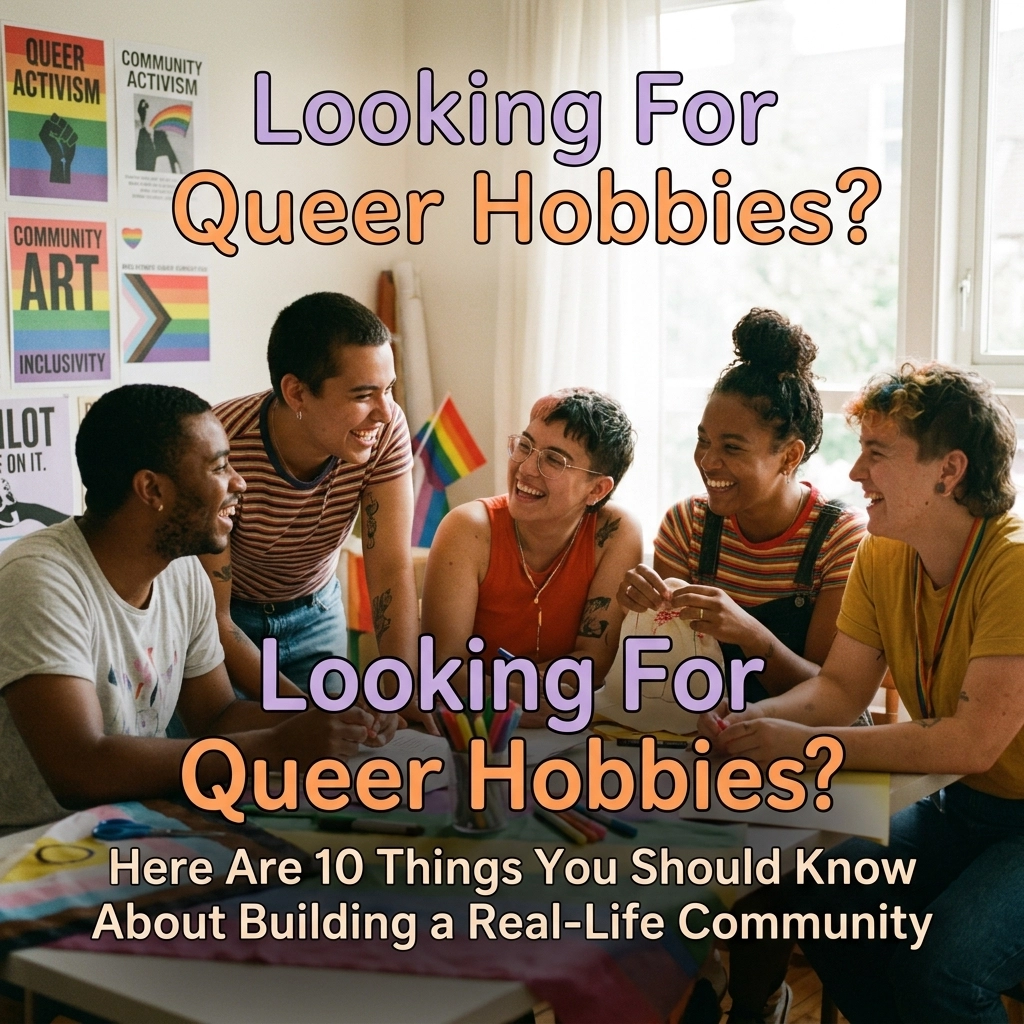
Here are 10 things you should know about building a real-life queer community through hobbies and grassroots organizing.
1. Hobbies are the New Gay Bars
For decades, the "scene" was synonymous with dark rooms, loud bass, and overpriced cocktails. But in 2026, the trend has shifted. Queer joy is being found in the daylight. Whether it’s a queer birdwatching group, a trans-inclusive D&D campaign, or a gay pottery class, hobbies are becoming the primary vehicle for connection. Why? Because having a shared activity takes the pressure off "performing." You’re not just a person looking for friends; you’re a person trying to make a lopsided mug who happens to be looking for friends.
2. The "Slow Burn" of Friendship is Real
We all love a slow burn MM romance, where the tension builds for twenty chapters before the first kiss. Real-life community building is the ultimate slow burn. You won’t find your best friend or your "tribe" at the first meetup. It takes consistent showing up. You have to be the person who returns to the knitting circle three weeks in a row before people start remembering your name and your favorite yarn weight. Don't ghost the group after one awkward interaction; give it time to simmer.

3. Lean Into the "Found Family" Trope
If there’s one thing queer fiction has taught us, it’s that the family you choose is just as valid (if not more so) than the one you were born into. When you start engaging in grassroots organizing or hobby groups, you’re auditioning for your found family. Look for people who share your values, not just your identity. A shared love for gay historical romance is a great start, but shared respect and mutual aid are what keep a community glued together.
4. Grassroots Organizing is Sexier Than You Think
There is something deeply attractive about people who care about things. Community building isn't just about fun and games; it's about organizing. Whether it’s setting up a community fridge, organizing a local pride event, or running a queer book exchange, being a part of something larger than yourself is a massive bonding agent. It’s basically the "enemies to lovers" trope but with local government: you start frustrated with the system and end up falling in love with the people who are helping you change it.
5. Book Clubs are the Ultimate Gateway Hobby
If you’re a regular here at Read with Pride, you know that books are our lifeblood. A gay book club is perhaps the easiest way to bridge the gap between "online lurker" and "community member." Discussing the latest MM contemporary release or debating the merits of a gay fantasy romance allows for deep, personal conversations without the awkward small talk.
If you're looking for recommendations to start your club, check out our product-sitemap1.xml for the latest 2026 releases that are burning up the charts.
6. Embrace the "Grumpy/Sunshine" Dynamic
In every community group, you’re going to have the "Sunshine" person who brings cookies and knows everyone’s birthday, and the "Grumpy" person who just wants to get the business done. Instead of letting these personalities clash, embrace them! A functional community needs both. The Sunshine keeps the vibes high, and the Grumpy makes sure the permits are filed and the bills are paid. It’s a classic trope for a reason: it works.

7. Low-Stimulation Spaces are Essential
Not every queer hobby needs to be high-energy. In fact, many of us are looking for "soft" spaces. "Silent book clubs," where people gather in a park to read their favorite gay novels in companionable silence, are exploding in popularity this year. Building community can be as simple as occupying the same space as other queer people while you work on your separate projects. It’s the "there was only one bed" energy, but it's "there was only one park bench."
8. Navigating the "Miscommunication" Act
In MM romance books, a simple conversation could usually solve the 80,000-word conflict. Real-life community is the same. People will flake, feelings will be hurt, and groups will have drama. The key to building a real community is learning how to navigate conflict without burning the whole thing down. Be the person who communicates clearly. If a hobby group isn’t meeting your needs, talk about it before you walk away.
9. Digital Tools are the Map, Not the Destination
While we love a good Discord server or an Instagram group, these should be tools to get you into the same physical room. Use social media to find your niche: search for keywords like "popular gay books" or "queer hiking [your city]": but make the leap to "real life" as soon as it feels safe. The magic happens when you’re sharing a pizza after a long day of trail clearing or arguing over the ending of a gay thriller in a coffee shop.
10. You Might Have to Be the Protagonist
If you can’t find the community you’re looking for, you might have to be the one to start it. It’s intimidating, we know. You feel like the side character who shouldn't be leading the quest. But every great gay love story starts with someone taking a risk. Post that flyer in the local bookstore. Start that meetup group for steamy MM romance fans. If you build it, the other queer nerds will come.

Why Community Matters in 2026
We’ve seen a lot of changes in the LGBTQ+ publishing world recently, with more diverse voices than ever hitting the shelves. But those voices need a place to be heard and celebrated in person. Whether you’re into gay adventure romance or you’re a connoisseur of gay psychological thrillers, there is a community out there waiting for you.
At Read with Pride, we want to see you thriving both on and off the page. Community building is a radical act of self-love and resistance. It’s how we ensure that the "Pride" in our name isn’t just a slogan, but a lived experience.
So, put down the MM historical romance (just for an hour!), look up your local community calendar, and see what’s happening. Your real-life "happy ever after" might just be one hobby away.
Want more queer content and bookish updates?
Stay connected with the Read with Pride community across the web:
- Visit our Blog for more tips on the queer lifestyle.
- Browse our latest E-books.
- Follow us on Facebook.
- Get snappy updates on X (formerly Twitter).
- See what we’re reading on Instagram.
#QueerHobbies #CommunityBuilding #ReadWithPride #MMRomance #LGBTQ2026 #FoundFamily #GayBookClub #GayRomanceBooks #QueerJoy

Leave a Reply
You must be logged in to post a comment.