

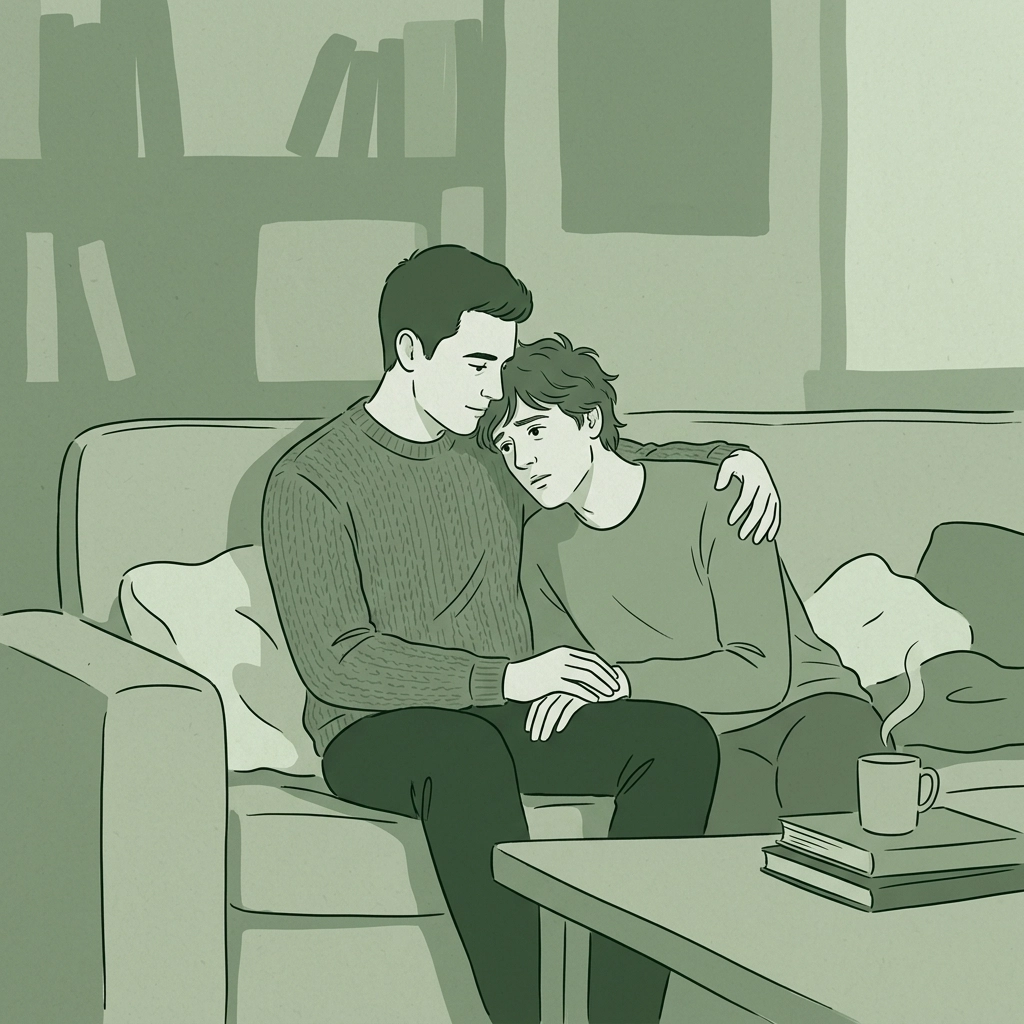
There is a specific kind of silence that exists between two men who love each other but are drowning in what they cannot say. It’s a heavy, humid thing: like the air in a small rural town before a storm breaks, or the cold, metallic hum of a midnight subway train in a city that doesn't know your name. This is the heart of high-angst MM romance. It is the ache in the chest, the grit in the soul, and the desperate hope that somehow, through the wreckage, two people can find a way to be whole together.
But sometimes, as writers, we build the wreckage, we pile on the sorrow, and yet the reader remains dry-eyed. We wonder why the "high-angst" label isn't translating into that visceral, gut-punching connection.
Writing gay fiction that resonates requires more than just making your characters suffer. It requires a map of the human heart. If your emotional journey feels stagnant, it might be because you’ve focused on the bruises rather than the reasons they were sustained. Let’s look at why your high-angst plot might be missing its mark and how to deepen the journey until every word bleeds.
1. The Suffering Lacks a "Why"
In the world of MM novels, pain is often a gateway to intimacy. However, if your protagonist is simply a punching bag for the universe, the reader eventually tunes out. Suffering without purpose is just noise.
To fix this, ensure every emotional blow serves the character’s internal arc. If a character is struggling with rural isolation: the suffocating gaze of a small town where every "hello" feels like an interrogation: that angst must force him to confront his fear of being seen. The "why" is the bridge between a tragedy and a story.
2. The Ghost of the City vs. The Silence of the Field
One of the most profound ways to heighten angst is through the contrast of environment. A high-angst plot often fails because it exists in a vacuum.
Imagine a character moving from the frantic, anonymous buzz of London to the raw, exposed hills of the Lake District. In the city, he could hide his broken heart in the crowd; in the country, the silence is a mirror. Use your setting to reflect the internal struggle. If your urban-dwelling hero is lonely, make the skyscrapers feel like bars on a cage. If your rural hero is trapped, make the horizon feel like an impossible promise.

3. Your Antagonist is a Shadow, Not a Mirror
In gay romance books, the antagonist isn't always a villain in a black cape. Often, it’s a father’s legacy, a former lover’s ghost, or the character’s own internalized shame. If your "bad guy" is just there to cause trouble, the angst feels hollow.
The most effective antagonists are those that represent the protagonist's deepest fear. If your hero fears abandonment, the person standing in his way should be someone who forces him to choose between staying and running. The conflict should be a mirror reflecting his own wounds.
4. The "Numbing" Effect of Constant Trauma
If every chapter is a ten on the trauma scale, your reader will eventually go numb. High-angst requires the "quiet" to make the "loud" hurt.
Deepen the journey by finding the small, domestic moments. It’s the way a man fingers the edge of a chipped coffee mug while watching his partner sleep, knowing he might have to leave by dawn. It’s the brief touch of fingers in a crowded room that feels like an electric shock. These moments of reprieve make the eventual heartbreak feel earned.
5. Subtext is Swallowed by Dialogue
In emotional MM books, what isn't said is often more important than what is. If your characters are constantly explaining their trauma to each other, you’ve robbed the reader of the experience of discovery.
Let the angst live in the subtext. Let it live in the way a man avoids eye contact, or how he over-pours a drink when a certain name is mentioned. The "unspoken" creates a pressure cooker environment that keeps the reader turning pages, desperate for the lid to blow.
6. The Milestone is Missing Its Weight
Relationship milestones in high-angst plots: the first "I love you," the first time they share a bed without the armor of clothes: should feel like crossing a minefield.
If these moments happen too easily, the angst was never real. To deepen the journey, make the milestones cost something. A confession of love shouldn't just be sweet; for a man who has been burned by his community or his family, it should be terrifying. It should feel like a surrender.

7. Sensory Details are Sacrificed for Plot
Angst isn't a plot point; it's a sensory experience. If you’re writing gay love stories and you’re not describing the scent of rain on hot asphalt or the way a throat tightens until it’s hard to swallow, you’re missing the heartbeat of the genre.
Write the body. How does grief feel in the stomach? How does desire feel when it’s wrapped in guilt? Use sensory details to ground the reader in the character's skin.
8. The Internal Struggle is Static
A character who is just "sad" for 300 pages is a stagnant character. High-angst plots fail when the internal struggle doesn't evolve.
The journey should move from denial to confrontation to (hopefully) some form of healing. Even if the ending is tragic, the character must have traveled a path. If he starts the book afraid and ends it afraid without ever having challenged that fear, the reader will feel cheated.
9. Ignoring the Nuance of the Queer Experience
LGBTQ+ fiction carries a specific weight. The angst often stems from the friction between who we are and what the world expects us to be.
If your plot feels generic, lean into the nuances of MM contemporary life. The specific anxiety of a first date in a place where you aren't sure if it's safe to hold hands; the complicated relationship with a "chosen family" versus a biological one. These are the threads that make your high-angst plot feel authentic and deeply personal.
10. The Resolution Doesn't Match the Cost
The biggest mistake in high-angst writing is a "easy" fix. If you’ve spent the whole book tearing your characters apart, you cannot sew them back together with a single conversation in the final chapter.
The resolution must be earned through sacrifice and change. The characters don't have to be "fixed": they just have to be different. They have to have found a way to carry their scars together.
As you craft these stories of gay novels and heartfelt gay fiction, remember that you are a steward of the reader's heart. They have come to you to feel something profound. Don't just give them pain; give them the journey through it.
If you’re looking for stories that dive deep into these emotional trenches, where the rural wind howls and the city lights flicker over broken hearts, visit my collection. Each story is a labor of love, designed to stay with you long after the final page is turned.
Explore the emotional depths here: https://readwithpride.com/e-book-store/dickfergusonwriter/
Follow us on social media:
- Instagram: https://www.instagram.com/dickfergusonwriter
- X (Twitter): https://www.x.com/DickFergus94902
- Facebook: https://www.facebook.com/profile.php?id=61572869844598
- Website: www.readwithpride.com
Proactive Blog Post Options for Dick:
- The Architecture of Longing: How to write pining that feels like a physical ache in MM romance.
- Concrete Jungles vs. Whispering Woods: Using setting as a secondary character in queer thrillers.
- The First Scar: Why childhood wounds are the secret weapon of high-angst gay fiction.
#ReadWithPride #MMRomance #GayFiction #HighAngst #WritingTips #LGBTQBooks #GayLiterature #EmotionalJourney #MMSuspense #DickFergusonWriter

Leave a Reply
You must be logged in to post a comment.