

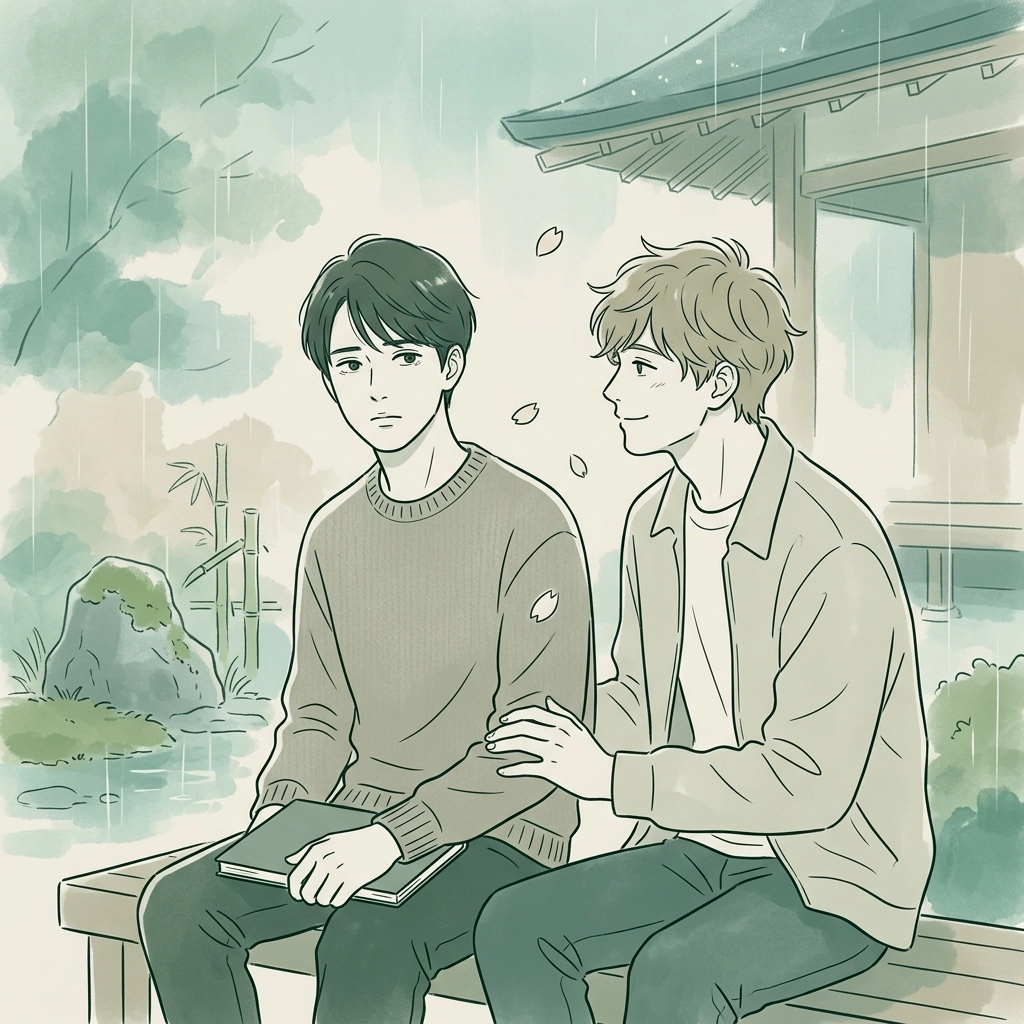
The rain in Shinjuku doesn’t just fall; it dissolves. It turns the neon signs of Kabukicho into smeared watercolors of electric blue and violent pink, blurring the edges of the salarymen rushing toward the station. Standing beneath the eaves of a narrow ramen shop, Kaito adjusted his umbrella, the silk of his suit jacket damp against his skin. Beside him stood Elias, an American writer who looked at the world as if it were a puzzle he could solve if only he stared long enough.
They were standing inches apart, yet a chasm of cultural history and personal fear lay between them. This is the landscape of the invisible war: the conflict between Honne and Tatemae.
In the world of Japanese social etiquette, these aren't just words; they are the pillars of existence. Tatemae, literally "built in front": is the facade, the mask of harmony we wear to keep the gears of society turning. Honne is the "true sound," the raw, unfiltered vibration of the heart that we rarely let anyone hear. For those of us navigating MM romance and the complexities of gay love stories, this duality isn't just a cultural curiosity. It is the very essence of the internal struggle we face every time we decide whether to hold a hand in public or pull away.
The Architecture of the Mask
Tatemae is a beautiful thing, in its own tragic way. It is the polite "I’ll see if I can make it" when you know your heart is too heavy to leave the house. It is the smile Kaito gave his mother when she asked about his marriage prospects, the one that never reached his eyes but kept the family peace intact. It is a shield.
In our gay fiction, we often see characters who have mastered the art of the "built front." They live in the urban sprawl, where the anonymity of the crowd provides a different kind of mask. Elias watched Kaito, noticing how his jaw tightened even as he spoke with a voice like polished glass.
"You're doing it again," Elias whispered, his voice barely audible over the hiss of the rain.
"Doing what?" Kaito replied, his Tatemae perfect, his expression a masterpiece of neutral grace.
"Hiding. I can see the war behind your eyes, Kaito. I can see the Honne trying to break through."

The True Sound: The Agony of Honne
To speak one's Honne is to be naked. It is to risk the harmony of the group for the sake of the individual truth. In the context of queer fiction and gay novels, the transition from Tatemae to Honne is often the most harrowing relationship milestone a character can face. It is the moment the "proper" social behavior collapses, and the raw, aching need for connection takes over.
For Kaito, his Honne sounded like a scream muffled by layers of velvet. It was the realization that he didn't just want Elias’s company; he wanted his soul. He wanted a life that wasn't "built in front" of a lie. But in a society that prizes the collective over the self, the weight of that truth can feel like a mountain.
This is the central theme of so much heartfelt gay fiction. We live in the tension. We navigate the urban/rural contrasts: the city where you can hide in plain sight, and the rural villages where the Tatemae is so thick it feels like a physical wall.
If you’ve ever felt that disconnect between what you say and what you feel, you might find a reflection of your own journey in our collection of LGBTQ+ ebooks. Stories like these explore the sensory details of longing: the smell of rain on hot asphalt, the specific coldness of a bed when the person you love is lying right next to you but feels a thousand miles away. You can explore these deeply emotional narratives at our Read with Pride store.
The Silent Milestone
There is a specific kind of milestone in a relationship that doesn’t involve anniversaries or rings. It’s the moment the Tatemae cracks.
In the heat of a Tokyo summer, or the biting chill of a northern winter, that crack can happen anywhere. For Kaito and Elias, it happened in a tiny, cramped apartment where the only sound was the hum of the refrigerator.
"I am tired of being polite," Kaito finally said. The glass had broken. His voice was no longer polished; it was jagged. This was his Honne. "I am tired of being the man my father wants, and the employee my boss expects. I am tired of being a ghost in my own life."
This is the "Invisible War" rendered visible. It is the moment of high angst that defines the best MM romance. It’s not just about the external obstacles; it’s about the internal struggle to be seen for who we actually are.

Urban Isolation and the Search for Meaning
Living in a metropolis like Tokyo or London, the pressure to maintain Tatemae is immense. We are surrounded by millions, yet we are encouraged to keep our "true sounds" to ourselves. We become experts at the "white lie," the social lubricant that prevents friction but also prevents true intimacy.
In my writing, I often focus on these sensory details: the way a flickering fluorescent light in an office can feel like a heartbeat, or how the silence between two men in a crowded elevator can be louder than a shout. This is the world of gay contemporary romance, where the stakes aren't always life and death, but they are always about the soul.
For those looking for a deeper dive into these themes, especially within the context of the beautiful, complex backdrop of Japan, I highly recommend checking out Blossoms and Reflections: A Journey Through Japan's Springtime Beauty. It captures that delicate balance between the beauty we show the world and the reflections we keep for ourselves.
Why We Write the War
As an author for eBooks by Dick Ferguson, I believe we write about the conflict between Honne and Tatemae because it is universal. Every person, regardless of their orientation, knows what it feels like to wear a mask. But for the LGBTQ+ community, that mask is often a survival mechanism.
Our MM novels and gay love stories serve as a sanctuary where the Honne can finally be heard. We create characters who fight that invisible war so that the reader knows they aren't fighting it alone. Whether it’s a gay psychological thriller where secrets are the primary weapon, or a gay historical romance where the Tatemae was mandated by law, the core remains the same: the human heart’s desperate need to be known.

Finding Your True Sound
If you are currently navigating your own invisible war, remember that the "built front" is only a structure. It can be dismantled. It can be renovated. It can be left behind.
In our gay book club community and through our gay book recommendations, we strive to highlight stories that don't shy away from the messy, unpolished truth of the Honne. We look for the top LGBTQ+ books that prioritize character depth and internal struggle over easy answers.
The journey from the urban mask to the rural truth: or simply from the front door to the heart: is the most important journey any of us will ever take.
Follow the Journey
At Read with Pride, we are more than just a publisher; we are a home for the emotionally invested reader. We invite you to explore our gay literature and find the stories that speak to your "true sound."
Don't forget to visit our store for the latest new gay releases and 2026 gay books: https://readwithpride.com/e-book-store/dickfergusonwriter/
Follow us on social media for more insights into the writer's craft and the queer experience:
- Instagram: https://www.instagram.com/dickfergusonwriter
- X (Twitter): https://www.x.com/DickFergus94902
- Facebook: https://www.facebook.com/profile.php?id=61572869844598
- Website: www.readwithpride.com
#HonneVsTatemae #MMRomance #GayFiction #LGBTQReads #DickFerguson #ReadWithPride #GayLoveStories #InternalStruggle #QueerLiterature #GayBooks2026 #HighAngst #RelationshipMilestones
Proactive Blog Post Options for Tomorrow:
- The Geometry of Longing: Why We Are Drawn to the 'Forbidden' in MM Romance (Focusing on the psychology of attraction and high-stakes emotional tropes).
- Midnight in Kyoto: The Niche Magic of the Gion Matsuri for the Lonely Heart (Focusing on Niche Events and Urban/Rural Contrast).
- The Bodyguard’s Silence: Decoding the Unspoken Language of Protection and Love (Targeting "bodyguard romance" keywords and SEO tropes).

Leave a Reply
You must be logged in to post a comment.