

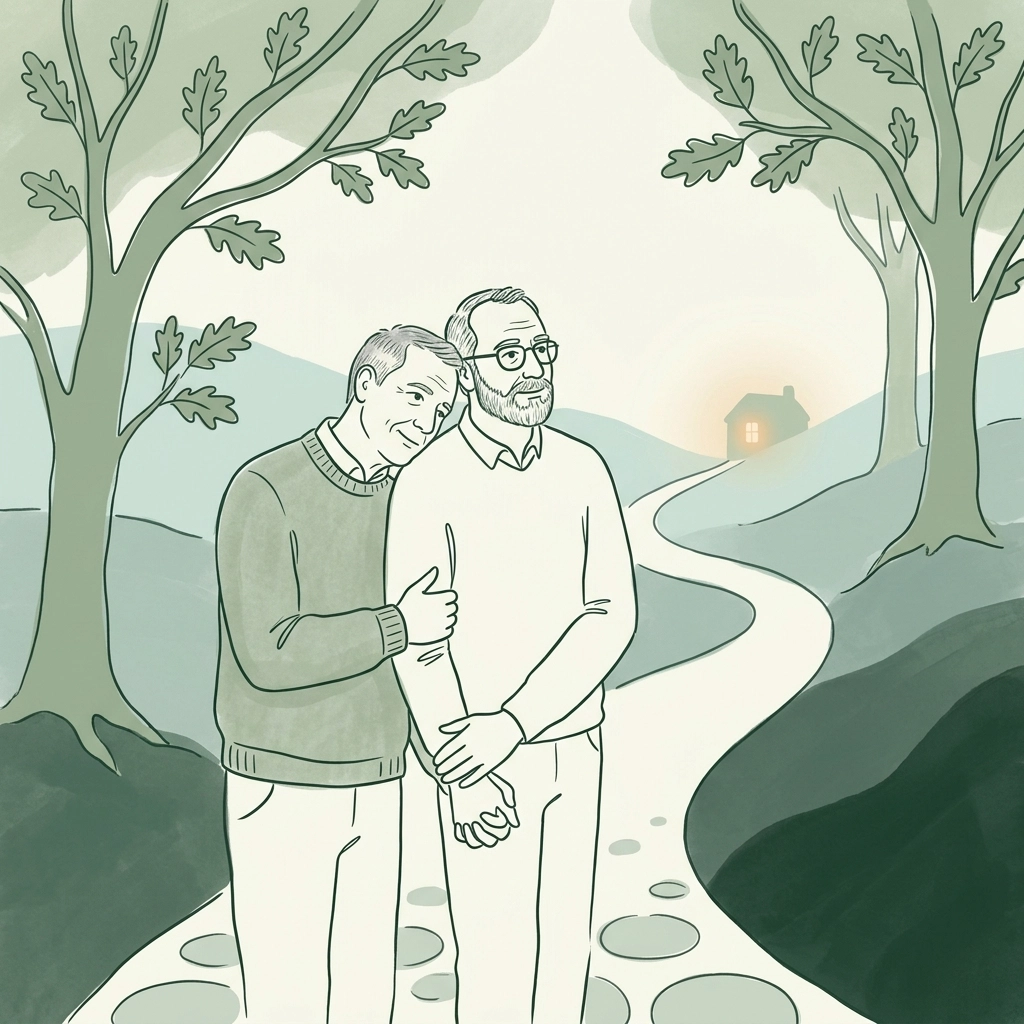
Coming out is often portrayed as a rite of passage for the young: a whirlwind of teenage angst or college-aged self-discovery. But the reality is that for many gay and bisexual men, the journey toward authenticity doesn’t even begin until the "second half" of life. Whether you are 40, 60, or 80, the decision to step into your truth is one of the most courageous things a man can do.
At eBooks by Dick Ferguson, we celebrate these stories. Our MM romance and queer fiction often touch on the deep, emotional complexities of men finding themselves later in life. Yet, despite the growing visibility of "late bloomers," several persistent myths still keep men in the closet long after they’ve realized who they truly are.
Today, we’re debunking seven of the biggest myths about coming out later in life and exploring the truth about finding the courage to live out loud.
Myth 1: It’s "Too Late" to Start Over
This is perhaps the most common fear. You might think, "I’ve spent forty years building this life. I have a career, maybe a family, and a reputation. It’s too late to change the narrative now."
The Truth: It is never too late to be who you are. The idea that there is an expiration date on authenticity is a lie. Every day you spend living as your true self is worth more than a lifetime spent in a shadow. Many men find that coming out in their 50s or 60s brings a sense of peace they never thought possible. Your "new" life doesn't delete your old one; it finally allows you to experience it fully. In the world of gay literature, some of the most moving gay love stories focus on "silver foxes" who finally find the partner they’ve waited decades for.

Myth 2: Your Identity is "Less Valid" Because it Took Time
There’s a strange phenomenon in the LGBTQ+ community where people sometimes feel like they have to "prove" their queerness. If you didn’t know you were gay when you were five, or if you didn’t come out during the "Rainbow Revolution," you might feel like an imposter.
The Truth: Your timing is your own. Everyone’s journey is influenced by their upbringing, their era, and their personal safety. Not knowing: or not being able to acknowledge it: doesn’t make you "less gay." Whether you realized it last week or have been suppressing it for thirty years, your identity is valid. M/M books often explore this exact theme of discovery; just because the light bulb took a while to flicker on doesn't mean the light isn't real.
Myth 3: You’ve "Wasted" Your Whole Life
When men come out later, they often experience a period of intense grief. They look back at the decades they spent in the closet and feel like those years were wasted or that they were living a lie.
The Truth: Those years weren't a waste; they were the foundation of who you are today. You were surviving, growing, and navigating a world that wasn't always kind to men like us. While it’s okay to grieve the experiences you didn’t have in your 20s, don't let that grief overshadow the fact that you are here now. You didn't "lie": you protected yourself until you were ready. Our emotional MM books often delve into this high-angst reflection, showing that the strength gained during those "hidden" years is what makes the eventual discovery so powerful.
Myth 4: You’ll Be an Outcast in the Gay Community
There’s a myth that the gay scene is only for the young, the gym-obsessed, and the club-goers. If you’re coming out at 50, you might worry that there isn't a place for you.
The Truth: The LGBTQ+ community is vast and diverse. While the media loves to focus on youth culture, there is a massive, thriving community of older gay and bisexual men. From gay book clubs to specialized social groups, there are countless men who share your life experience. In fact, many younger men in the community look up to those coming out later in life as symbols of resilience. You aren't losing a social circle; you’re finally finding the one where you actually fit.

Myth 5: You’ll Have to "Act Your Age" Immediately
When men finally come out, they often go through what we call a "Second Adolescence." You might want to buy the clothes you never wore, listen to the music you missed, or date with the awkward enthusiasm of a teenager. Some people might tell you to "act your age."
The Truth: Second adolescence is a real, healthy, and necessary phase. If you didn't get to explore your identity at 16, your brain is going to want to do it now. It’s okay to be a "newbie" at 45. It’s okay to make "rookie mistakes" in dating. MM contemporary romances often highlight this "fish out of water" feeling, and honestly, it’s one of the most charming and relatable tropes in gay fiction. Embrace the learning curve!
Myth 6: You Have to Have All the Answers Right Now
When you tell someone you’re gay or bisexual, they often start asking questions: "When did you know?" "Are you going to change your name?" "Are you dating yet?" This can create a pressure to have a perfectly curated "Gay Life" immediately.
The Truth: Coming out is a process, not a singular event. You don’t need to know exactly how your life will look in five years. You don’t even need to know exactly what labels you prefer yet. You are allowed to explore. You are allowed to change your mind. Discovery is a marathon, not a sprint. This is a common theme in M/M fiction, where the journey of self-actualization is just as important as the "Happily Ever After."
Myth 7: You Won't Find Romantic Love at Your Age
A huge fear for men coming out later is the idea that they’ve "missed the boat" on romantic love. They worry that they are too old to find a partner or that the gay romance world is only interested in twenty-somethings.
The Truth: Love has no age limit. In fact, many men find that their relationships in later life are more fulfilling because they are built on a foundation of true self-knowledge. When you aren't hiding who you are, you can connect with a partner on a level you never could before. Whether you’re looking for a gay historical romance vibe or a gay contemporary connection, there is someone out there looking for exactly who you are: maturity and all.

Finding the Courage: The Path Forward
So, how do you find the courage to face these myths?
- Pace Yourself: You don't have to tell everyone at once. Start with a trusted friend or a therapist.
- Seek Support: Look for "Late Bloomer" groups online or in person. Hearing other men's stories is the best way to realize you aren't alone.
- Read and Reflect: There is immense power in queer fiction. Reading MM novels about men who have walked your path can provide a "blueprint" for your own journey. Seeing your struggles reflected in gay love stories can validate your feelings and give you the words you need to express yourself.
- Be Kind to Yourself: You are undoing years of social conditioning. Give yourself grace on the days when it feels hard.
At eBooks by Dick Ferguson, we believe that every story matters. Our collection of LGBTQ+ ebooks is designed to provide that sense of community and reflection. If you're looking for stories that dive into the heart of the male experience: the angst, the passion, and the discovery: check out our latest releases in the e-book store.

Living authentically is an act of bravery, especially when you’ve spent a lifetime waiting for the right moment. But remember: the right moment is whenever you decide to step into the light.
Follow us on social media for more stories and updates:
Explore our full collection of MM Romance and Gay Fiction:
Visit the Read with Pride E-Book Store
3 New Blog Post Options for Dick:
- The "Second Adolescence": Navigating Your First Gay Dates in Your 40s and 50s (A deep dive into the practical and emotional side of dating later in life).
- Why "High Angst" MM Romance is Healing for Late Bloomers (Exploring how emotional literature helps us process repressed feelings).
- From "Silver Fox" to Hero: The Rise of Older Protagonists in Gay Fiction (A look at why readers are craving more mature characters in their stories).
#LGBTQ #MMRomance #GayBooks #LateBloomer #GayFiction #ReadWithPride #QueerLiterature #GayLoveStories #ComingOut #MMFiction #DickFerguson

Leave a Reply
You must be logged in to post a comment.