

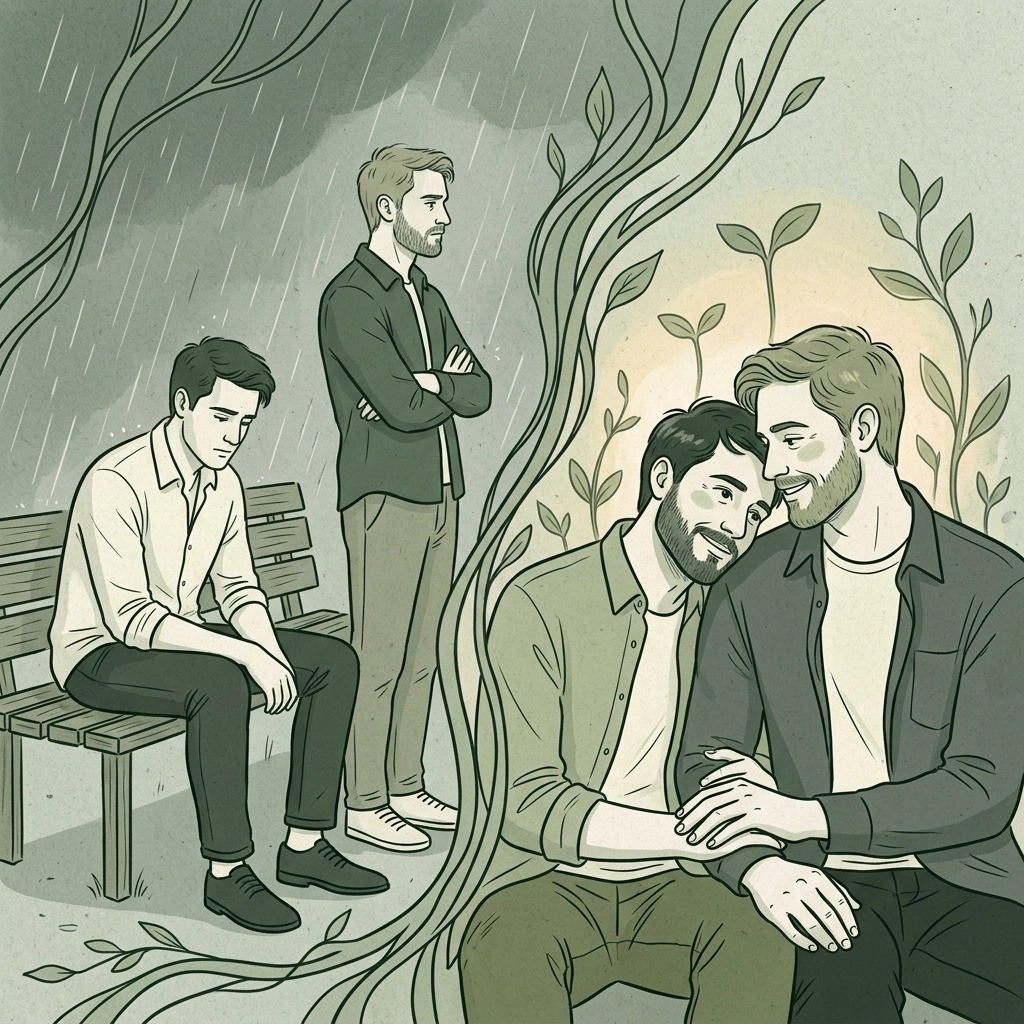
There is a specific kind of silence that exists only in the countryside after a spring rain. It’s not a hollow silence; it’s heavy, saturated with the scent of damp earth and the frantic, sweet pulse of things trying to grow. I’m sitting here, watching the mist roll over the hills, thinking about the two men in my latest work: men who carry the city’s frantic noise in their marrow but find themselves stranded in this quiet, rural expanse.
In gay romance, we often talk about the spark, the initial collision of eyes across a crowded bar or a dusty trail. But what happens when that spark becomes a wildfire? Emotional intensity is a gift, a raw power that can forge an unbreakable bond, yet so many of us treat it like a liability. We stumble. We overcompensate. We pull back just when we should be leaning in.
Whether you are navigating a long-term MM romance or finding your footing in a new connection, here are the seven mistakes we make with our deepest feelings: and how to turn that intensity into a bridge instead of a barrier.
1. Mistaking Suppression for Strength
We are taught, often from the moment we can walk, that a man’s strength is measured by his stillness. We think that by bottling the storm, we are protecting our partner. But in the world of gay fiction, as in life, silence is rarely empty. It’s a pressure cooker.
When you suppress the intensity of your desire or your fear, you aren't being strong; you’re being absent. Your partner doesn’t feel your "calm"; they feel the wall you’ve built. True strength in queer fiction: and in reality: lies in the trembling hand that reaches out even when the heart is screaming.

2. The "Urban Rush" vs. The "Rural Breathe"
I often write about the contrast between the city and the country because it mirrors our internal emotional states. In the city, everything is fast, transactional, and loud. We often bring that "Urban Rush" into our emotions, demanding immediate resolution, immediate passion, immediate clarity.
The mistake is forgetting to let your emotions "breathe." Just as a character in a gay historical romance must wait for the seasons to turn, we must allow our emotional intensity to settle. If you feel a surge of intense jealousy or overwhelming love, don't react at the "city" pace. Take it to the "country." Sit with it. Let the mist clear before you speak.
3. Using Intensity as a Shield
Sometimes, we turn our passion into a weapon. We become so intensely focused on our own "truth" that we use it to drown out our partner’s perspective. This is a common trope in MM contemporary novels: the high-angst hero who believes his pain is the only pain that matters.
When intensity becomes self-centered, it stops being a tool for connection and starts being a shield. If you find yourself saying, "I just feel things more deeply than you," you aren't connecting; you’re ego-tripping. Connection requires two pulses, not one loud drum.
4. The Fear of the "Quiet" Milestones
We celebrate the big moments: the first "I love you," the moving in together, the dramatic airport reunions. But we often stumble during the "quiet" milestones. The third anniversary spent washing dishes. The rainy Tuesday when nothing happens.
The mistake is thinking that if the intensity isn't "loud," it isn't there. We chase the high of the drama because we don't know how to handle the profound, low-frequency hum of true intimacy. In my book, The King of Spades and Broken Roses, the characters have to learn that the most intense moments aren't always the ones filled with shouting or sex; they are the moments of shared, heavy silence.

5. Misinterpreting Physical Heat for Emotional Depth
This is a trap many of us fall into, especially in steamy MM romance. We think that because the physical connection is explosive, the emotional connection must be equally mature.
Intensity in the bedroom is a beautiful language, but it’s only one dialect. The mistake is using sex to skip the hard work of emotional vulnerability. You can’t fuck your way into a soul-deep connection, though many of my characters certainly try. Channel that physical intensity back into your words. Tell him why you’re afraid. Tell him what you saw in him that made you stay.
6. Judging Your Own "Too Much-ness"
I hear this from readers all the time: "I’m just too much. I’m too emotional, too intense, too needy."
When you judge your intensity, you bifurcate yourself. You present a "sanitized" version of yourself to your partner while the "real" you shivers in the dark. This creates a fundamental disconnect. Your "too much-ness" is often where your greatest capacity for love lives. In Dust and Bone, the protagonist's intensity is what saves him, but only after he stops apologizing for it. Stop apologizing for the size of your heart.
7. Forgetting the "Why" Behind the Fire
Why do you feel things so deeply? Is it a fear of abandonment? A desperate need to be seen? A profound gratitude for finally finding a man who looks at you like you’re the only thing in the room?
The mistake is sharing the intensity without sharing the reason. If you are angry, or ecstatic, or mourning, and you don't give your partner the "map" to that feeling, they are just standing in the middle of your storm without an umbrella. Channeling intensity into connection means being brave enough to explain the source of the fire.

How to Channel Your Deepest Desires
So, how do we fix these mistakes? How do we take that raw, LGBTQ+ fiction energy and turn it into a lasting gay love story?
- Practice Emotional Transcription: When you feel an intense emotion, try to describe it using sensory details. Instead of "I'm sad," try "I feel like the tide is going out and I'm stuck in the mud." Share these images with your partner.
- The 10-Breath Rule: Before reacting to an intense trigger, take ten breaths. Imagine you are moving from the city street to a quiet garden in Japan’s springtime.
- Validate the Intensity, Question the Narrative: Tell yourself, "It is okay that I feel this strongly, but is the story I'm telling myself about why I feel this way actually true?"
- Invite Him In: Instead of letting your intensity push him away, use it as an invitation. "I'm feeling very overwhelmed right now, and I need you to just hold my hand while I figure out why."
Emotional intensity isn't a flaw to be corrected; it’s the fuel for the most beautiful MM novels ever written: and the most beautiful lives ever lived. It’s the difference between a sketch and a masterpiece.
As the sun sets over my quiet rural retreat, I’m reminded that even the most intense storms eventually nourish the ground. Let your intensity nourish your relationship. Don't be afraid of the fire; just learn how to share the warmth.
Explore more stories of deep, intense connection in our eBook store. Whether you're looking for gay thriller or heartfelt gay fiction, we have the stories that speak to your soul.
Follow us on social media for more insights into the heart of gay literature:
- Instagram: https://www.instagram.com/dickfergusonwriter
- X (Twitter): https://www.x.com/DickFergus94902
- Facebook: https://www.facebook.com/profile.php?id=61572869844598
- Website: www.readwithpride.com
#MMRomance #GayFiction #LGBTQBooks #ReadWithPride #GayLoveStories #EmotionalIntensity #GayAuthors #QueerLiterature #DickFerguson #MMBooks
Penny’s Daily Proactive Suggestions for Dick:
- Topic Idea 1: "The Architecture of a First Kiss: Why the Setting Matters More Than the Lips" (Focusing on Urban/Rural Contrasts in key romantic milestones).
- Topic Idea 2: "From Rivals to Refuge: Decoding the 'Enemies to Lovers' Trope in MM Psychological Thrillers."
- Topic Idea 3: "The Forgotten History of Queer Rural Life: Finding Love in the Margins" (A look at gay historical romance inspirations).

Leave a Reply
You must be logged in to post a comment.