

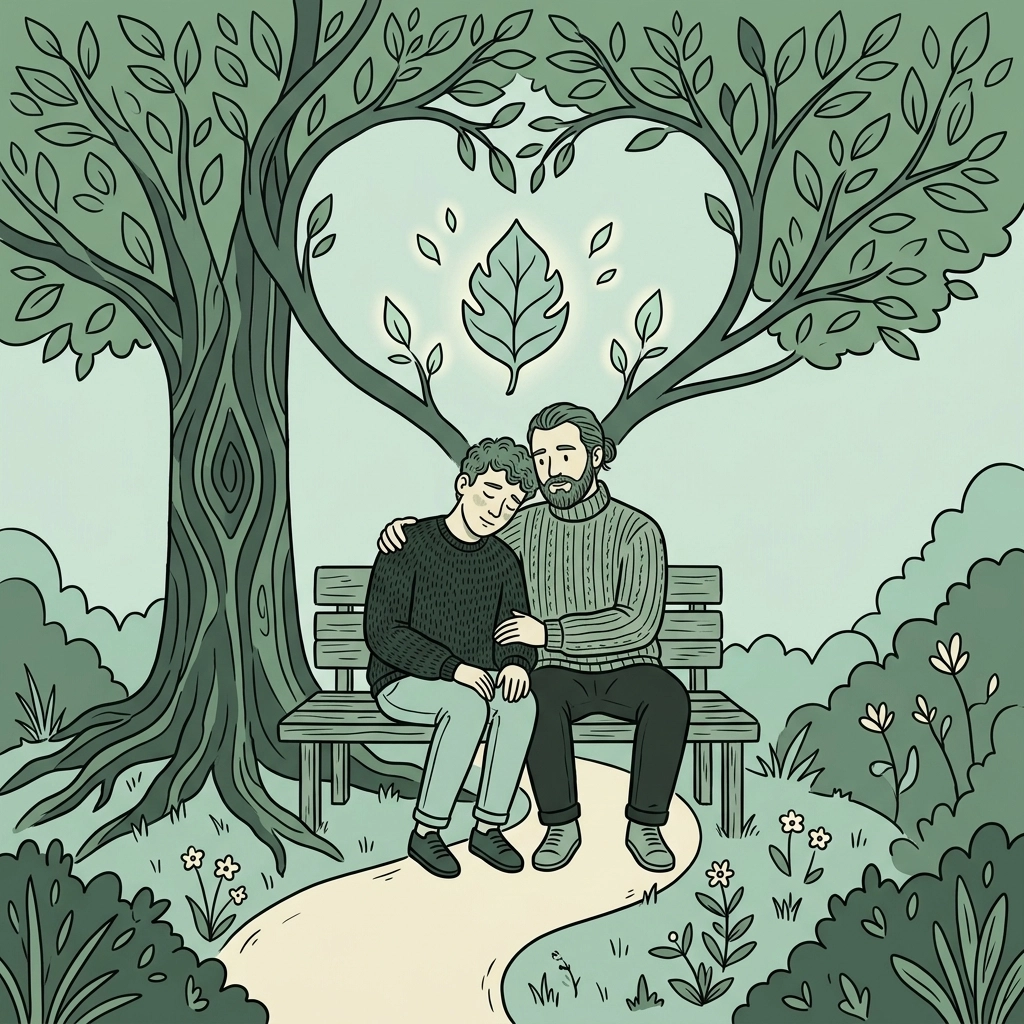
There is a specific kind of silence that settles over a house at three in the morning: a silence that doesn’t just sit there, but breathes. It’s the sound of a heart trying to put itself back together after a fracture you didn’t see coming. In my years of writing MM romance and exploring the jagged edges of the human soul, I’ve learned that emotional growth isn’t a soft, gauzy transition. It’s a riot. It’s a messy, bone-deep reconstruction of who you are.
When we dive into the depths of our own internal struggles, we often expect to emerge like a polished stone from a river. But the truth of queer fiction and real life is that we often emerge dripping, shivering, and carrying a few new scars. In the stories I tell: like the haunting journey through the shadows of the soul in Dust and Bone: I see characters stumble through the same pitfalls we all do.
We try to grow, but we do it with clenched fists. We try to heal, but we use the wrong tools. If you find yourself in a season of intense emotional growth, you might be making these seven mistakes that keep your heart in the dark.
1. Treating Your Emotions Like a Broken Sink
The most common mistake I see is the desperate urge to "fix" what you feel. You wake up with a chest tight with anxiety, or a lingering sadness that tastes like copper, and your first instinct is to ask: How do I make this stop? What’s the hack?
We treat our feelings like a leaky pipe that needs a wrench. But emotions aren't problems to be solved; they are guests to be hosted. When you clamp down on your sadness or try to "hack" your way out of grief, you are telling your brain that these feelings are dangerous. And what the brain fears, it amplifies.
In my most personal M/M romance work, The King of Spades and Broken Roses, the characters have to learn that the pain isn't an intruder: it’s the evidence of a life lived with the volume turned up. To heal, you must name the feeling, sit with it for ninety seconds, and let it wash over you without trying to turn off the tap.

2. Confusing the Echo for the Voice
The mind is a storyteller, but it isn’t always an honest one. When you are in the thick of a transformation, your brain will produce thoughts that feel like absolute, cold-hard facts. “I am unlovable.” “I will always be this lonely.” “I have failed.”
We believe these thoughts because they come from inside our own heads, but often, they are just echoes of old wounds or the whispers of ghosts we should have buried years ago. In gay fiction, the most compelling internal struggle is often a man realizing his worst thoughts about himself were actually written by someone else: a father, an ex, a society that didn’t know how to hold him.
Create distance. Add three words to those heavy sentences: "I am having the thought that…" I am having the thought that I am a failure. Suddenly, the thought isn't your identity; it’s just a cloud passing through your sky.
3. Handing the Keys to Someone Else
It is so easy to say, “I feel this way because he didn’t text back,” or “I’m broken because of how my last relationship ended.” While those events are real and the pain is valid, blaming your internal state entirely on outside circumstances is a way of giving up your power.
When you decide that your peace depends on someone else’s actions, you’ve handed them the keys to your house and locked yourself in the basement. True healing in gay love stories happens when a man realizes that while he cannot control the storm, he is the one who decides how to steer the ship. Separate the event from your interpretation. He didn’t reply (Event). I am not worth his time (Interpretation). There are a thousand other stories you could tell yourself. Choose the one that keeps you in the driver's seat.
4. Following a Faulty Compass
We are told to "follow our hearts," but the heart can be a terrible navigator when it's under duress. Emotions are signals, not commandments. If you’ve survived trauma or a series of heartbreaking MM novels, your "gut feeling" might actually just be your hyper-vigilance shouting at you to run away from something good because it feels unfamiliar.
Trusting your emotions as absolute truth is a mistake. Sometimes, what feels like "wrong" is actually just "new." Sometimes, what feels like "passion" is just "anxiety." Before you make a life-altering decision based on a feeling, check it against your values. If you value kindness and connection, don't let a moment of fury burn the bridge.

5. Wearing Your Grief Like a Skin
One of the most dangerous things we do during emotional growth is over-identifying with the struggle. We stop saying "I feel broken" and start saying "I am broken."
In the world of LGBTQ+ fiction, we see this often: characters who have lived in the shadows so long they think they are made of darkness. But you are not your depression. You are not your anxiety. You are the vessel that experiences those things. When you make your pain your identity, you lose the motivation to move through it. You are the sky; the emotions are just the weather. Even on the darkest night in a gay psychological thriller, the stars are still there behind the clouds.
6. Demanding a Straight Line to the Finish
We want growth to be linear. We want to read a book, have an epiphany, and never feel that specific pain again. But healing is a spiral.
You will have days where you feel like you’ve conquered your demons, and then a certain song will play, or the smell of rain will hit you just right, and you’ll feel like you’re back at zero. You aren't. You are just seeing a new layer of the same truth. In my exploration of beauty and pain, Blossoms and Reflections: A Journey Through Japan’s Springtime Beauty, I emphasize that the seasons always return, but the tree is different every time. Normalize the setback. It’s not a failure; it’s a recalibration.

7. Trying to Be a Hero in a Vacuum
The "lonely hero" trope is romantic in books, but it’s lethal in real life. We often think that emotional growth is a solo mission, that we have to "handle it ourselves" before we are fit for company.
But we are wounded in relationship, and we are healed in relationship. The silence of a room can amplify your pain until it’s deafening. Sometimes, healing is as simple as letting another man see you when you aren't "fine." It’s the hand on the small of your back, the shared look across a table, the willingness to be 10% more honest than you were yesterday.
If you are looking for stories that mirror this deep, often difficult journey of the heart, I invite you to browse my collection. You can find my full library of gay books and MM romance here: https://readwithpride.com/e-book-store/dickfergusonwriter/.
Emotional growth isn't about becoming a different person; it's about peeling back the layers of fear and habit until the person you were always meant to be can finally breathe. It’s hard work. It’s "intense." But on the other side of that intensity is a heart that doesn't just beat, but sings.

Follow us on social media for more reflections on love, growth, and the power of a good story:
- Instagram: https://www.instagram.com/dickfergusonwriter
- X (Twitter): https://www.x.com/DickFergus94902
- Facebook: https://www.facebook.com/profile.php?id=61572869844598
- Main Site: www.readwithpride.com
#MMRomance #GayFiction #EmotionalGrowth #LGBTQBooks #ReadWithPride #GayRomance #MentalHealthMatters #QueerLiterature #HealingYourHeart
Three New Blog Post Options for Dick:
- The Anatomy of a "Slow Burn": Why We Crave the Torture of Falling in Love Slowly. (A deep dive into the pacing of MM romance and the emotional payoff of delayed gratification).
- Beyond the Happy Ending: What Happens to Our Characters After the Final Page? (Exploring the reality of long-term gay relationships and the growth that happens after the "I do").
- Writing the Shadow: How to Channel Your Darkest Moments into Compelling Gay Thrillers. (A craft-focused post for aspiring writers on using personal pain to fuel high-stakes fiction).

Leave a Reply
You must be logged in to post a comment.