

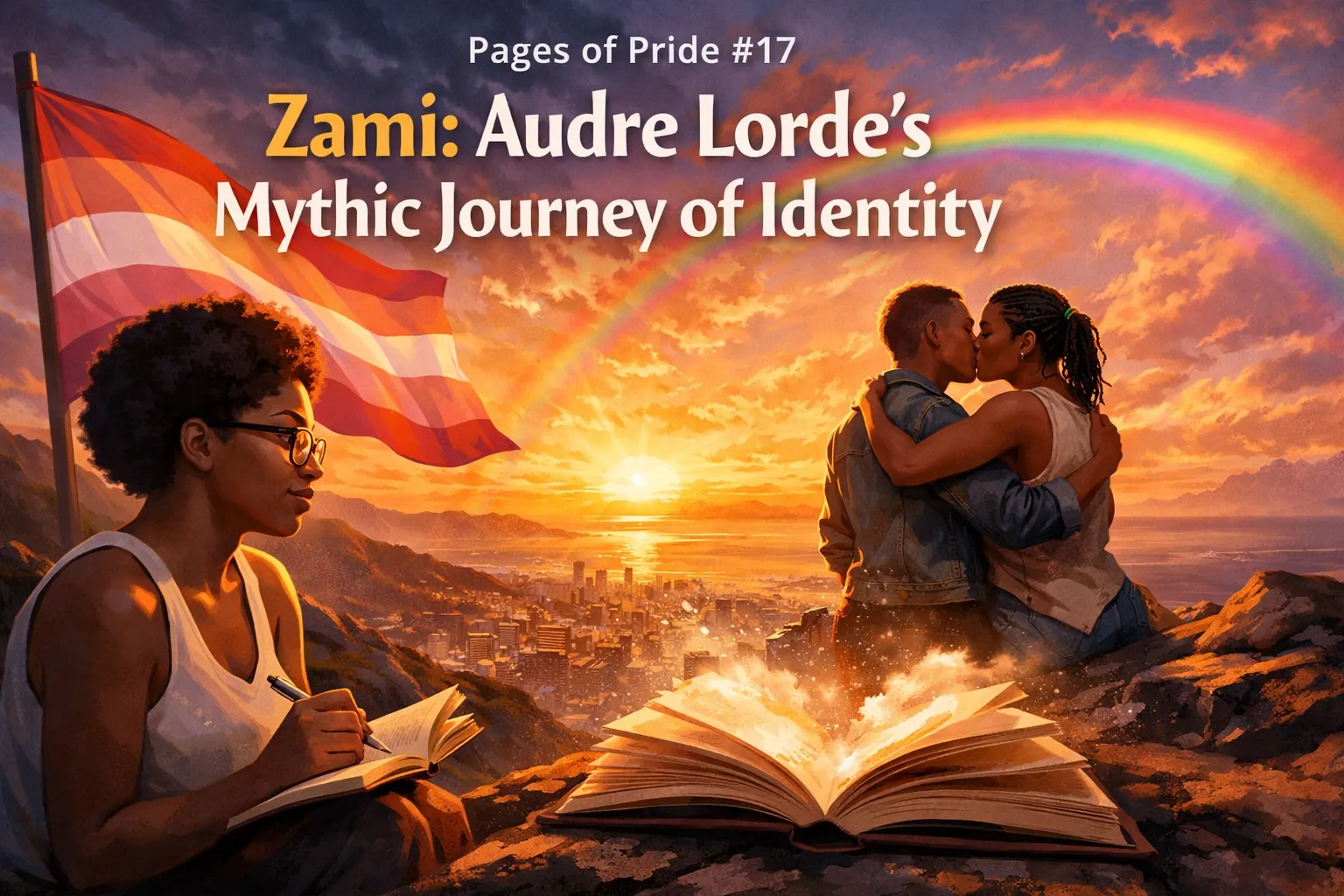
Before there was "intersectionality" as a buzzword, there was Audre Lorde living it, breathing it, and writing it down. Her 1982 masterwork Zami: A New Spelling of My Name isn't just another memoir: it's what Lorde herself called a "biomythography," a revolutionary blend of autobiography, mythology, and history that changed the landscape of queer Black literature forever.
If you're hunting for LGBTQ+ books that go beyond the surface, that challenge you while holding your hand, that make you feel seen in ways you didn't know you needed: this is it. This is the one that paved the way for so much of the authentic, intersectional gay fiction we celebrate today at Read with Pride.
What Even Is a Biomythography?

Let's start with that delicious word: biomythography. Lorde invented it because the existing boxes: memoir, autobiography, novel: couldn't contain what she needed to say. She wove together the concrete facts of her life with the mythic resonance of her identity, creating something that feels both intimate and epic.
The title itself, Zami, comes from Carriacou: the Caribbean island where Lorde's mother was born: and it means "women who work together as friends and lovers." From page one, Lorde signals that this isn't a story about isolation. It's about connection, community, and the women who shape us.
This approach to storytelling feels incredibly contemporary now, as more queer authors experiment with form and genre to tell their truths. But back in 1982? This was groundbreaking stuff.
Growing Up Different in Every Possible Way
Lorde's journey begins in 1930s and 1940s Harlem, where she navigates childhood as a legally blind Black girl in a world that wasn't built for her survival, let alone her thriving. Her prose captures what it means to be othered on multiple fronts simultaneously: something that resonates deeply with anyone who's ever felt like they exist at the intersection of marginalized identities.

She writes about:
- The racism that surrounded her, from Jim Crow laws to a landlord's suicide after renting to her Black family
- Her complicated relationship with her mother, who was both harsh and the source of her deepest strength
- Her visual impairment, which isolated her further from a family that already struggled to understand her
- The suffocating conformity of 1950s McCarthyism, when being different in any way could destroy your life
Reading Lorde's account of these obstacles isn't just educational: it's visceral. You feel the weight of every door slammed in her face, every microaggression, every moment of not-quite-belonging.
Finding Home in Women's Arms
Here's where Zami transforms from a coming-of-age story into something more tender and radical. Lorde doesn't find her home in geography or traditional family structures. She finds it in the arms and hearts of other women.
The relationships she chronicles: with Eudora in Mexico, her partner Muriel, and the brief but intense connection with Afrekete: aren't just romantic subplots. They're the crucible where Lorde's identity is forged. Each woman teaches her something new about herself, about desire, about what it means to be a Black lesbian in mid-century America.

This focus on female community and lesbian love stories was revolutionary then and remains powerful now. Lorde understood that for marginalized people, chosen family isn't just a nice idea: it's survival. The women she loved weren't distractions from her "real" life; they were her real life, the foundation of everything she would become as a poet and activist.
Contemporary readers of MM romance and queer fiction will recognize this theme: the found family, the community that sees you when blood relatives can't or won't. But Lorde was writing it decades before it became a beloved trope in gay romance books.
The Intersectional Blueprint
What makes Zami essential reading for anyone interested in LGBTQ+ literature is how it refuses to separate Lorde's identities into neat compartments. She's not Black or lesbian or a woman or working-class: she's all of these things, all the time, and each identity shapes and informs the others.
This intersectional approach (though that term wouldn't be coined until later) makes Zami feel remarkably modern. In an era where we're increasingly understanding identity as complex and multifaceted, Lorde was already showing us how to tell those stories truthfully.

For readers exploring best LGBTQ+ books that go beyond single-identity narratives, Zami offers a masterclass in how to honor the full complexity of human experience. It's essential reading for anyone who wants to understand the roots of contemporary gay literature and the conversations we're having now about representation and authenticity.
Why This Book Still Matters in 2026
Four decades after publication, Zami continues to resonate because Lorde's questions remain urgent: How do we build identity when the world tells us we shouldn't exist? Where do we find home when traditional structures exclude us? How do we honor all the parts of ourselves without diminishing any of them?
These aren't just historical questions: they're deeply personal ones that every queer fiction reader grapples with. Whether you're discovering your identity or you've been out for decades, Lorde's journey offers both mirror and map.
At Read with Pride, we believe in the power of stories to transform lives. Zami did that in 1982, and it's still doing it today. It paved the way for the diverse, authentic LGBTQ+ fiction we celebrate: from MM romance books to literary fiction, from contemporary gay novels to experimental memoirs.
Reading Zami Today
If you're ready to dive into this award-winning gay fiction classic, here's what you need to know: Lorde's prose is poetic and dense, demanding your full attention. This isn't a beach read (though honestly, read it wherever you want). It's a book that rewards slow, thoughtful engagement.
You'll want to sit with passages, maybe read them twice. You'll want to look up references you don't know. You'll want to talk about it with other readers: which is why it's become a staple of gay book clubs everywhere.
And when you finish? You'll understand why Audre Lorde remains a towering figure in queer literature, why her work continues to inspire gay authors and activists, and why Zami deserves its place among the most important LGBTQ+ books ever written.
Join the Conversation
Have you read Zami? Did it change how you think about identity, community, or lesbian fiction? We'd love to hear your thoughts. Follow us on Facebook, Instagram, and Twitter/X to join the conversation about this and other essential gay romance and queer literature.
And if Zami speaks to your soul, explore more diverse voices and stories at readwithpride.com: because every queer story deserves to be read with pride.
#ReadWithPride #ZamiAudreLorde #QueerLiterature #LGBTQBooks #BlackLesbianLiterature #IntersectionalQueerStories #GayFiction #QueerClassics #LesbianBooks #LGBTQHistory #GayLiterature #QueerAuthors #Biomythography #PagesOfPride #2026Reading #GayBookClub #LGBTQReading #QueerBlackLit #AudreLorde #EssentialQueerBooks

Leave a Reply
You must be logged in to post a comment.