

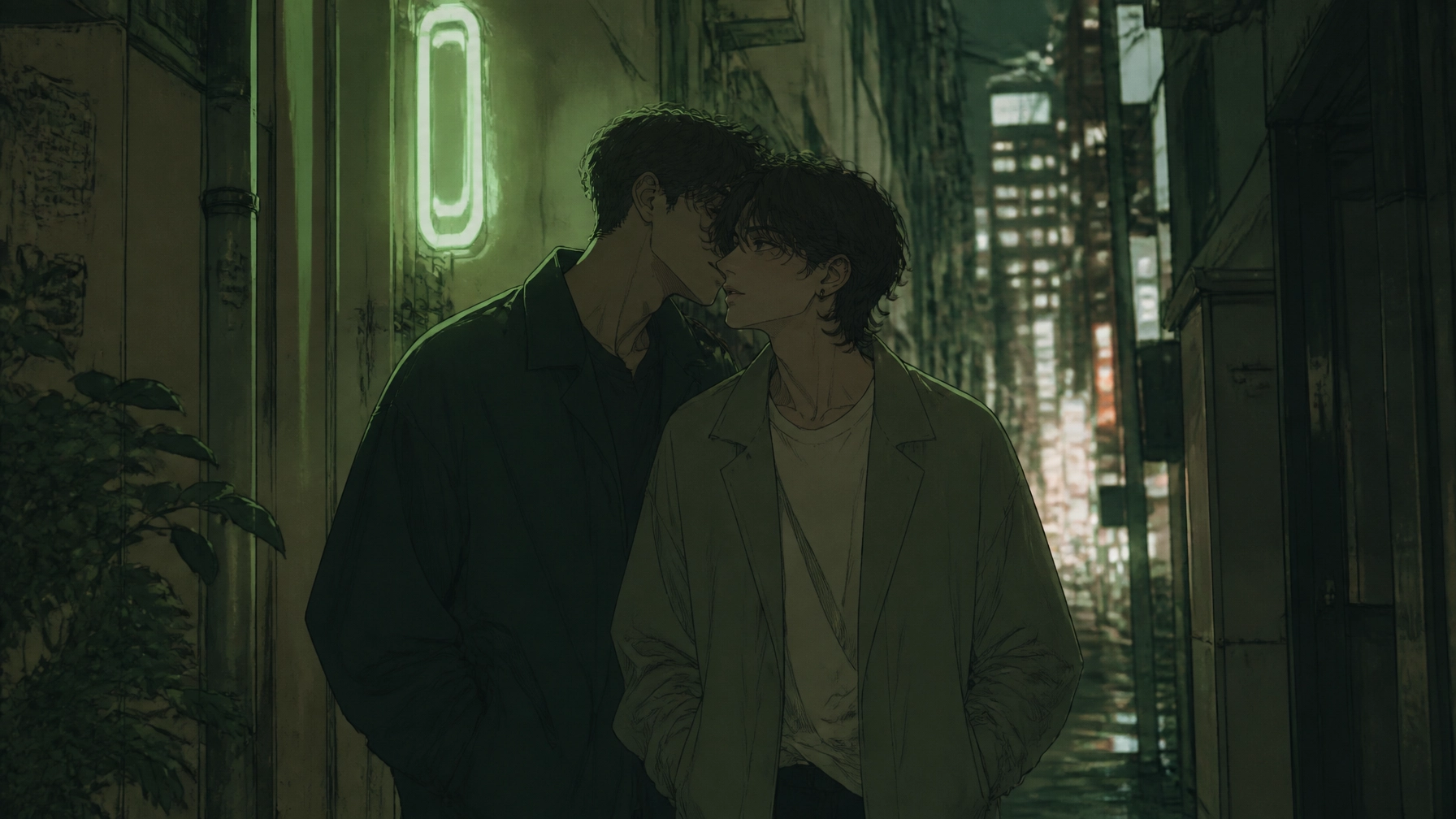
There is a specific kind of silence that exists only in the center of a roar. You find it in Shinjuku. You step off the train at the world’s busiest station, a frantic sea of suits and glowing screens, and you walk. You walk until the towering skyscrapers begin to shrink, until the air grows thick with the scent of charcoal and rain-slicked asphalt. Suddenly, the neon shifts. It becomes softer, more intentional. This is Shinjuku Ni-chōme.
For the emotionally invested reader, Ni-chōme is not just a district; it is a living, breathing gay love story etched into the concrete of Tokyo. It is a place where gay novels come to life, where every narrow stairway leads to a story of longing, belonging, and the quiet bravery of being oneself. Whether you are searching for MM romance in the real world or simply a place to breathe, here are ten things you must understand about this hidden heartbeat.
1. The Micro-Universe of the "Mama-san"
In Ni-chōme, the heart of the home is the bar, and the soul of the bar is the Mama-san (or Master). These are the keepers of secrets. Often former drag performers or pillars of the community, they curate the atmosphere with a surgeon’s precision. In the world of MM fiction, we often write about mentors who provide sanctuary; in Ni-chōme, they are real. They don’t just pour whiskey; they offer a listening ear to the man who isn't yet out at his corporate office.
2. The Unspoken Language of "Members Only"
You will see signs that say "Members Only." Do not let them turn you away with a cold heart. In gay fiction, we understand the need for protective barriers. These signs often mean the bar is a tiny sanctuary: perhaps only six seats: where regulars go to escape the "eyes" of the outside world. It’s about preserving a safe space where a man can lean his head on another man’s shoulder without fear. If you are polite and patient, the door may just open for you.
3. A Sanctuary Born of Shadows
The history of Ni-chōme is as poignant as any gay historical romance. It blossomed in the 1960s, a time when queer life had to be carved out of the shadows. Because the area was once a red-light district with lower rents and less scrutiny, it became a haven. When you walk these streets, you are walking on layers of resilience. Every neon sign is a testament to those who decided, decades ago, that they deserved a place to exist.
4. The Intimacy of the Six-Seat Bar
Forget the sprawling clubs of the West. The true magic of Ni-chōme happens in bars so small you can feel the warmth of the person sitting next to you. It is the perfect setting for a gay romance book trope: the accidental brush of hands, the whispered conversation that no one else can hear. In these spaces, you aren't just a customer; you are part of a temporary, beautiful family.
5. The "Bottle Keep" – A Promise to Return
Look at the shelves behind the bar. You’ll see rows of spirit bottles with names written on tags. This is the "Bottle Keep" system. It is a physical manifestation of a promise. "I will be back. I belong here." For many men in Tokyo, their bottle in a Ni-chōme bar is the only thing they truly own in their queer identity. It is a tether to a community that understands their authentic internal struggles.
6. Visibility in a Discreet Society
Japan is a land of nuances and "reading the air." While Tokyo is safe, the pressure to conform is immense. Ni-chōme is the place where the air changes. It’s where a man can finally stop looking over his shoulder. This transition: from the performance of the "salaryman" to the truth of the self: is a theme I explore deeply in my LGBTQ+ ebooks. Ni-chōme is the physical bridge between those two worlds.
7. The Sacredness of the No-Photo Rule
You will notice a distinct lack of cameras. This is not about secrecy for the sake of shame, but for the sake of safety. Many patrons are not out to their families or employers. Respecting this rule is an act of profound empathy. In our gay book club discussions, we often talk about the weight of the "closet." In Ni-chōme, the no-photo rule is the lock on the door that keeps the sanctuary secure.
8. Not Just Nightlife, but Chosen Family
While the sun sets and the drinks flow, Ni-chōme is more than a party. It is a hub for activism and support. It’s where young men go when they first move to the city, looking for gay book recommendations or simply a sign that they aren't alone. It is the epicenter of queer fiction in motion: a place where the plot is always about finding your people.
9. The Price of Entry: Cover Charges as Connection
Most bars have a "table charge." Don't view this as a transaction, but as a contribution to the preservation of the space. By paying your seat fee, you are helping to keep the lights on for the next man who needs a place to hide or a place to shine. It is a small price for the kind of heartfelt gay fiction experiences that stay with you long after you leave.
10. Finding Your Own Reflection
Ultimately, Ni-chōme is a mirror. It reflects the diversity of the MM romance genre itself: from the gritty and urban to the soft and lyrical. Whether you are a visitor or a resident, you go there to find a version of yourself that can breathe. It is a place of profound empathy, much like the stories we seek out when we want to feel truly seen.
If you find yourself wandering the neon mazes of Tokyo, let your heart lead you to Ni-chōme. And if you cannot travel there in person, let literature take you. You can find that same depth of emotion and authentic representation in our e-book store, where every story is a journey into the heart of what it means to love.
Ni-chōme reminds us that no matter how vast the city, there is always a corner where the light stays on for you. It is a world of steamy MM romance, quiet angst, and the enduring power of connection.
Explore more stories of identity and passion in our latest releases or browse our full store listing. Your next great emotional journey is waiting.
Follow us on social media for more lyrical journeys and MM romance updates:
- Instagram: https://www.instagram.com/dickfergusonwriter
- X (Twitter): https://www.x.com/DickFergus94902
- Facebook: https://www.facebook.com/profile.php?id=61572869844598
- Website: www.readwithpride.com
#ReadWithPride #MMRomance #GayFiction #TokyoNightlife #Nichome #LGBTQBooks #GayTravel #DickFerguson #QueerLiterature #BisexualRep #GayLoveStory #WriteWithPride


{“@type”:”BlogPosting”,”image”:[“https://cdn.marblism.com/5ft6xGtWki4.webp”,”https://cdn.marblism.com/6JAyOpAW_Ia.webp”,”https://cdn.marblism.com/pHuyVtxo6Zc.webp”,”https://cdn.marblism.com/YhH4rnYPZ6k.webp”,”https://cdn.marblism.com/DkvwPns_03A.webp”],”author”:{“url”:”https://readwithpride.com/e-book-store/dickfergusonwriter/”,”name”:”Dick Ferguson”,”@type”:”Person”},”@context”:”https://schema.org”,”headline”:”Looking for Ni-chōme? Here Are 10 Things You Should Know About Tokyo’s Hidden Heartbeat”,”keywords”:”LGBTQ+ ebooks, gay books, MM romance, gay romance, Shinjuku Ni-chome, gay Tokyo guide, queer fiction, gay fiction, Dick Ferguson”,”publisher”:{“logo”:{“url”:”https://readwithpride.com/logo.png”,”@type”:”ImageObject”},”name”:”Read with Pride”,”@type”:”Organization”},”description”:”Discover the emotional and cultural heartbeat of Shinjuku Ni-chōme, Tokyo’s premier gay district, through the lyrical lens of author Dick Ferguson.”,”datePublished”:”2026-05-31″}

Leave a Reply
You must be logged in to post a comment.