

readwithpride.com
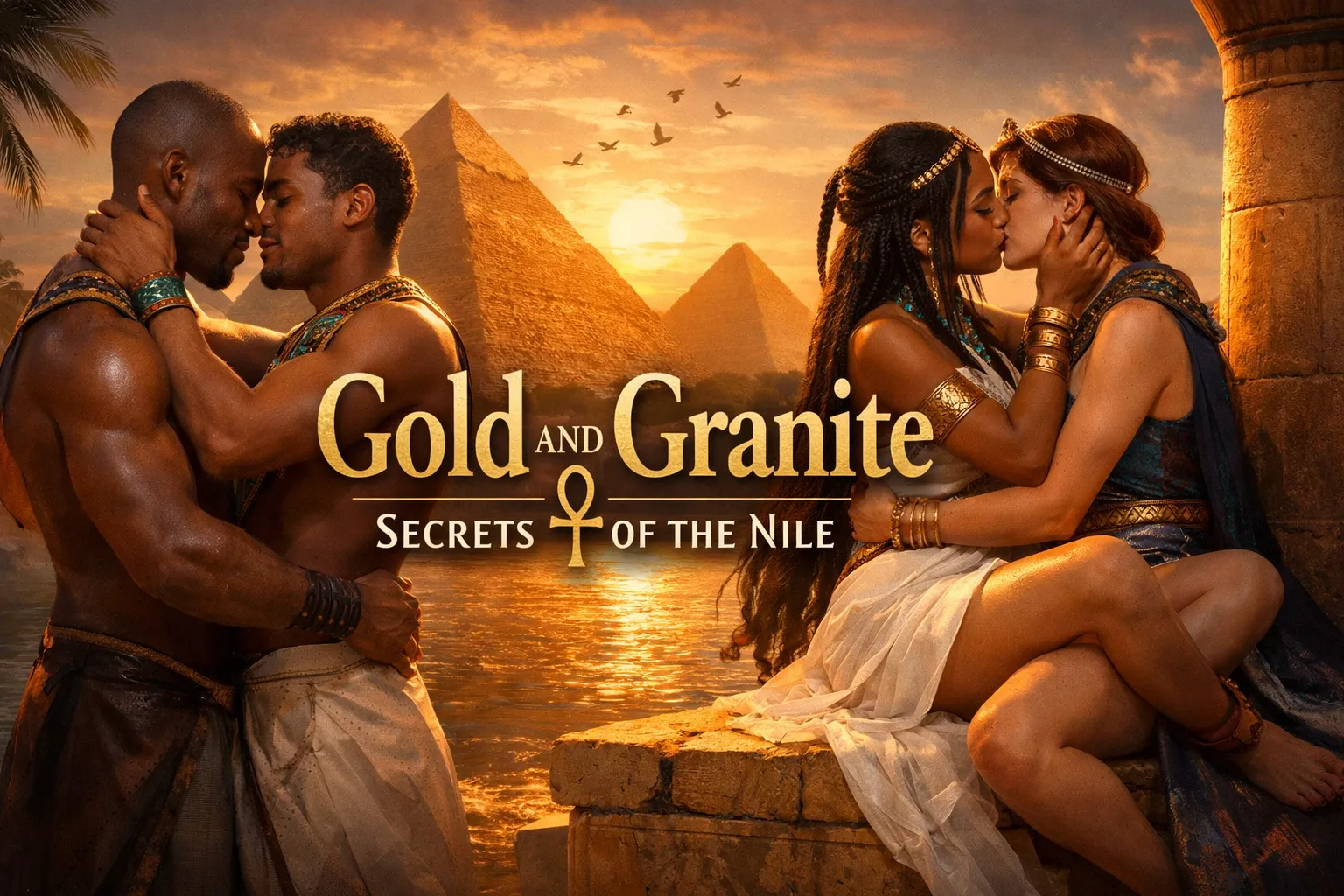
The Nile carried more than just water through ancient Egypt: it carried secrets. Secrets carved in granite, whispered between temple columns, and buried deeper than any pharaoh's tomb. This is one of those stories that history tried to forget, about two men whose love defied every boundary their world had built.
When Gold Meets Stone
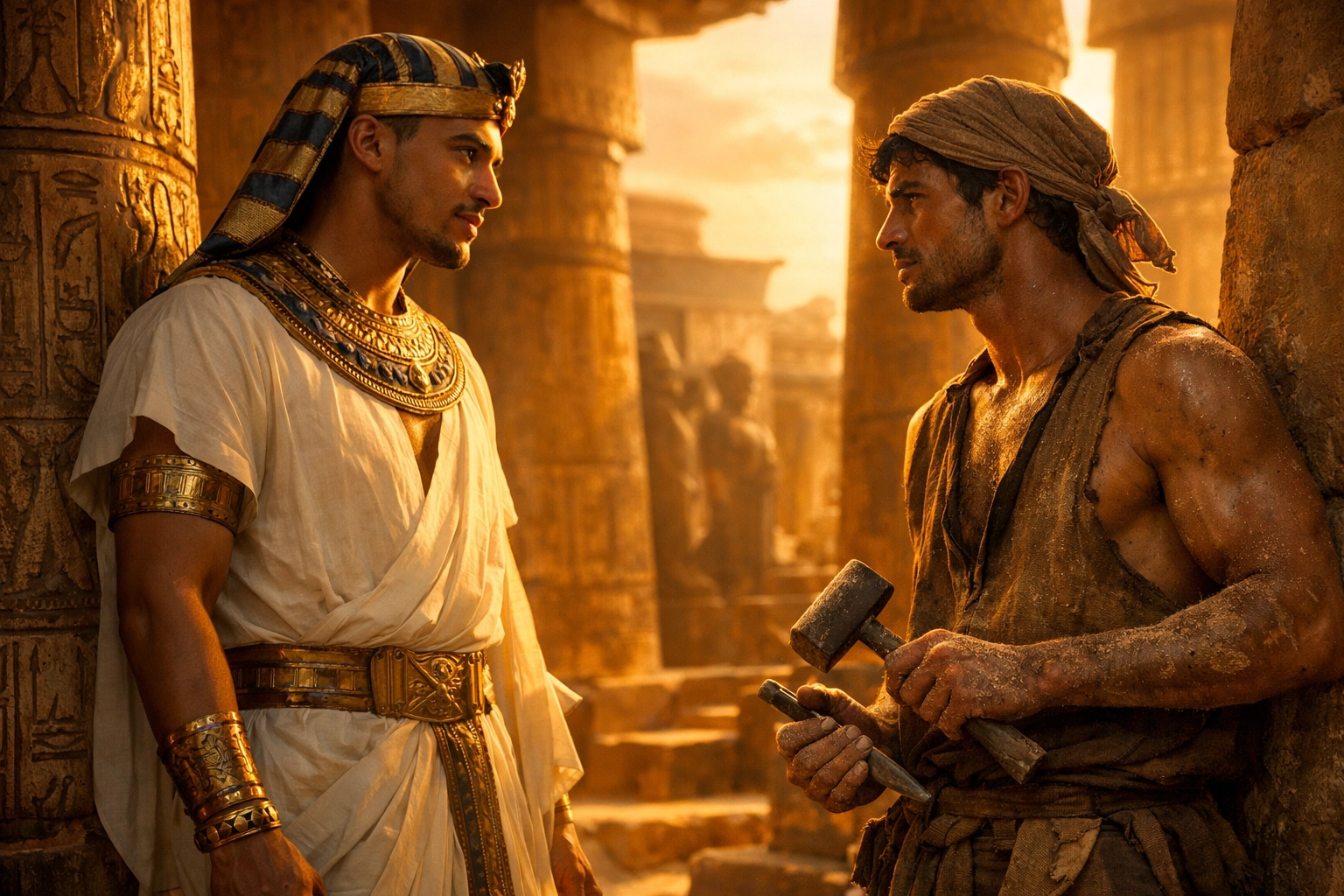
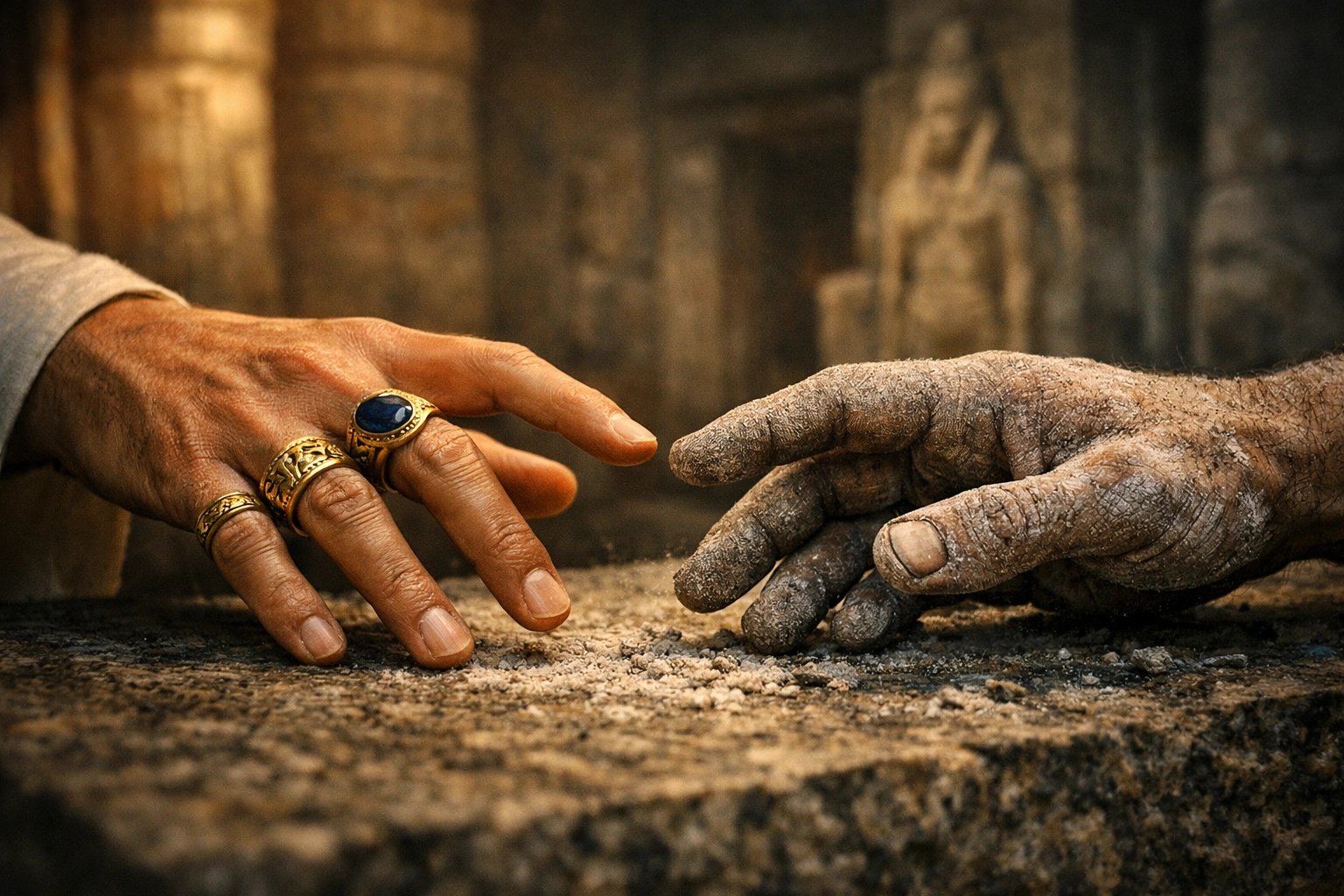
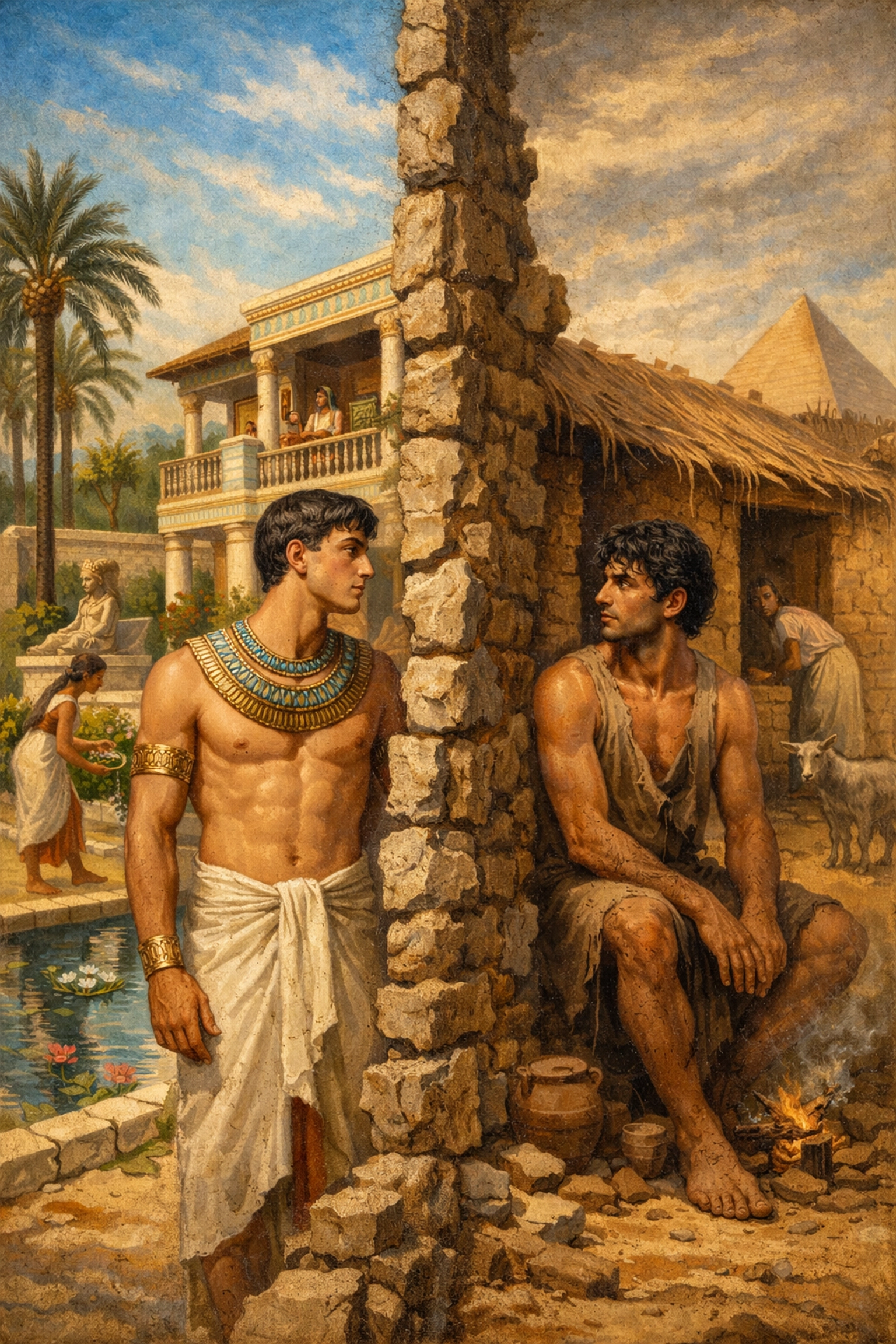
Khenti was a high priest of Amun, draped in fine linen that cost more than most families earned in a year. Gold rings adorned his fingers: real gold, the kind pulled from Nubian mines and Nile rapids, worth about 0.0455 grams of daily wages per worker. He walked through Karnak's towering columns like he owned them. In many ways, he did.
Bakenamon was a stonemason. His hands were permanently stained with granite dust, his back perpetually bent from years of hauling blocks for the pharaoh's endless construction projects. While Khenti performed sacred rituals in rooms lined with gold leaf, Bakenamon carved the very walls that held those rooms together.
They shouldn't have even existed in the same world, let alone shared the same breath.
The Price of Proximity
Their paths crossed during the construction of a new chapel within the Amun temple complex. Khenti needed to oversee the sacred inscriptions. Bakenamon was assigned to prepare the granite surfaces. The Eastern Desert granite: hard as hell and twice as stubborn: required skilled hands and patient precision.
"You work with stone like you're whispering to the gods themselves," Khenti said one evening when most workers had left.
Bakenamon didn't look up. "The gods don't listen to men like me, my lord."
"Then perhaps they're fools."
That moment: that single exchange: changed everything. But change in ancient Egypt came with a price tag most couldn't afford.
The Impossible Mathematics of Love
Let's talk reality. Khenti lived in a villa near the temple precinct with servants, gardens, and more food than twenty families could eat. His annual income? Difficult to calculate in modern terms, but we're talking about someone who controlled temple resources worth hundreds of tons of gold accumulated during the New Kingdom period.
Bakenamon shared a mud-brick dwelling with five other craftsmen in the workers' village. His daily wage barely covered bread, beer, and onions. If he got sick or injured, there was no backup plan. Just poverty and probably death.
The gap between them wasn't just wide: it was designed to be uncrossable.
Secret Meetings in Stone Chambers
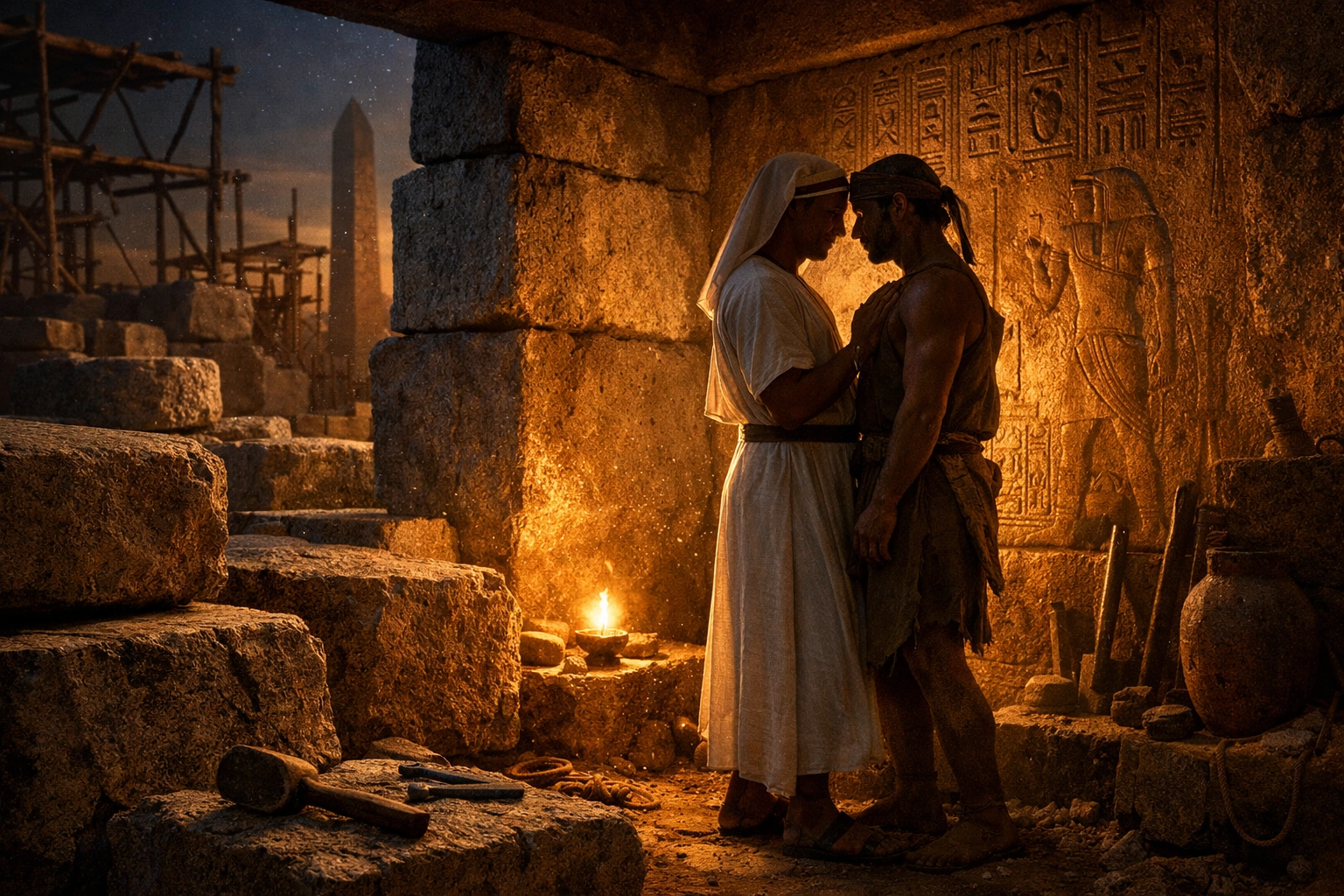
They met in unfinished sections of the temple, places where granite blocks awaited carving and no one questioned a priest's presence. Khenti would dismiss his attendants. Bakenamon would arrive covered in the dust that marked his station.
"Remove your jewelry," Bakenamon once told him. "The gold marks you like a beacon."
"I want to be marked by you instead," Khenti replied.
But romance novels didn't exist in ancient Egypt for a reason. Real life was messier, more complicated, and infinitely more dangerous.
The temple hierarchy watched everything. Other priests noticed Khenti's unusual attention to construction projects. Workers gossiped about the stonemason who spent extra hours at the temple. In a society built on rigid class structures and divine order, deviation attracted attention like blood attracts crocodiles.
The Weight of Different Worlds
Bakenamon's world was brutally simple. Work. Eat. Sleep. Survive. One injury could end everything. One mistake could mean losing his position, his housing, his bread rations.
"Come live with me," Khenti suggested once, naive in his privilege. "I can provide for you."
"As what?" Bakenamon's laugh was bitter. "Your servant? Your pet? Men would talk, Khenti. They'd destroy you first, then me for daring to climb above my station."
He was right. Ancient Egyptian society had more flexibility than medieval Europe regarding same-sex relationships: some historical evidence suggests certain forms were tolerated: but class boundaries were sacred. A high priest maintaining a relationship with a common laborer? That violated ma'at, the divine order that supposedly kept the universe functioning.
The Practical Problems No One Talks About
History loves grand romantic gestures, but let's get specific about the actual challenges these men faced:
Schedule incompatibility: Khenti participated in multiple daily temple rituals, festival processions, and administrative duties. Bakenamon worked from sunrise to sunset, six days straight, with one day off if he was lucky. Finding time alone required careful planning and significant risk.
Language and literacy: Khenti read and wrote hieratic script fluently. Bakenamon was likely illiterate like most commoners. They literally didn't share the same language of communication beyond speech.
Physical toll: While Khenti maintained his appearance as part of his priestly duties, Bakenamon's body bore the permanent marks of hard labor: calluses, scars, the early onset of joint problems. The contrast was a constant reminder of their different realities.
Social networks: Khenti's world involved political maneuvering, temple politics, and aristocratic connections. Bakenamon's world centered on fellow craftsmen, shared meals, and survival strategies. They had almost no overlap in their daily social lives.
When Reality Intervened
The relationship lasted three years: longer than either expected. But ancient Egypt was practical about everything, including marriage. Khenti faced increasing pressure to marry a woman from an appropriate family, to produce heirs, to fulfill his social obligations.
"I could refuse," he said one night, but even he didn't sound convinced.
"And then what?" Bakenamon asked. "You lose your position. Your family loses face. I lose you anyway when they exile you or worse. At least if you marry, we might still find moments."
This is the part of LGBTQ+ history that Readwithpride.com exists to tell honestly. Not every story has a happy ending. Not every love story ends with two men riding into the sunset together. Sometimes, historical reality crushed people, and all they could do was survive it.
What We Can Learn from Granite and Gold
The ancient Egyptians knew something about permanence. They built with granite because it lasted. They hoarded gold because it held value across generations. But they also understood that some things: like human feelings: couldn't be contained by either stone walls or golden chains.
Khenti did marry. He had children. He continued his priestly duties for another twenty years. Bakenamen continued carving stone until his hands wouldn't let him anymore.
Did they stop loving each other? Historical silence doesn't mean historical absence. Sometimes the deepest truths are the ones never written down.
What we do know is this: someone in that temple carved two names together in a hidden corner of an unfinished chamber. Not in the formal hieroglyphic inscriptions that proclaimed pharaohs' victories, but in the informal marks that craftsmen left behind. The names? Khenti and Bakenamon. Together. Permanent as granite.
The Modern Echo
Today's MM romance books often explore class differences, but usually with modern solutions: upward mobility, democratic equality, career changes. Reading historical LGBTQ+ fiction reminds us how recent these possibilities are. For most of history, loving someone from a different class wasn't just complicated: it was potentially catastrophic.
That's why we need to tell these stories. Not to romanticize suffering, but to honor the courage it took to love anyway. To acknowledge that our queer ancestors made impossible choices with grace we can barely imagine.
Their story lives in the granite they shaped and the gold they treasured. It lives in every modern gay love story that overcomes obstacles. It lives in us, every time we choose love despite the world's insistence that we shouldn't.
Discover more untold LGBTQ+ historical stories at Readwithpride.com. Follow us on Facebook, Instagram, and X for daily stories that celebrate queer history and MM romance.
#ReadWithPride #LGBTQHistory #AncientEgypt #MMRomance #GayRomance #QueerHistory #HistoricalLGBTQ #GayLoveStories #MMBooks #LGBTQFiction #GayHistoricalRomance #QueerStories #LGBTQBooks #GayNovels #MMHistoricalRomance #QueerLiterature #GayFiction #LGBTQRomance #HistoricalRomance #LoveIsLove

Leave a Reply
You must be logged in to post a comment.