

readwithpride.com
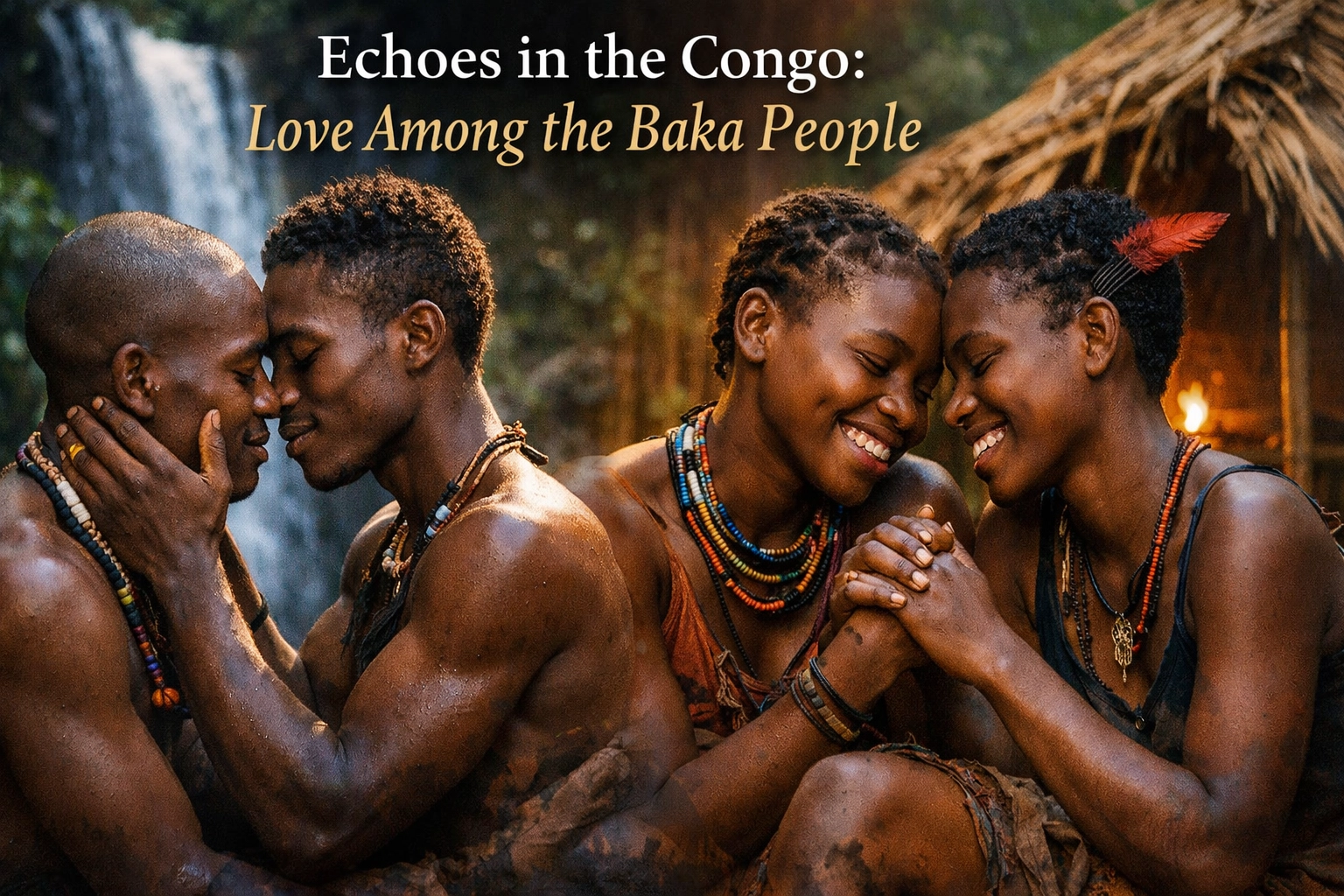
Deep in the Congo Basin, where the forest canopy weaves a green cathedral overhead and rivers carve ancient pathways through the earth, the Baka people have lived for millennia. These hunter-gatherers, sometimes called "the people of the forest," have built a society so intertwined with the rainforest that their language contains dozens of words for different types of trees but lacks a word that translates directly to "goodbye." When you're this connected to place and community, perhaps departure feels unnatural.
What makes the Baka particularly fascinating from an anthropological perspective isn't just their intimate knowledge of forest ecology or their polyphonic singing traditions, it's their remarkably egalitarian social structure. In a world where hierarchy seems baked into human nature, the Baka offer a different model. And within that model, questions about intimacy, friendship, and what Westerners might label as same-sex relationships take on textures that resist easy categorization.
The Forest Doesn't Judge
Traditional Baka society operates without the rigid social hierarchies found in agricultural or industrial societies. There are no kings, no chiefs with absolute authority, no formal structures of power that dictate who can love whom or how affection should be expressed. Decision-making happens through consensus, and the individual's autonomy is deeply respected within the context of community responsibility.
This egalitarian framework extends to gender roles, which are more fluid than many Western anthropologists initially assumed. While certain hunting and gathering activities follow gendered patterns, these aren't enforced with the rigidity seen in other cultures. The forest demands cooperation, flexibility, and the recognition that survival depends on everyone contributing their strengths.
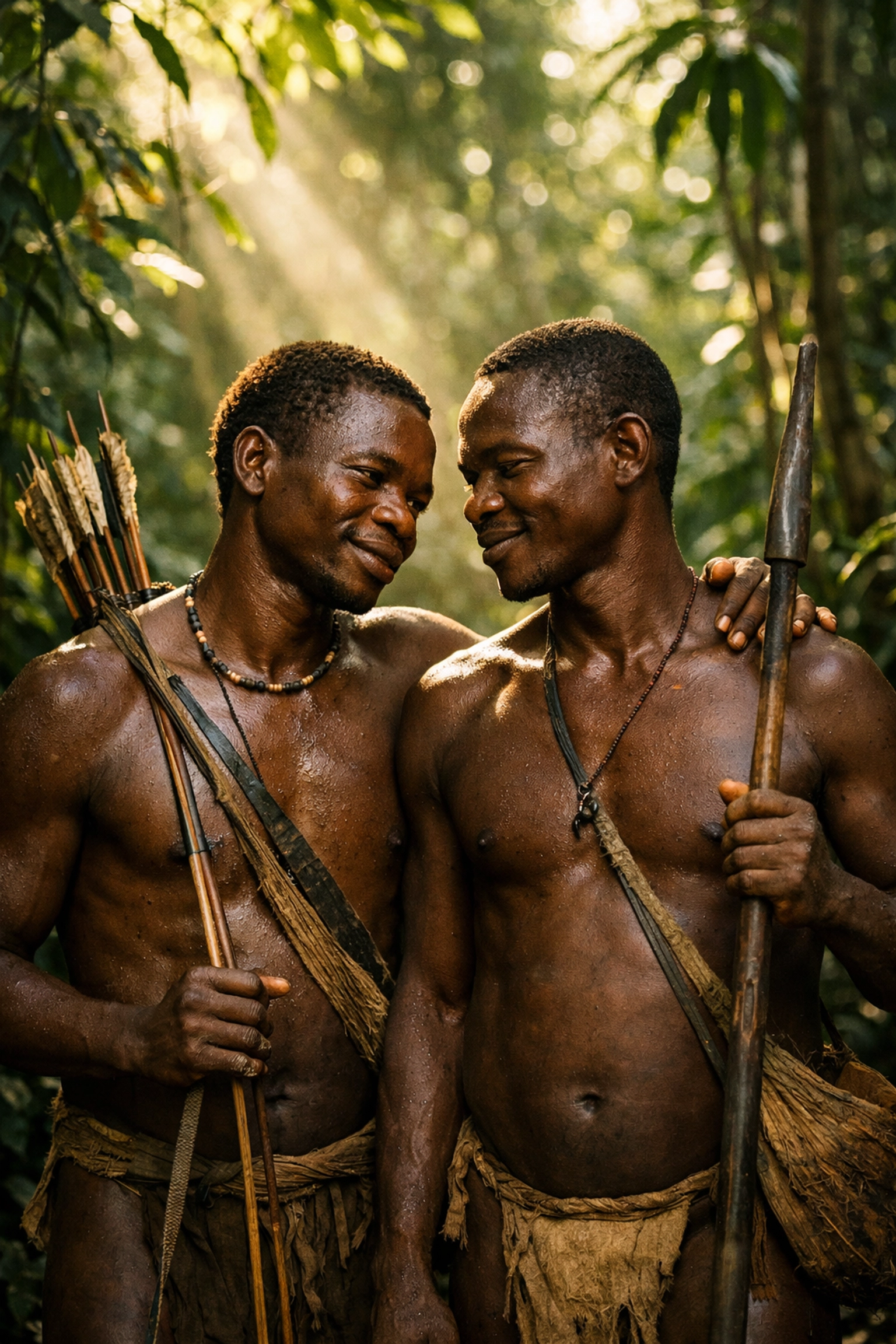
Within this context, deep same-sex friendships aren't just tolerated, they're often essential to the social fabric. Hunting partnerships, which can last decades, involve intense emotional bonds. These relationships include physical affection, shared resources, and a level of intimacy that Western observers sometimes struggle to classify. Are they friendships? Brotherhoods? Something that exists outside our taxonomies entirely?
The Problem With Western Eyes
Here's where we need to pump the brakes and acknowledge something crucial: most of what's been written about the Baka comes filtered through Western anthropological lenses. Colonial-era ethnographers brought their own assumptions about sexuality, often viewing anything outside heterosexual marriage as either invisible or deviant. The questions they didn't ask tell us as much as the ones they did.
Modern anthropologists have worked to correct these blind spots, but challenges remain. The Baka oral tradition, rich with songs, stories, and histories passed down through generations, doesn't necessarily package information in ways that answer Western questions about sexual orientation or gender identity. Their worldview doesn't separate the individual from the forest, the physical from the spiritual, or love into neat categories of platonic versus romantic.
When researchers ask direct questions about same-sex intimacy, they're often met with responses that seem contradictory to Western ears. "Yes, this happens," someone might say, followed by a shrug that suggests the question itself is slightly absurd. The forest contains multitudes. People contain multitudes. Why categorize what simply is?
Oral Histories and Hidden Truths
The oral histories of the Baka people contain layers upon layers of meaning. Stories about forest spirits, hunting expeditions, and community celebrations often encode information about social relationships in ways that require cultural fluency to decode. A tale about two men who journey deep into the forest together and return changed might be about a hunting trip. Or a spiritual initiation. Or a love story. Or all three simultaneously.
One anthropologist working in the region recorded a song performed during a moonlit gathering: a song about two hunters whose bond was so strong that even death couldn't separate them. The song used imagery of intertwined vines, of trees growing from the same root system, of a love that fed the forest itself. When asked if this was a song about romantic love between men, the elder singing simply smiled and said, "It's a song about love."
This resistance to Western categorization isn't evasion: it's a fundamentally different way of understanding human connection. In Baka culture, the line between deep friendship and romantic partnership isn't drawn in the same place it might be in New York or London. Physical affection between same-sex friends is common and unremarkable. Sharing resources, living arrangements, and child-rearing responsibilities can happen across multiple types of relationships.
The Spirit of the Forest Knows
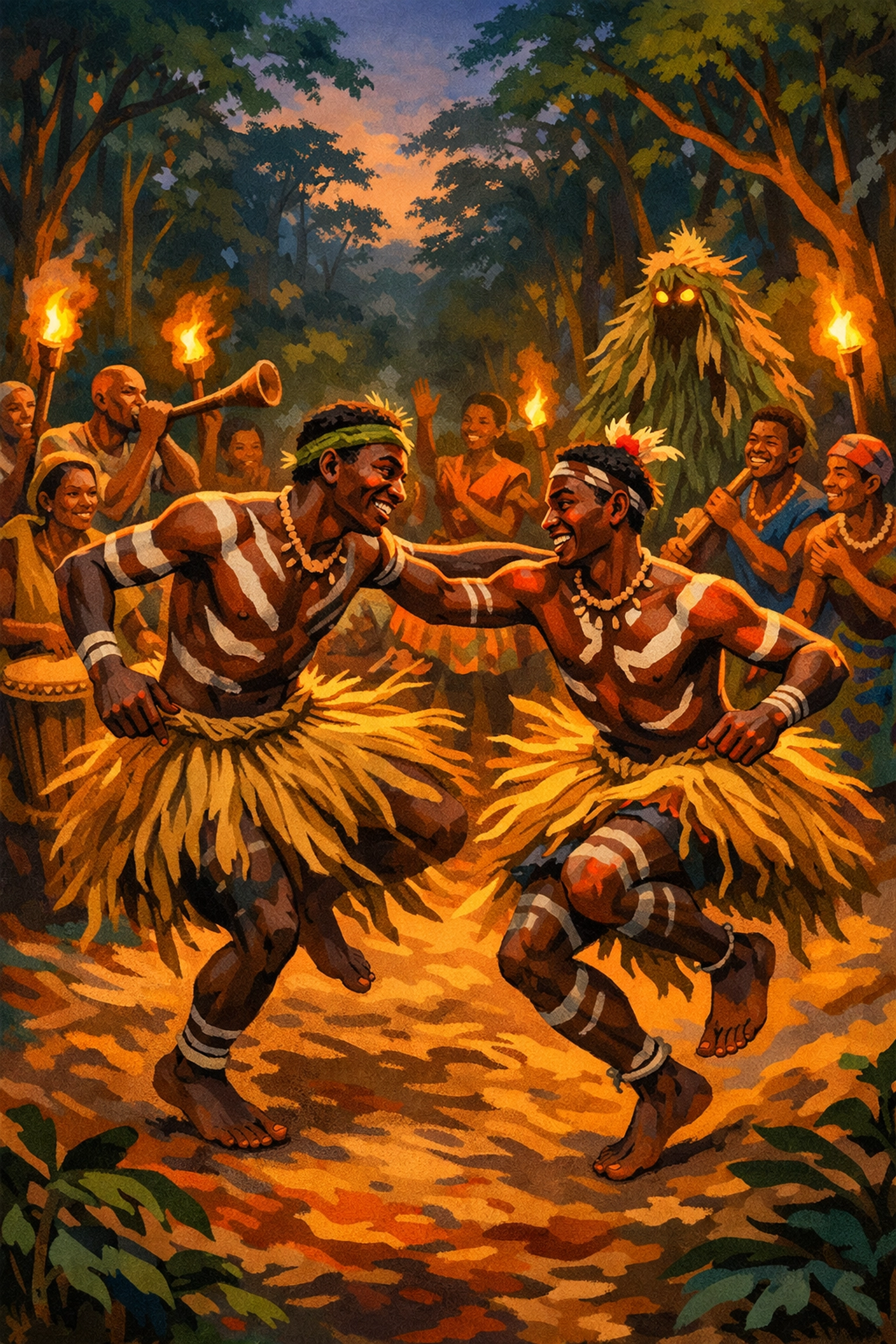
The Baka spiritual tradition centers on Jengi, the forest spirit who embodies both male and female principles. During Jengi ceremonies, which can last for days, gender boundaries become permeable. Men may dress in raffia skirts and perform dances typically associated with women. Women may take on roles usually reserved for men. The forest, through Jengi, reminds the community that rigid categories are human inventions: nature itself is far more fluid.
These ceremonies create spaces where same-sex intimacy, desire, and partnership can exist without requiring explanation or justification. In the liminal time of ceremony, when the forest spirit walks among the people, what matters isn't who loves whom but whether that love serves the community and honors the forest.
Several researchers have documented accounts of Baka individuals who lived what Western culture might call queer lives: men who partnered with men, women with women, people whose gender expression didn't fit binary expectations. These individuals weren't ostracized or punished. They participated fully in community life, their differences acknowledged but not pathologized.
One particularly moving account describes an elder known for her relationships with both men and women throughout her long life. When researchers asked how the community viewed her choices, the response was illuminating: "She is who the forest made her to be. Who are we to argue with the forest?"
Love in the Time of Change
The modern era has brought devastating changes to the Baka people. Deforestation, national park creation that excludes them from their ancestral lands, pressure to sedentarize, and the encroachment of majority culture have all taken their toll. Christian missionary activity, in particular, has introduced concepts of sexual sin and shame that were largely absent from traditional Baka culture.
Some younger Baka individuals now express homophobic views learned from outside sources. The egalitarian social structures that once provided space for diverse expressions of intimacy are under pressure as the Baka are forced to adapt to hierarchical national systems. The oral traditions that encoded these hidden histories are at risk as languages shift and elders pass away without enough young people learning the old songs.
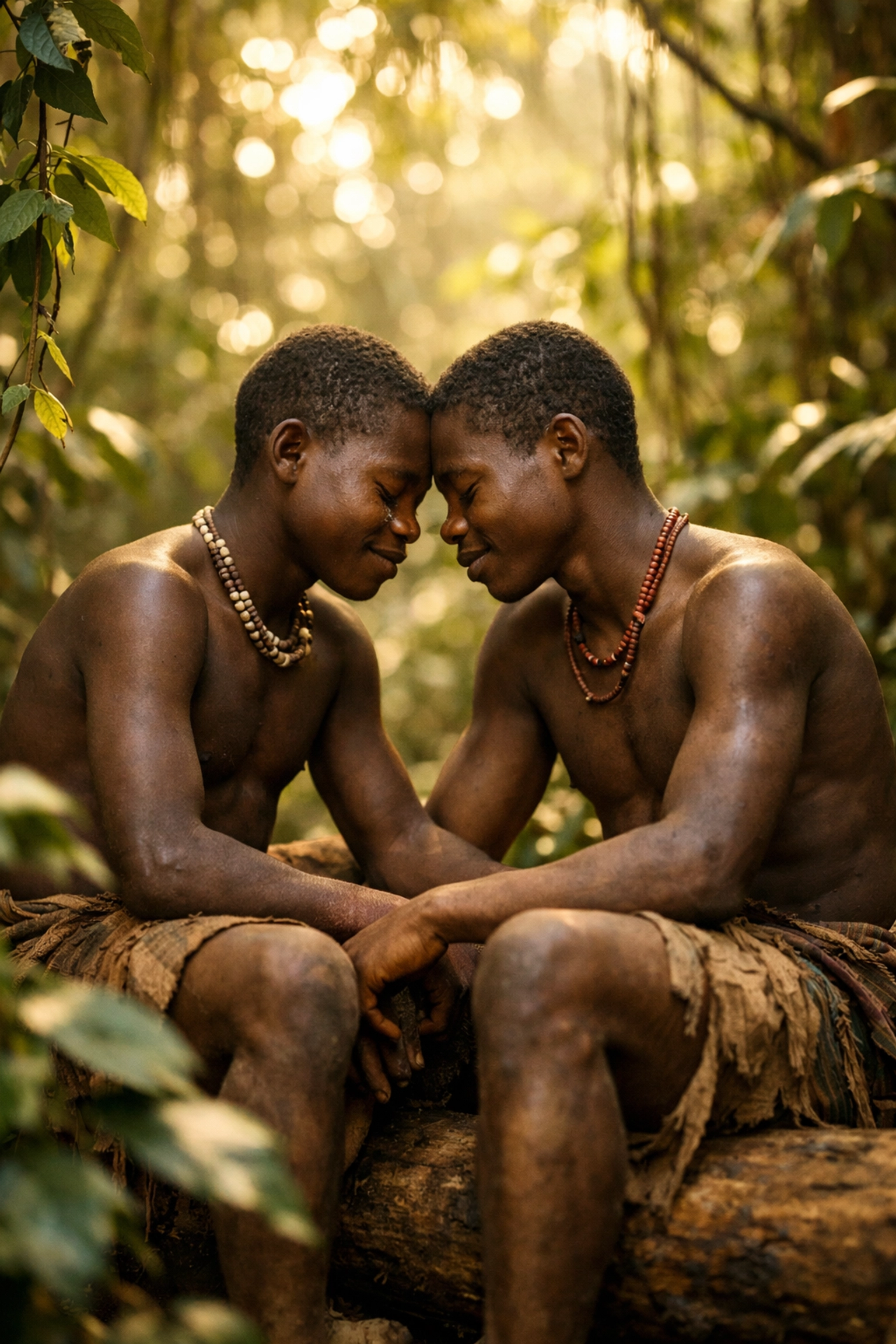
Yet resilience persists. In some Baka communities, particularly those that have maintained stronger connections to traditional forest life, the old acceptance continues. LGBTQ+ individuals exist as they always have: woven into the fabric of community life, their relationships neither celebrated nor condemned but simply acknowledged as part of the rich tapestry of human experience.
What the Forest Teaches Us
The Baka experience challenges Western assumptions about sexuality and gender in Indigenous cultures. It resists the narrative that acceptance of LGBTQ+ people is a modern Western invention that needs to be exported to "less enlightened" societies. Instead, it suggests that many traditional cultures already had frameworks for understanding human diversity: frameworks that colonialism and missionary activity actively worked to erase.
The lesson here isn't that the Baka were some queer utopia hidden in the forest. Every culture has its complexities, its blind spots, its failures. Rather, the Baka example reminds us that rigid categorization of human intimacy is culturally specific, not universal. The forest doesn't judge. The forest knows that life expresses itself in infinite forms, and all of them have a place in the ecosystem.
For those of us seeking to understand LGBTQ+ history beyond Western contexts, the Baka oral traditions offer something precious: evidence that other ways of being were possible, that they existed, that they still exist in pockets and fragments. These stories survive in songs sung around fires, in the memories of elders, in the DNA of communities that have weathered centuries of change.
The challenge for researchers, activists, and curious readers is to listen without imposing our categories, to hear these stories on their own terms, and to honor the wisdom they contain. The Baka people don't need us to validate their approach to love and intimacy. But we might need them to expand our understanding of what's possible when human communities build themselves around cooperation rather than hierarchy, when the forest is teacher rather than resource, when love is allowed to be as complex and uncategorizable as the ecosystem itself.
Finding These Stories
At Read with Pride, we're committed to exploring LGBTQ+ narratives from every corner of human experience: including the oral histories and hidden lives that mainstream publishing often overlooks. Whether you're drawn to MM romance, queer fiction, or anthropological deep dives into how different cultures understand intimacy, we believe these stories deserve space and celebration.
The echoes in the Congo Basin remind us that queer history isn't just Western history. It's human history, expressed in countless languages, preserved in countless traditions, waiting to be heard by those willing to listen.
#ReadWithPride #LGBTQHistory #QueerAnthropology #IndigenousCultures #BakaPeople #CongoBasin #MMRomance #QueerFiction #LGBTQBooks #GayRomanceBooks #HiddenHistories #ForestWisdom #IndigenousLove #GayLiterature #QueerStories
Connect with us: Facebook | Instagram | X/Twitter | readwithpride.com

Leave a Reply
You must be logged in to post a comment.