

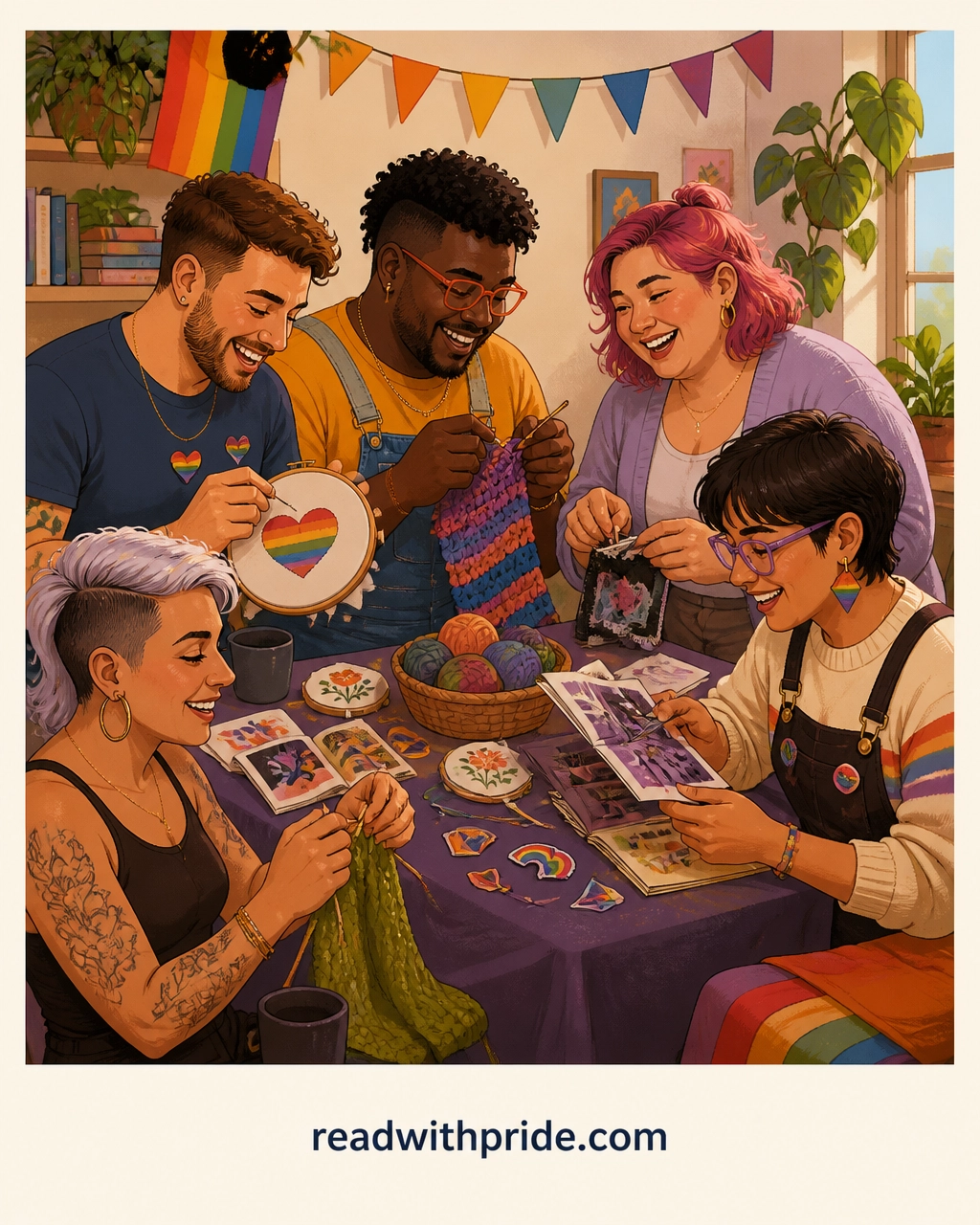
Making friends as an adult can feel like applying for a job you are wildly overqualified for but somehow still nervous about. Add being queer, trans or non-binary, and finding your people can occasionally feel like searching for one very specific book in a library with no labels.
Enter the queer craft circle: part hobby meetup, part chosen-family waiting room, part gentle revolution involving yarn.
Whether you call it a stitch-and-bitch, craft club, makers’ circle or “the place where everyone brings snacks and emotional baggage,” this kind of gathering offers something many of us have been missing: connection without performance.
Why queer hobbies make community-building easier
There is a special kind of social pressure that comes with meeting new people. You have to make conversation, appear relaxed, remember names and pretend you know what to do with your hands.
Crafting solves at least one of those problems.
When everyone is threading needles, crocheting granny squares or attempting embroidery that was absolutely meant to look like a flower, conversation can happen naturally. You do not have to stare into someone’s soul over a drink and announce your personality in three carefully edited sentences. You can simply ask, “What are you making?” and let the thread do some of the work.
That low-pressure structure is one reason queer hobbies can become powerful tools for community building. Shared activity creates a reason to gather, while regular meetups give relationships time to grow beyond small talk.

The craft is only half the point
Nobody has to arrive as an expert. In fact, a forgotten crochet hook, wonky button or unfinished project may be the perfect membership card.
A good queer craft circle makes room for every skill level. Someone might be teaching embroidery. Someone else might be learning how to knit without creating what can only be described as a woollen weather system. Another person may bring colouring supplies, collage materials or a half-written zine.
The important thing is not producing something flawless. It is being present.
These circles can offer affirmation in wonderfully ordinary ways:
- Using someone’s correct name and pronouns without making it a big production.
- Sharing a technique without gatekeeping.
- Making space for quiet people and enthusiastic storytellers alike.
- Celebrating a finished project, even when it is gloriously lopsided.
- Checking in when someone has had a difficult week.
That is community care with a glue gun nearby.
From stitch-and-bitch to mutual support
Queer crafting is not automatically activism, and it does not need to become a committee meeting with twelve action points. Sometimes the radical act is simply resting beside people who understand you.
Still, trust has a funny habit of growing where people gather consistently. A circle that begins with crochet and tea may eventually become a place where members exchange local resources, organise a fundraiser, share practical advice or support one another through a hard season.
Research into queer crafting and communal making has explored these groups as spaces of care, belonging and queer world-building. In other words, people are not only making blankets, patches or cards. They are making a small version of the world they want to live in: welcoming, collaborative and far less interested in respectability politics.

Yes, there is room for romance tropes too
Let us be honest: a queer craft circle is also excellent fuel for MM romance tropes and sapphic romance daydreams.
There is the forced proximity of two people sharing the last comfortable chair. The slow burn of weekly meetups, increasingly personal conversations and one suspiciously thoughtful cup of tea. The enemies-to-lovers MM romance possibility when two perfectionists disagree about the correct way to organise a communal yarn basket.
There is workplace romance energy in the volunteer committee, friends-to-lovers potential over matching embroidered tote bags and plenty of “only one table left” tension.
Real life does not need to become a novel to be meaningful. But queer fiction helps us recognise the emotional shape of connection: the nervous first hello, the comfort of being remembered, the joy of being invited back.
That is one reason Read with Pride celebrates queer stories alongside queer life. Our LGBTQ+ blogs and articles explore identity, relationships, hobbies and the everyday moments that help us feel seen.
How to start your own queer craft circle
Keep it simple:
- Choose an accessible venue, online space or rotating home meetup.
- Make the invitation clear: all skill levels welcome.
- Offer a basic supply table for people who cannot bring materials.
- Set expectations around names, pronouns, accessibility and respectful behaviour.
- Pick a regular time so the group can become part of people’s routines.
- Let the first gathering be slightly awkward. That is tradition.
You do not need a perfect logo, an elaborate booking system or a seventeen-page constitution. You need a table, a few supplies and the willingness to say, “Pull up a chair.”

Your people may be closer than you think
The right community does not always arrive with a dramatic entrance. Sometimes it appears as a group chat, a spare ball of yarn and someone asking whether you want to join next week.
So choose a queer hobby that makes you curious. Find a local group, start a virtual circle or invite a few people to make something badly together. Bring your favourite gay romance books, swap recommendations during the tea break and let the conversations wander through identity, relationships, art and the best MM romance tropes.
Your people may already be in the thread.
Explore Read with Pride, follow Read with Pride on Instagram and connect with us on Facebook. Then share this post with the queer crafter, reader or future community organiser in your life.
#ReadWithPride #QueerHobbies #CommunityBuilding #LGBTQCommunity #MMRomanceTropes #QueerFiction #GayRomance #SapphicRomance #ChosenFamily #LGBTQReading

Leave a Reply
You must be logged in to post a comment.