

Making friends as an adult can feel like applying for a job you are wildly overqualified for but somehow still nervous about. Add being queer, trans, or non-binary, and finding your people can occasionally feel like searching for one very specific book in a library with no labels.
Enter queer hobbies: the glorious, low-pressure activities that give us something to do with our hands while our nervous systems figure out whether it is safe to say, “Hi, I’m new here.”
Why shared hobbies create real connection
A sewing circle, community garden, board-game night, book club, or craft workshop can do something dating apps rarely manage: bring people together without demanding instant chemistry.
You can focus on the thread, the cards, the plants, or the disastrous attempt at homemade pottery. Conversation happens naturally. People share skills, snacks, recommendations, and occasionally the story of why their sewing machine has been in the cupboard since 2022.
That is community building in its most welcoming form. It is regular, practical, and rooted in shared joy rather than crisis. Queer people deserve spaces built around laughter and creativity, not only the need to respond to bad news.

Visible mending is a perfect queer hobby
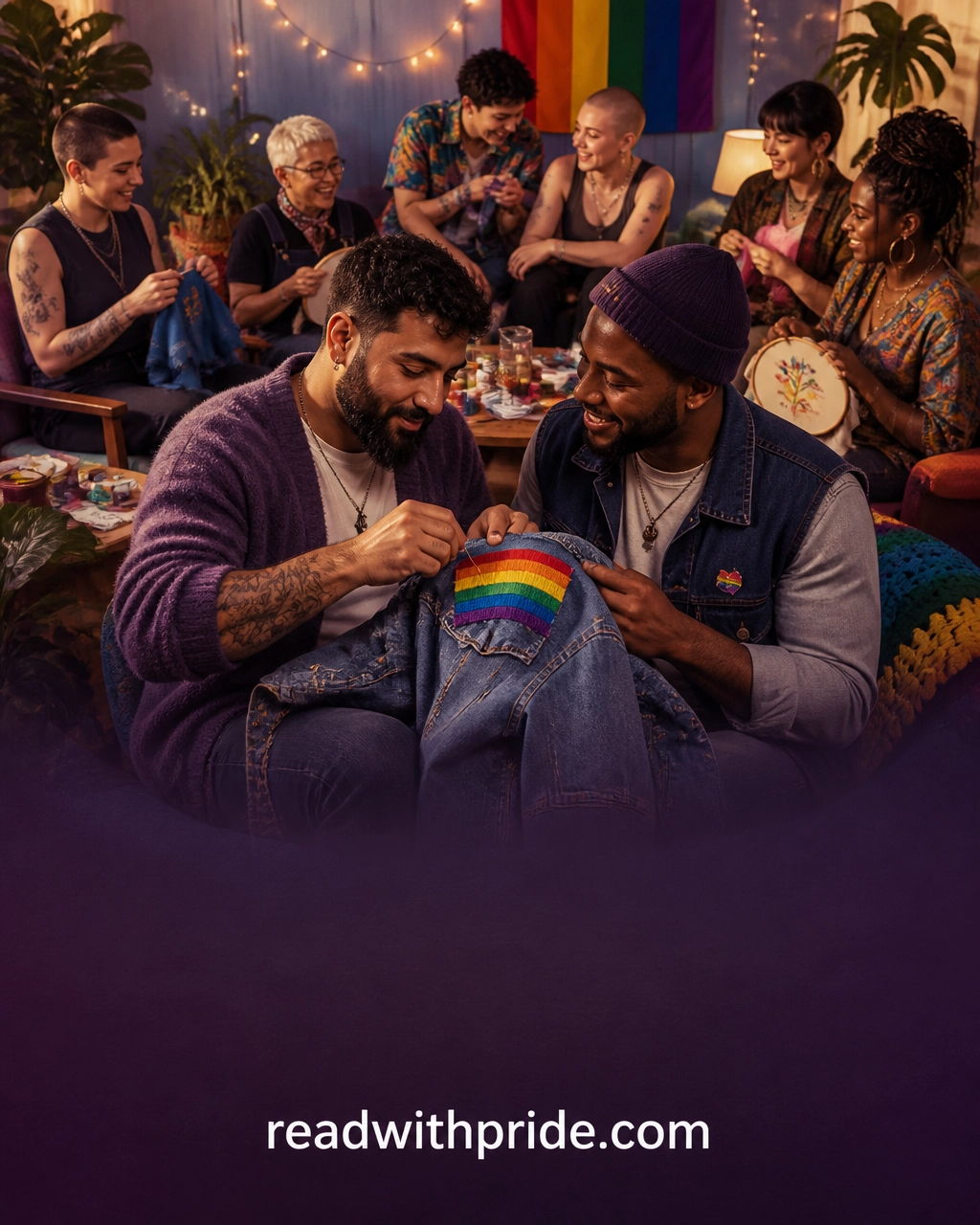
Visible mending is the practice of repairing clothes while making the repair part of the design. A tear becomes a bright patch. A worn sleeve gets colourful stitching. Instead of hiding damage, you add care and character.
Honestly, the metaphor is doing a lot of work.
Queer communities have long understood that survival can become creativity. We take what was dismissed, overlooked, or considered “too much” and turn it into something expressive. A shared mending night can become a gentle place to talk about identity, change, chosen family, and the many ways people remake their lives.
You do not need expert skills. Bring a jacket, a tote bag, or simply yourself. The point is not perfection. The point is showing up.
Community building has excellent romance-trope energy
Shared hobbies also explain why certain MM romance tropes are so irresistible. They mirror the ways real relationships grow: gradually, through trust, teamwork, and repeated moments of showing up.
Forced proximity
Two people volunteering at the same community centre or sharing a tiny craft-room table cannot avoid one another forever. One passes the scissors. The other remembers their coffee order. Suddenly, forced proximity has become emotional intimacy with a side of embroidery floss.
Enemies to lovers
Perhaps they disagree about the event budget, the playlist, or the correct way to organise a communal fabric stash. Their bickering is entertaining, but the real appeal is watching judgement soften into understanding.
Slow burn
A slow-burn romance is basically the emotional equivalent of hand stitching. One small moment at a time, the relationship becomes stronger. A shared joke becomes a private language. A difficult day becomes an opportunity to offer support. Nobody needs to sprint towards a grand declaration when a steady connection is already forming.
These are the same reasons readers love MM romance books, gay love stories, lesbian romance, and queer fiction: the relationships feel earned. They are built through action, patience, vulnerability, and care.

Turning a hobby into a lasting queer space
If you want to start your own group, keep it simple:
- Choose one accessible activity, such as mending, painting, gardening, gaming, or reading.
- Meet regularly so people know when and where to return.
- Make experience optional. Beginners are not a problem to solve.
- State clearly that the space welcomes LGBTQ+ people and allies.
- Consider access needs, costs, transport, sensory comfort, and online participation.
- Build in time for conversation, but never pressure anyone to share personal information.
- Create a community agreement covering respect, pronouns, confidentiality, and behaviour.
The best groups are not necessarily the biggest ones. They are the spaces where someone can arrive alone and leave knowing at least one person will notice if they are missing next week.
Stories help us recognise the feeling
A good queer romance can feel like another kind of community table. You arrive with your own experiences and find characters working through longing, fear, miscommunication, family, desire, and hope.
At Read with Pride, you can explore LGBTQ+ ebooks, gay fiction, MM novels, lesbian romance, and emotionally rich queer stories. Our LGBTQ+ blog and articles also explore identity, relationships, healing, hobbies, and chosen family.

Your invitation to make something together
This week, choose one hobby you already enjoy: or one you have been meaning to try: and look for a queer-friendly group nearby or online. Bring your curiosity, your imperfect first attempt, and perhaps a snack powerful enough to sustain a three-hour discussion about fictional men who desperately need to communicate.
Follow Read with Pride on Facebook and Instagram, then share the hobby that helps you feel most connected.
Community is not built in one grand gesture. It is stitched together, one welcome, one shared table, and one honest conversation at a time.
#QueerHobbies #CommunityBuilding #MMRomanceTropes #ReadWithPride #MMRomance #GayRomance #LesbianRomance #QueerFiction #LGBTQEbooks #ChosenFamily #QueerJoy #LGBTQReading

Leave a Reply
You must be logged in to post a comment.