

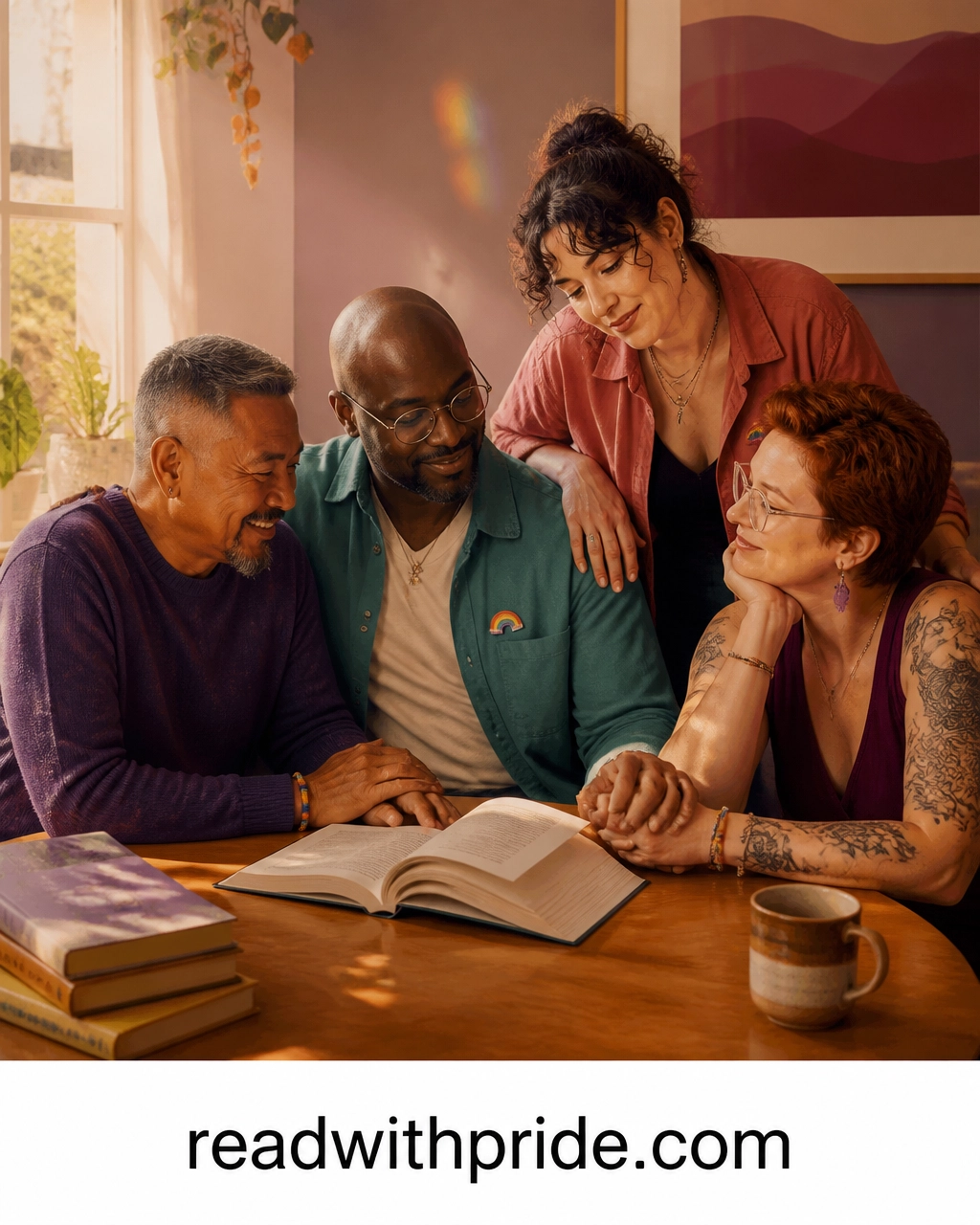
readwithpride.com
There is no single queer timeline.
Some people know who they are in adolescence. Others find the language much later. Some come out before their first relationship, while others fall in love first and understand themselves through that connection. Some build a life around one partner. Others create a wide, loving network of partners, friends, exes, co-parents and community members.
None of these paths is more authentic than the others.
The milestones of queer life, coming out, finding community, forming chosen family, falling in love, setting boundaries and creating a home, rarely arrive in a neat line. They overlap, repeat and occasionally take a surprise detour because apparently life enjoys ignoring the carefully colour-coded plan.
That is part of what makes queer relationships so powerful. We are not simply following an inherited script. We are often writing one.
Coming out is a process, not a performance
Popular stories sometimes present coming out as one grand announcement. There is a dramatic dinner, a trembling confession or a speech delivered beneath perfect cinematic lighting.
Real life is usually quieter and more complicated.
Coming out may happen first to yourself. It may begin with admitting that your feelings for another man or woman are not just admiration. It may involve trying out words such as gay, bisexual, lesbian, queer or questioning, then deciding that a different word, or no label at all, fits better.
You may tell one friend, then a sibling, then a partner. You may be out in one part of your life and private in another. You may come out repeatedly when you start a new job, join a new group or move to a new place.
Each moment can carry its own mixture of relief, fear, hope and grief.
Research on sexual-orientation identity development suggests that awareness, questioning, self-identification, coming out and romantic relationships often appear as connected milestones, but not necessarily in the same order or at the same age for everyone. The National Library of Medicine research review and the Williams Institute’s research on coming-out milestones both underline an important point: averages are not instructions.
You do not have to come out on somebody else’s schedule.
The right moment is the moment that takes your emotional, financial and physical safety seriously. Waiting is not cowardice. Privacy is not dishonesty. You are allowed to choose a text message, a letter, a conversation with one trusted person or the support of an LGBTQ+-affirming counsellor.
A truth does not become less real because you are careful about who gets to hear it.

The first milestone may be coming in
Coming out is often described as becoming visible. But before visibility comes something just as important: coming in.
Coming in can mean finding your way home to yourself.
It may happen while reading a queer story and recognising an emotion you thought belonged only to fictional characters. It may happen when you hear another person describe their experience and think, “Oh. That is me.” It may happen gradually, through conversations, community spaces, friendships or the simple decision to stop arguing with your own feelings.
There is no prize for choosing a label quickly. You are allowed to question. You are allowed to change your mind. You are allowed to use a label that feels useful today and different language later.
The most meaningful life milestones are not always visible to anyone else. Choosing your name, accepting your desires, setting your first boundary or allowing yourself to imagine a queer future can be enormous acts of courage.
This is also where many MM romance themes begin. In emotionally rich gay romance novels, the central character may understand his attraction long before he understands what love, vulnerability or partnership should look like. His journey is not simply about finding another man. It is about learning that desire does not have to be followed by shame, secrecy or self-abandonment.
Chosen family changes the meaning of belonging
For many LGBTQ+ people, chosen family is not an optional extra. It is a lifeline, a celebration and sometimes the first place where belonging feels practical.
Chosen family can include friends, partners, former partners, queer elders, mentors, neighbours, colleagues and online community members. It may be a group chat that never stops sending food recommendations. It may be the friend who knows which relatives are safe to invite. It may be the people who show up during illness, heartbreak, moving day or the annual battle with flat-pack furniture.
These relationships often become milestones in their own right:
- Finding your first queer friend group.
- Celebrating a holiday with people who understand your life.
- Creating shared caregiving arrangements.
- Building a home with friends or partners.
- Supporting one another through health, grief or major transitions.
- Developing rituals that make community feel dependable.
Chosen family does not have to replace biological family, and it does not need to look one particular way. Some people have supportive relatives and a large chosen family. Others rely almost entirely on the people they have found. What matters is that the relationships are real, reciprocal and treated with respect.
Read with Pride explores these themes in LGBTQ+ relationships and life milestones and chosen families, queer joy and the healing power of love.
Stories about found family can be especially comforting because they remind us that home is not always the place we started. Sometimes it is the place we build together.
Partnership is something we define
There is no single correct shape for queer partnership.
Some people want monogamy, marriage, shared finances and a home filled with plants that may or may not survive. Others prefer long-term relationships with separate homes. Some practise ethical non-monogamy or polyamory. Others create relationship networks where friendship, romance, sex, caregiving and family do not fit into rigid categories.
The important word is ethical.
Healthy non-monogamy depends on communication, informed consent, honesty, boundaries and ongoing care. Polyamory is not an excuse for avoiding difficult conversations, and monogamy is not automatically simpler. Both require people to discuss expectations rather than assuming that love comes with a universal instruction manual.
A partnership might need conversations about:
- What commitment means to each person.
- How time and attention are shared.
- Whether relationships are open, closed or somewhere in between.
- How safer sex and health information are communicated.
- What privacy looks like.
- How partners handle jealousy, conflict and change.
- Who belongs in the wider support network.
These conversations may not sound particularly cinematic, but they are deeply romantic. There is tenderness in asking, “What would help you feel secure?” There is devotion in listening to the answer and remembering it next week.

Queer time does not follow a straight line
Many LGBTQ+ people feel out of step with conventional life milestones. Perhaps your friends married before you had your first same-gender relationship. Perhaps you spent your twenties understanding yourself while other people seemed to be buying houses and discussing school admissions.
Perhaps you experienced several milestones at once: coming out, finding community, falling in love and creating a home in one whirlwind year.
Queer time can be delayed by safety concerns, discrimination, isolation or a lack of visible role models. It can also be expansive. You may choose milestones that mainstream culture never taught you to expect.
A meaningful life does not require marriage, children, coupledom or a traditional home. It may include all of those things, some of them or none. Your timeline might centre creative work, friendship, activism, travel, caregiving, education, personal freedom or a particularly committed relationship with your sofa.
There is no deadline for becoming yourself.
MM romance themes reflect the work of becoming known
One reason readers return to MM romance books is that the best stories understand love as more than instant chemistry. They explore the emotional work beneath attraction.
Common MM romance themes include:
- Coming out and self-acceptance: learning to name desire without shame.
- Slow burn: allowing trust to develop through small, meaningful choices.
- Forced proximity: two men discovering that avoidance is no longer an option.
- Enemies to lovers: challenging assumptions and learning to see one another clearly.
- Found family: building safety beyond the romantic couple.
- Second chances: recognising that people can grow without pretending the past did not hurt.
- Domestic intimacy: sharing meals, errands, responsibilities and the wonderfully unglamorous details of daily life.
- Chosen commitment: deciding what forever means instead of inheriting a definition.
A powerful gay love story does not need to present one perfect model of queer life. It can show uncertainty, negotiation, desire, conflict and repair. It can include monogamous gay couples, polyamorous networks, lesbian relationships, bisexual characters and queer people who are still working out what they want.
Representation becomes richer when it leaves room for all of us.

Your milestones are allowed to be yours
If you are mapping your own queer timeline, try asking:
- Which moments have genuinely mattered to me?
- Which milestones have I chosen, and which have I inherited from other people?
- Who makes me feel safe enough to be honest?
- What does family mean in my life?
- What kind of relationship structure feels right for me now?
- What might I want to change as I grow?
The answers do not need to be permanent. Queer relationships evolve. People evolve. A boundary that helped you feel safe last year may need revisiting. A label may become more comfortable, less comfortable or unnecessary. A chosen family may grow, change shape or include people you never expected to meet.
That is not failure. It is life.
At Read with Pride, you can discover LGBTQ+ ebooks, gay books, lesbian romance, queer fiction, heartfelt gay fiction and emotional MM novels that explore love in all its complicated, hopeful forms. Browse the LGBTQ+ blog and article collection for more reflections on identity, relationships and community.
Follow Read with Pride on Facebook and Instagram for more LGBTQ+ reading, queer life conversations and new stories.
Your timeline does not need to resemble anyone else’s.
It only needs to make room for a life that feels more honestly, joyfully and safely yours.
#ReadWithPride #QueerRelationships #LifeMilestones #MMRomanceThemes #MMRomance #GayRomance #LesbianRomance #QueerFiction #ChosenFamily #LGBTQBooks #GayLoveStories #Polyamory #QueerJoy #LGBTQReading
{“@type”:”BlogPosting”,”image”:[“https://cdn.marblism.com/GfwJppwUBzX.webp”,”https://cdn.marblism.com/x38Pvz084ux.webp”,”https://cdn.marblism.com/2KEM6EBxe11.webp”,”https://cdn.marblism.com/bjAeL-cNfQf.webp”],”author”:{“url”:”https://readwithpride.com”,”name”:”Read with Pride”,”@type”:”Organization”},”@context”:”https://schema.org”,”headline”:”The Queer Timeline: Coming Out, Chosen Family, and the Many Shapes of Love”,”keywords”:[“queer relationships”,”life milestones”,”MM romance themes”,”MM romance”,”chosen family”,”LGBTQ+ ebooks”,”lesbian romance”],”publisher”:{“url”:”https://readwithpride.com”,”logo”:{“url”:”https://cdn.marblism.com/3frC7pIx901.jpg”,”@type”:”ImageObject”},”name”:”Read with Pride”,”@type”:”Organization”},”inLanguage”:”en”,”description”:”An inclusive reflection on queer relationships, coming out, chosen family, partnership, monogamy, polyamory and the many life milestones that shape LGBTQ+ lives.”,”datePublished”:”2026-08-16″,”articleSection”:”LGBTQ+ Relationships and Life Milestones”}

Leave a Reply
You must be logged in to post a comment.