

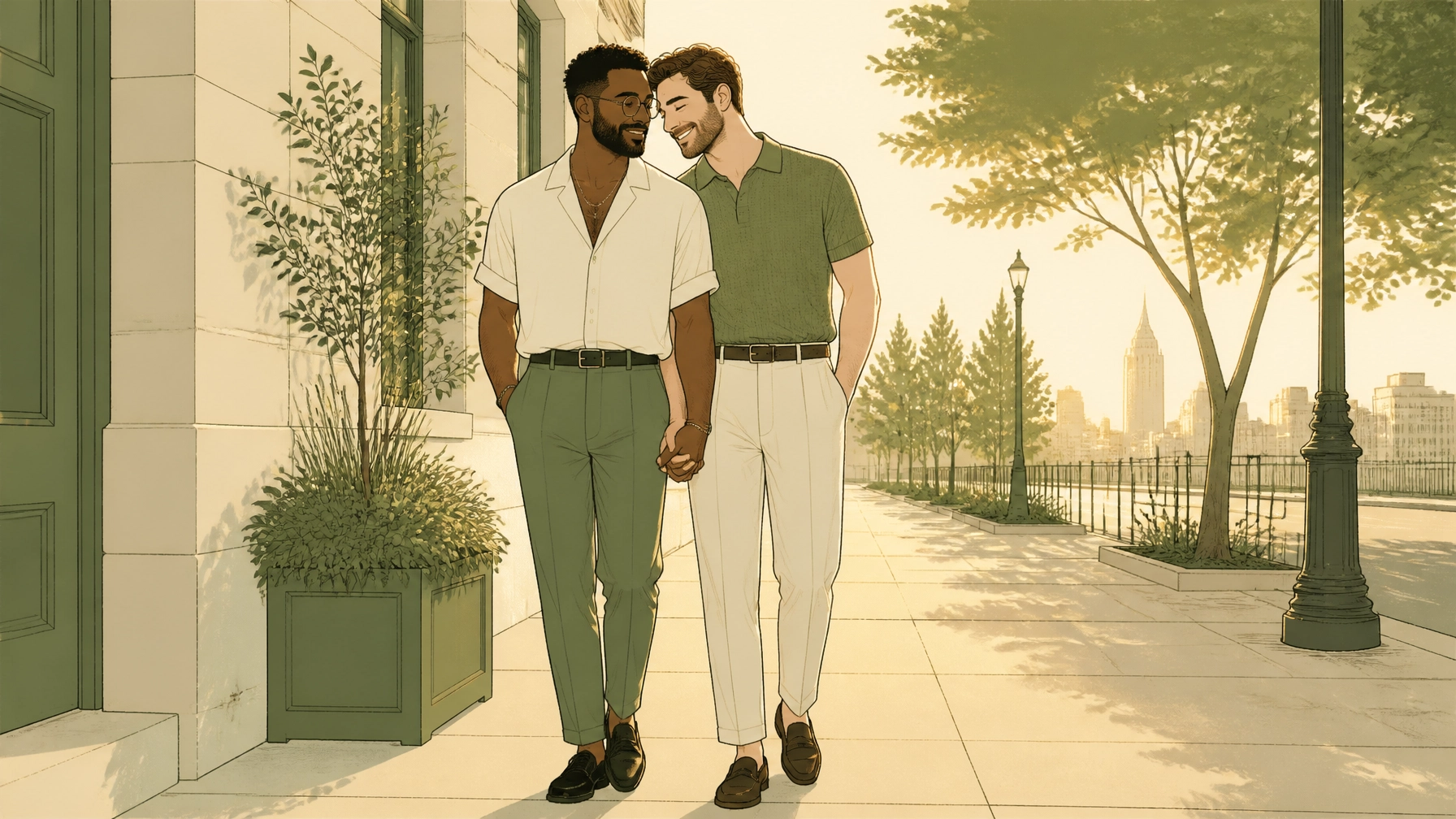
There is a particular kind of freedom in no longer editing yourself for the comfort of other people.
It might look like holding your boyfriend’s hand in public. Wearing the outfit that makes you feel most like yourself. Saying your pronouns without apologising for the pause that follows. Talking about your identity openly instead of carefully choosing every word. Posting a photograph that feels honest. Walking into a room and deciding you do not need to become smaller just because someone else has not learned how to make space.
For many LGBTQ+ people, being visible is not always simple. Safety, family, work, culture, and past experiences can all shape how openly someone chooses to live. Visibility should never be treated as a test of courage, and nobody owes the world a public explanation of who they are.
But when visibility is chosen freely, it can be joyful. It can feel like breathing more deeply. It can become a quiet declaration: I am here, and I am allowed to be here exactly as I am.
Taking up space is not the same as demanding attention
The phrase “taking up space” can sound dramatic, as if it means standing on a stage and making a grand announcement. Sometimes it does involve public celebration, activism, or proudly showing up in places where queer people have historically been ignored.
More often, though, taking up space is wonderfully ordinary.
It is sitting comfortably at a café with the man you love instead of pretending you are just friends. It is mentioning your husband in conversation without rehearsing how the sentence might land. It is allowing yourself to laugh loudly, dress boldly, dance badly, or be soft in public without treating your happiness as something that needs to be hidden.
Queer visibility does not have to be polished. It does not have to look perfect on social media. It does not need a carefully constructed message. Sometimes the most powerful form of visibility is simply living a full, recognisable life.
A life with errands, arguments, inside jokes, tired mornings, shared meals, new clothes, old fears, and genuine delight.
That everyday reality matters because queer people deserve to be seen as whole people: not symbols, headlines, stereotypes, or problems to be solved.
The joy of being recognised
One of the most beautiful parts of living openly is the possibility of recognition.
You might notice another queer person across a crowded room because of a small rainbow pin, a familiar expression, or the easy confidence of someone who is not trying to disappear. There can be an immediate sense of connection in that moment. No conversation is required. You simply understand that you are not the only one.
For gay men and other queer people, public visibility can create these small bridges between strangers. A couple walking hand in hand may remind someone else that a loving future is possible. A person speaking openly about being bisexual may help another person feel less confused or alone. Someone choosing a name, style, or way of moving through the world can quietly give another person permission to explore their own identity.
This is one reason queer joy can feel bigger than individual happiness. It travels.
A visible, contented queer life can become a message without needing to become a performance. It says that love between two men belongs in the ordinary landscape of the world. It says that queer people are not merely surviving difficult stories. They are building homes, making friends, falling in love, finding community, and enjoying the simple pleasure of being known.
Visibility begins with the self
Being fully visible to others often begins with becoming more visible to yourself.
That process can take time. Many queer people grow up learning to read the room before they read their own feelings. They become experts at noticing what is acceptable, what is questioned, what is mocked, and what is left unsaid. Before they can decide how they want to live, they may first have to work out which parts of themselves they have been hiding: even from themselves.
Self-acceptance is rarely one dramatic moment. It can be a collection of small recognitions:
This is the name that feels right.
This is the kind of love I want.
This is how I want to dress.
This is the truth I am ready to say.
This is the person I am when I am not trying to be less difficult, less obvious, or less queer.
Each choice can bring relief. Not necessarily because every fear disappears, but because the distance between inner life and outer life begins to shrink.
That feeling of alignment can be deeply grounding. When your clothes, words, relationships, and surroundings reflect who you are, the world may feel less like a stage and more like a place you actually inhabit.
Love deserves room to be ordinary
Romantic relationships are often treated as the most visible part of queer identity, but they also show why representation needs emotional depth.
A story about two men in love should not have to focus only on conflict, secrecy, or tragedy to be meaningful. Those experiences are real and important, but queer love also contains tenderness, irritation, humour, routine, desire, loyalty, and the strange comfort of knowing exactly how someone takes their tea.
There is joy in seeing two men navigate the ordinary details of a shared life. One reaches for the other’s hand while crossing the road. They disagree about where to eat. They exchange a look across a crowded room. One notices that the other is anxious and quietly moves closer. They make plans, change plans, and continue choosing each other.
These moments are not small because they are ordinary. They are powerful precisely because queer people have so often been told that their love is unusual, inappropriate, or somehow separate from the main story of human life.
Queer fiction and gay love stories can make room for the full emotional landscape. They can hold fear and confidence, jealousy and trust, uncertainty and hope. They can show people becoming visible not as flawless heroes, but as complicated human beings learning that love does not require them to disappear.
You are allowed to choose your own level of visibility
Taking up space should feel liberating: not like another demand.
There may be places where you are open and places where you are careful. There may be days when you wear your identity boldly and days when you need privacy. You may feel proud in one setting and vulnerable in another. None of these choices make you less authentic.
Authenticity is not measured by how much personal information you share. It is not a competition to see who can be the most visible. It is the freedom to make choices based on your own truth, safety, energy, and circumstances.
Some people find confidence through public advocacy. Others find it through a quiet conversation with one trusted friend. Some celebrate through Pride events, while others find queer joy in a peaceful evening at home with their partner. A person may be out to everyone they know but still keep parts of their life private. Another may be exploring their identity and not yet have language for it.
All of these experiences are valid.
The goal is not to be visible for the approval of strangers. The goal is to feel less controlled by the fear of being seen.
Making more room for joy
If you are looking for a place to begin, start with one small act that feels honest rather than impressive.
Wear something that makes you feel comfortable in your own skin. Spend time with people who let you relax. Read a story where queer characters get to experience happiness as well as hardship. Say the sentence you have been avoiding. Let yourself imagine a future that is not organised around explaining or defending your identity.
You do not have to transform your whole life overnight.
Confidence often grows through repetition. Each time you show up as yourself and discover that the world continues, the fear can lose a little of its power. Each time someone responds with warmth, the possibility of belonging becomes more believable. Each time you see another queer person living openly, you are reminded that visibility can be shared rather than carried alone.
And each time you allow yourself to feel joy without immediately questioning whether you deserve it, you reclaim something important.
Taking up space is not selfish. It is not rude. It is not an invitation for other people to judge your worth.
It is the right to occupy your own life.
For emotionally rich queer fiction, heartfelt gay fiction, and stories about complicated people finding connection, you can explore Dick Ferguson’s books through Read with Pride.
Three ideas for the next Queer Life and Identity story
- The First Time I Said “My Boyfriend” Out Loud: Small Words, Huge Courage
- Chosen Family and the Art of Feeling at Home
- Queer Confidence After Coming Out: Learning to Trust Your Own Reflection


#QueerJoy #QueerLife #QueerIdentity #LGBTQFiction #GayFiction #GayLoveStories #MMRomance #QueerRomance #LGBTQReading #ReadingWithPride #ReadWithPride #GayBooks
Follow us on social media for more conversations about queer life, identity, literature, love, and finding freedom in being fully yourself.

Leave a Reply
You must be logged in to post a comment.