

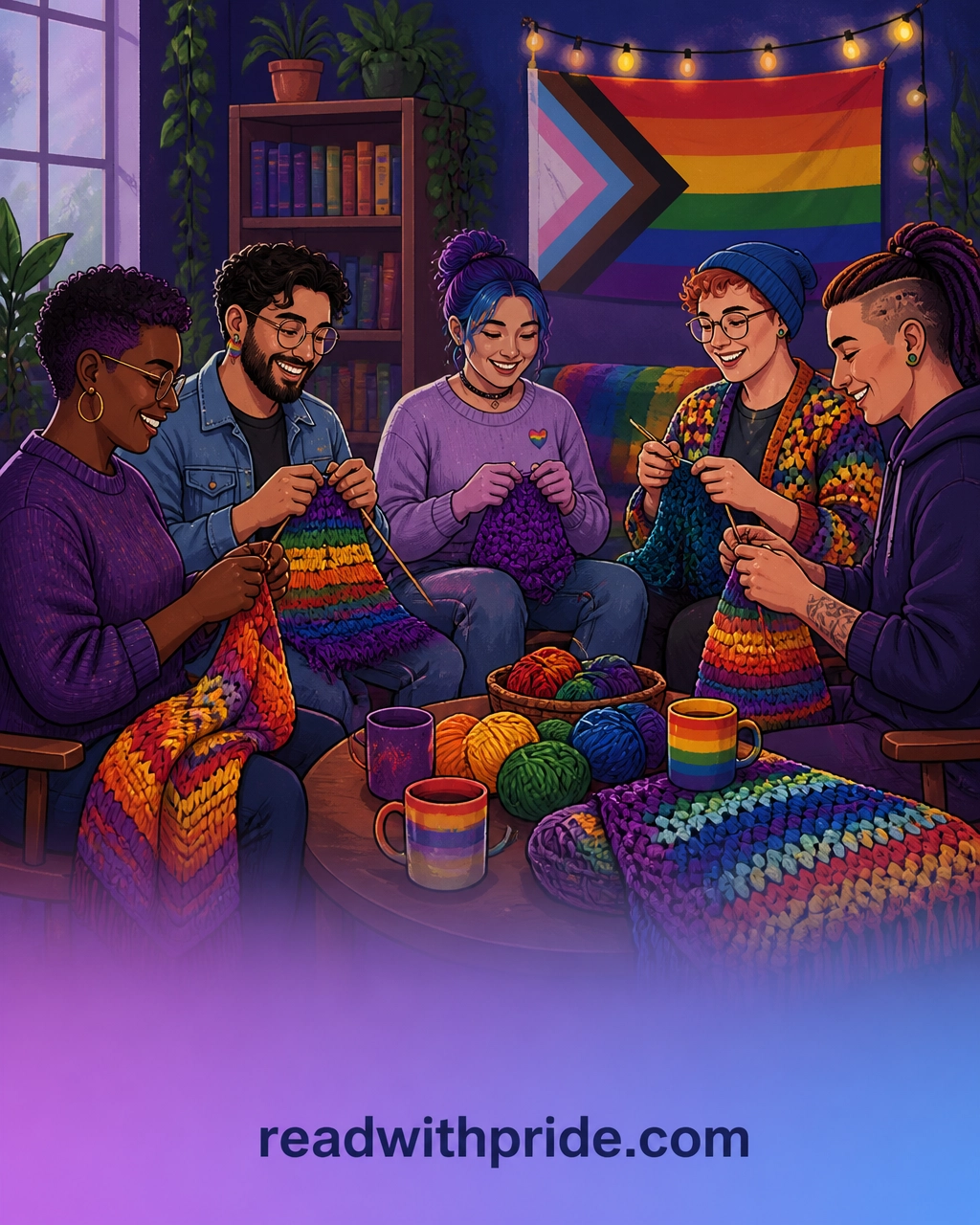
There is something wonderfully disarming about a queer craft circle. You arrive with a ball of yarn, a half-finished project, and perhaps the social confidence of a startled pigeon. Ten minutes later, someone is showing you how to fix a dropped stitch, someone else is sharing their most dramatic dating story, and the group has collectively decided that the purple yarn is cursed.
That is the magic of queer hobbies. They give us something to do with our hands while community happens around us.
Why knitting and crochet make brilliant community builders
Knitting, crochet, embroidery, sewing, quilting, and other needlecrafts are often described as solitary hobbies. But a project can be wonderfully portable: take it to a café, a library, a community centre, or a cosy corner at a queer meetup, and suddenly it becomes an invitation.
A stitch-and-bitch group does not need to be intimidating or polished. Beginners can learn. Experienced crafters can teach. People can chat, listen, laugh, or simply sit in a room where nobody expects them to explain who they are.
That low-pressure format makes needlecraft circles powerful tools for community building. You do not have to arrive with a dazzling introduction or a five-year friendship strategy. You can just say, “I’m trying to make a hat,” and let the conversation grow from there.

The queer romance trope energy is honestly unmatched
Needlecraft circles have the emotional pacing of the best MM romance tropes.
- Enemies to lovers: Two people disagree intensely about the correct way to hold a crochet hook. They eventually share snacks.
- Forced proximity: The only available seat is beside the person with the excellent rainbow cardigan. Naturally, you end up untangling yarn together.
- Slow burn: You attend every week. First, you exchange recommendations. Then birthdays. Then emergency emotional-support biscuits.
- Grumpy/sunshine: One member arrives determined to hate group activities. Another has brought six types of tea and believes everyone can be cheered up with a pom-pom.
Of course, real community is not a romance novel, and nobody owes anyone flirtation or a happily-ever-after. But the comparison is fun because queer craft circles create the same conditions we love in MM romance books and gay romance novels: repeated encounters, shared vulnerability, practical care, and people learning how to show up for each other.
Craftivism: making care visible
Some groups take their projects beyond personal creativity and into craftivism: using handmade work to support a cause or meet a community need.
That might mean crocheting blankets for LGBTQ+ shelters, knitting warm beanies for community organisations, sewing pride patches, or making comfort items for people navigating difficult transitions. The project does not need to be perfect. It needs to be made with care.
There is also something deeply queer about turning ordinary materials into visible solidarity. A ball of yarn becomes a blanket. A blanket becomes warmth. Warmth becomes a reminder that someone, somewhere, thought you deserved comfort.
Passing skills between generations
Needlecraft also creates a lovely bridge between generations. An older lesbian teaching a younger queer person how to mend a jumper is not just passing on a technique. They may be sharing patience, resourcefulness, stories, and a way of caring for what has been damaged instead of throwing it away.
That exchange can work in every direction. Younger makers might introduce new patterns, online tutorials, or playful designs. Older makers may offer practical wisdom and the confidence that comes from having made, repaired, unravelled, and remade things many times.
For people who missed out on affirming family traditions, this can feel especially meaningful. Community can create its own rituals: the first finished scarf, the annual blanket drive, the group photo nobody quite knows how to organise, and the friend who always brings too much cake.

How to start your own stitch circle
Keep it simple:
- Choose an accessible place, online or in person.
- Make it clear that all skill levels and portable crafts are welcome.
- Offer spare needles, hooks, yarn, and easy beginner patterns.
- Set a regular time so the group can become part of people’s routine.
- Agree on community guidelines that protect trans, non-binary, lesbian, gay, bi, ace, and questioning members.
- Add a shared project if you want to support a local LGBTQ+ organisation.
You can also combine stitching with reading. A queer book club could meet for an hour of discussion, followed by an hour of crafting. Bring your current gay fiction, LGBTQ+ novels, or favourite queer love stories from Read with Pride, then let the conversation wander.
At Read with Pride, we celebrate LGBTQ+ fiction 2026, gay literature, MM fiction, lesbian romance, and stories that make room for complicated, tender, hilarious lives. Whether you are searching for coming out stories, heartfelt gay fiction, or your next steamy read, there is always more to discover.
Follow Read with Pride on Facebook and Instagram for more queer reading, community, and everyday joy.
Have you found your people through knitting, crochet, embroidery, or another queer hobby? Start a circle, bring a project, and invite someone who has been looking for a place to belong.
#ReadWithPride #QueerHobbies #CommunityBuilding #MMRomanceBooks #GayRomanceNovels #ComingOutStories #QueerBookClub #LGBTQFiction2026 #CSection2026 #GayFiction #LGBTQNovels #QueerLoveStories

Leave a Reply
You must be logged in to post a comment.