

readwithpride.com
There is a strange little rulebook many of us absorb without ever agreeing to it.
By a certain age, we are apparently meant to have had the first kiss, said “I love you,” found a partner, moved in together, bought the cushions, attended Pride, and developed a firm opinion about whose turn it is to empty the dishwasher.
For queer people, life milestones rarely arrive in such a neat order. Sometimes they arrive late. Sometimes they arrive twice. Sometimes they turn up wearing completely different shoes from the ones we expected.
And that is not failure. That is life.
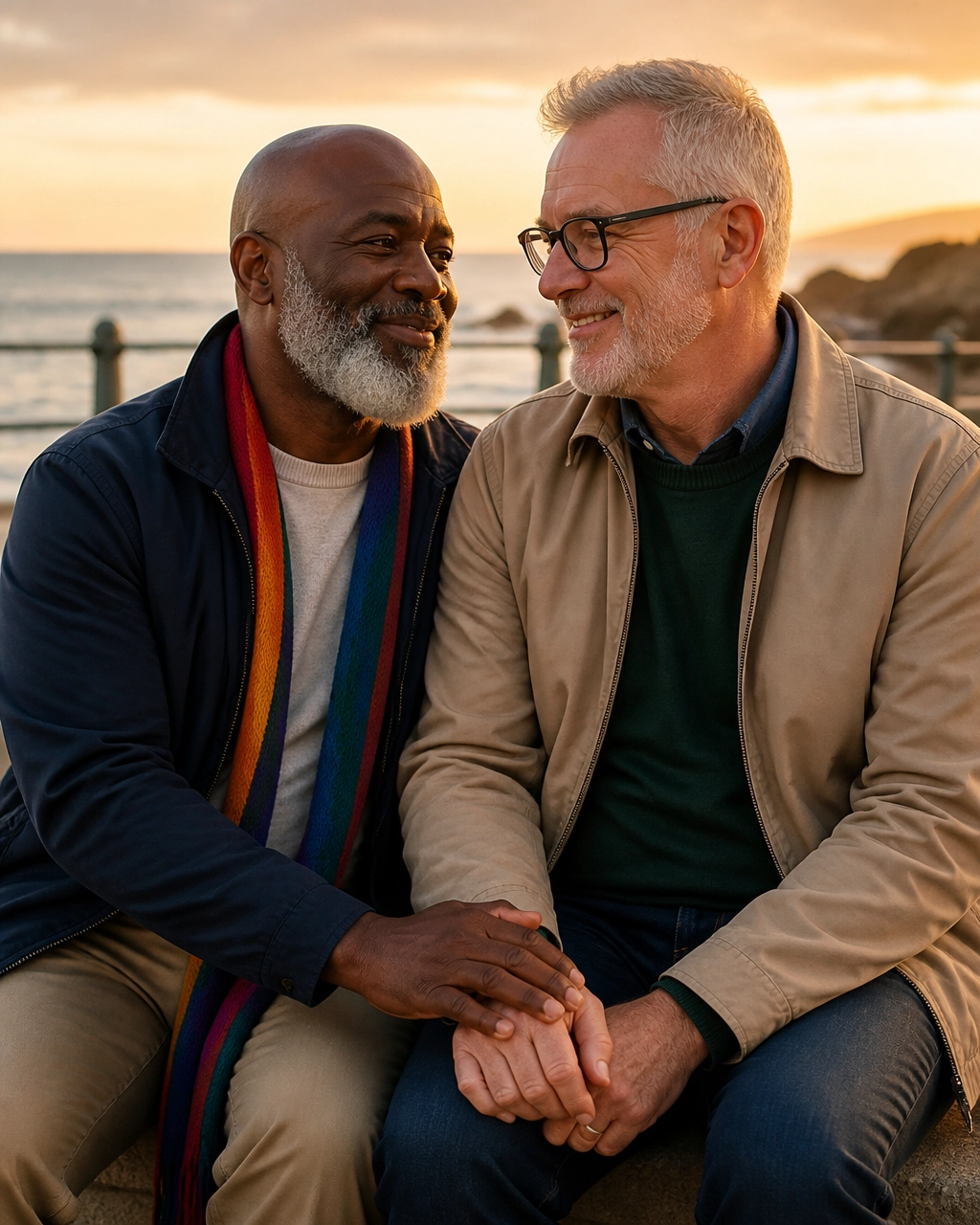
Whether you are discovering yourself after a divorce, beginning a relationship in your forties, attending your first Pride at seventy, or simply realising that your first truly safe love is happening now, there is no expiration date on queer relationships or the moments that make them meaningful.
There Is No Single Timeline for Queer Love
Straight culture has spent a lot of time pretending there is one universal path through adulthood. Meet someone young, settle down, marry, have children, buy a home, and glide gracefully into matching garden furniture.
Queer lives have never been that tidy. Nor should they be.
Coming out may happen before a first relationship, after a marriage, during a career change, following the loss of a partner, or when the language finally feels right. Some people understand their identity early but cannot safely live it. Others only begin questioning later in life, when circumstances create room for self-discovery.
Research on LGBTQ+ identity development has found that older generations often experienced longer gaps between recognising queer feelings, identifying openly, coming out, and entering a same-gender relationship. Social stigma, religious pressure, workplace discrimination, family expectations, and a lack of visible role models all played a part.
In other words: if your life milestones happened later, there may be very good reasons. You were not behind. You were navigating the map you had.

The Beauty of a First Kiss That Happens Later
A first kiss is a first kiss, whether it happens at sixteen, thirty-six, or sixty-six.
Perhaps it happens after years of wondering. Perhaps it follows a second date with someone who makes you laugh so hard you forget to be nervous. Perhaps it takes place in a parked car, outside a bookshop, or in a kitchen where one of you is holding a wooden spoon.
Romance does not become less romantic because you have lived a little first. In fact, later-in-life romance can carry a particular kind of tenderness. You may know yourself more clearly. You may understand your boundaries, your hopes, and the difference between chemistry and someone who simply texts “u up?” at 1:13 a.m.
The first “I love you” can be just as powerful. So can the first time someone introduces you as their boyfriend, girlfriend, wife, husband, partner, or simply their person.
For many queer people, these moments carry an added emotional weight because they represent not only intimacy, but visibility. Being loved openly can feel like stepping into a life you once thought belonged to someone else.
That is one reason second-chance romance is such a beloved theme in MM romance books and lesbian romance. The characters are not beginning from nothing. They are beginning with knowledge, history, scars, humour, and a clearer sense of what they will and will not accept.
Coming Out Does Not Have One Deadline
Coming out stories are often framed as dramatic turning points, and sometimes they are. But coming out can also be a long, gentle process of telling one trusted person, then another, then deciding what privacy means on your own terms.
There is no requirement to make a grand announcement. There is no compulsory social-media post. There is no queer graduation ceremony where someone hands you a rainbow sash and asks whether you have completed all the forms.
Coming out later in life may follow a divorce, children leaving home, retirement, bereavement, or years of putting everyone else first. For some lesbian women, a later relationship with a woman may provide the first opportunity to explore an identity that was difficult to name earlier. For gay men, coming out later may involve navigating family histories, religious communities, professional expectations, or the grief of time spent hidden.
The important thing is safety and choice. A milestone counts because it matters to you, not because it matches somebody else’s schedule.
If this subject feels personal, supportive LGBTQ+ organisations and LGBTQ-affirming counsellors can help. Resources such as the LGBT Aging Center’s guide to coming out later in life and research on sexual-orientation identity development across the life course offer useful context without suggesting that every queer journey looks the same.

Later Love Can Be a Second Chance, Not a Last Chance
Second-chance love is not only about former partners finding their way back to each other. It can also mean receiving a second chance at honesty, softness, domesticity, or hope.
A person who spent decades in a relationship that did not reflect their full identity may experience their first openly queer partnership as a second beginning. Someone widowed or divorced may discover that love is still possible, even if it looks different now. A person who focused on work or caregiving may finally have time to date, flirt, fall, and make an unnecessarily complicated shared calendar.
These are some of the richest MM romance themes: later-in-life gay romance, slow burn, found family, emotional healing, and characters who are old enough to know that a grand gesture is lovely, but remembering your partner’s coffee order is also a major declaration of devotion.
The same is true in lesbian romance. Two women moving in together after years of independence may need to negotiate routines, finances, family relationships, and whose books are allowed on the “temporary” staircase pile. Mature love is not free of awkwardness. It simply has more interesting conversations about it.
Moving In Together Means Making Room
Moving in together is often treated as a practical milestone: two toothbrushes, one set of keys, and an urgent discussion about storage.
But for queer couples, sharing a home can carry deeper meaning. It may be the first home where the relationship is not hidden. It may be the first time a partner is listed as an emergency contact. It may mean introducing someone to neighbours, friends, adult children, or chosen family as the person you love.
A shared home can also be a place of repair. You get to decide what family looks like there. Maybe it is Sunday dinner with friends. Maybe it is a weekly queer book club. Maybe it is a group chat full of affectionate chaos and photos of everyone’s pets. Maybe it is just two people eating takeaway in comfortable silence while one reads and the other watches television.
There is no “small” milestone when it represents a life you once believed might not be available to you.

First Pride, First Home, First Time Feeling Seen
For some people, their first Pride happens in their teens. For others, it happens after coming out in midlife or later. Some attend alone. Some go with a partner. Some arrive with chosen family and immediately discover that the group’s organisational system is mostly snacks and optimism.
Every version counts.
The first Pride with a partner can be especially moving. Holding hands in public, taking a photograph together, or hearing someone say “my wife” or “my boyfriend” in a crowd can transform an ordinary day into a personal landmark.
Visibility is not an obligation, though. A private relationship can be deeply real. A person can be out to themselves but not everyone else. A couple can celebrate their commitment without performing it for strangers. Queer joy has room for volume and quiet.
What matters is the feeling of being able to choose.
Found Family Keeps Growing
One of the most enduring queer love stories is the story of chosen family.
Chosen family may include friends, partners, ex-partners, neighbours, colleagues, community elders, younger people you mentor, and the person who always knows when you need soup. These relationships often become central to queer life milestones: first Pride, moving day, illness, celebrations, breakups, birthdays, and the difficult practical conversations about care and the future.
This is where a queer book club can become much more than a reading group. It can be a place to find people who understand why a fictional first handhold feels like a major event, why a coming-out scene can make you cry into your tea, or why the best gay romance novels include at least one emotionally significant kitchen.
Read with Pride celebrates stories where connection is allowed to be complicated, sensual, funny, hopeful, and real. Browse the LGBTQ+ blogs and articles for more reflections on quiet queer relationship milestones, first Pride together, and coming out, chosen family, and love stories in between.

Your Milestones Belong to You
There is no age limit on a first kiss, a first “I love you,” a first committed partnership, a first Pride, or a first shared home.
There is also no age limit on changing your mind, beginning again, falling in love after loss, discovering a new identity, or deciding that the life you were told to want is not the life you want at all.
That is the heart of queer relationships: not a single timeline, but the freedom to build a life that fits.
Read gay fiction, LGBTQ+ novels, emotional MM books, lesbian romance, and queer love stories that remind you of this truth. Whether you are looking for MM romance books, gay romance novels, coming out stories, or LGBTQ+ fiction 2026, there is room for your story, and plenty of beautiful fictional ones waiting for you.
And if the internet serves up an oddly specific search such as “C Section 2026” along the way, well, queer reading has always contained multitudes.
Find your next story at readwithpride.com, follow Read with Pride on Instagram, and connect with Read with Pride on Facebook.
Your firsts are not late. They are yours.
#ReadWithPride #Readwithpride #MMRomanceBooks #GayRomanceNovels #QueerLoveStories #ComingOutStories #LGBTQFiction2026 #GayFiction #LGBTQNovels #QueerBookClub #LesbianRomance #LaterInLifeRomance #SecondChanceRomance #SlowBurnRomance #FoundFamily #QueerRelationships #LifeMilestones #CSection2026

Leave a Reply
You must be logged in to post a comment.