

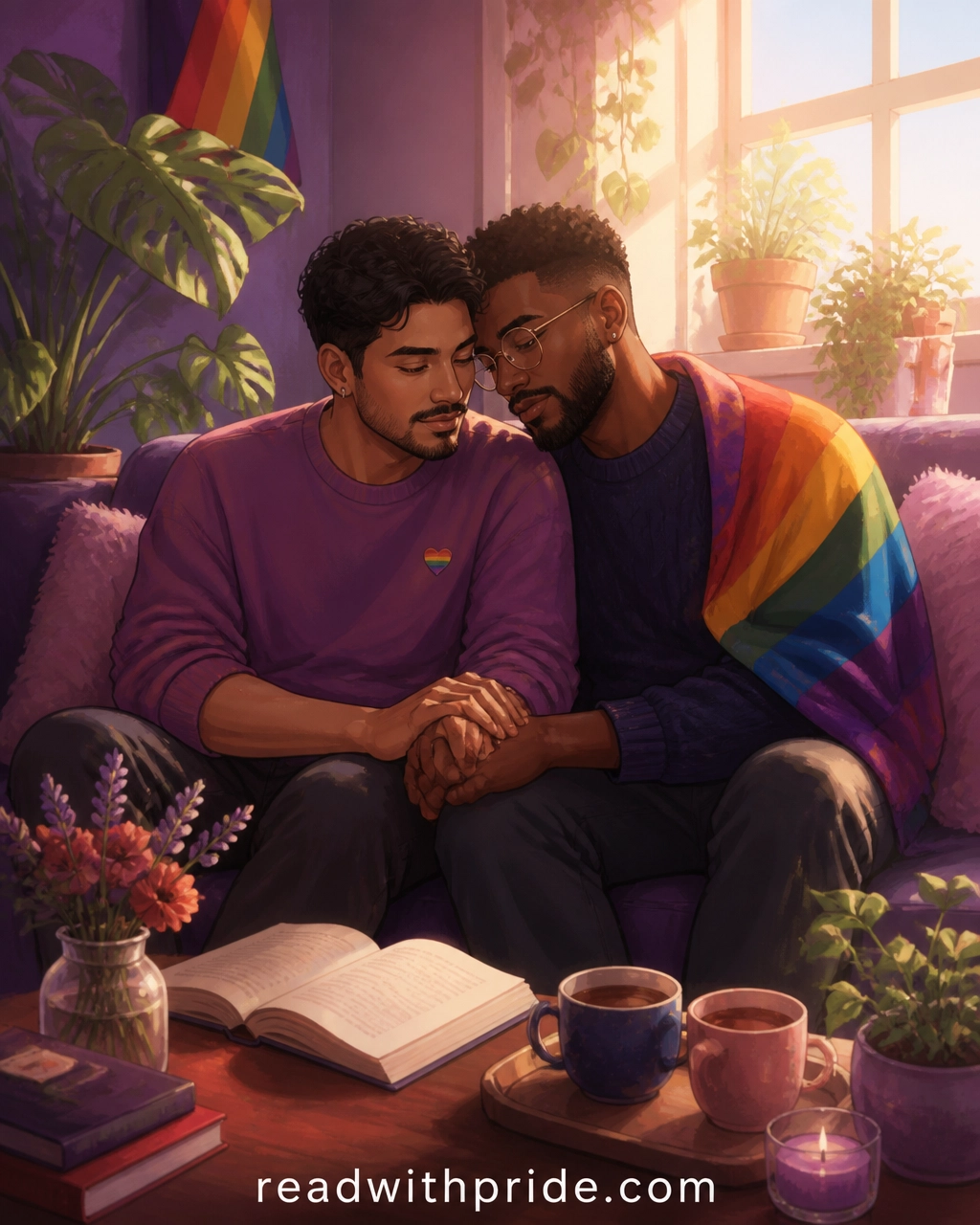
readwithpride.com
Grief rarely follows a tidy storyline. It does not always begin with a clear goodbye, arrive after a single loss, or move politely through five predictable stages. In LGBTQ+ communities, grief can come from many directions: the death of a partner, friend, relative, or chosen-family member; the end of a relationship; family rejection; an unsafe home; a lost community; or the years spent hiding parts of yourself to survive.
Sometimes, we grieve a future we thought we would have. Sometimes, we grieve the person we might have become if we had been allowed to live openly sooner.
That is why queer healing is not about rushing to “move on”. It is about making space for the full truth of what happened while slowly discovering that life can still hold tenderness, connection, pleasure, and possibility. It is about recognising LGBTQ+ resilience without turning resilience into another demand. You do not have to be endlessly strong to be worthy of hope.
In this edition of Read with Pride’s Queer Healing & Future Visions series, we are looking at how grief and hope can exist side by side, and how imagining better futures can become part of the healing itself.
Queer grief is often bigger than one loss
For many LGBTQ+ people, grief is complicated by whether the outside world recognises what has been lost.
A surviving partner may be treated as “just a friend”. A chosen-family member may not be invited into important conversations. A breakup may involve losing not only a lover but also shared queer spaces, mutual friends, routines, and the sense of safety built around the relationship. Someone coming out later in life may mourn the years spent performing a version of themselves that felt acceptable to others but distant from their own truth.
These experiences can create what is sometimes called disenfranchised grief: pain that is real but not socially acknowledged. There may be no formal ritual, no sympathetic workplace leave, and no easy language for explaining why the loss has shaken every part of your life.
Queer healing begins with refusing to minimise that pain.
You are allowed to grieve a person, a relationship, a home, a community, a younger self, or an imagined future. You are allowed to say, “This mattered to me,” even if someone else does not understand why.
Research and clinical writing increasingly recognise the importance of affirming LGBTQ+ identities, relationships, and chosen families in grief support. Resources such as this discussion of grief in queer healing and research on LGBTQ+ bereavement highlight something many queer people already know: healing becomes more possible when our relationships are treated as real.
Resilience can be quiet, ordinary, and gloriously unphotogenic
We often talk about resilience as if it looks like a triumphant speech, a community march, or a dramatic reinvention. Those moments matter. But LGBTQ+ resilience also looks like eating toast because that is all you can manage. Answering one message. Taking your medication. Letting a trusted person sit beside you without trying to fix everything.
It can look like blocking an unsafe relative. Going to therapy. Returning to a place you once loved. Changing your name. Resting before you have “earned” it. Laughing at a ridiculous video when you thought joy had temporarily left the building.
None of these actions are too small.
In fact, small acts are often how the nervous system learns that the future is not only made of danger. A regular meal, a familiar song, a gentle walk, or a weekly check-in with a friend can create a little structure around an otherwise shapeless day.

Continuing bonds: you do not have to erase love to heal
One of the most unhelpful ideas about grief is that healing requires letting go completely. For many people, the goal is not to sever connection but to find a new way of carrying it.
You might cook someone’s favourite meal on a particular date. Keep a photograph somewhere private. Write a letter you never send. Play a song that brings them close. Tell a story about them to someone who never had the chance to meet them.
These rituals can be especially meaningful in queer communities, where relationships have sometimes been hidden, dismissed, or excluded from traditional ceremonies. Creating your own ritual can restore the recognition that was missing.
A continuing bond does not mean you are trapped in the past. It means love can change shape. The person, place, or dream you lost may remain part of your story without becoming the only chapter left to read.
Future visions start with ordinary safety
When life has taught you to expect rejection, imagining a hopeful future can feel surprisingly vulnerable. Hope may sound beautiful in theory, but trusting it can feel like handing someone your softest possession and hoping they do not break it.
That is where future visions can help. You do not have to imagine a perfect world. Start with something smaller and more believable.
Imagine a home where you can leave your partner’s photograph on the mantel without explaining it. A family gathering where nobody asks you to edit your life. A workplace where coming out is information, not a crisis. A friendship that survives honesty. A queer book club where you arrive nervous and leave with three recommendations, two new friends, and a firm opinion about fictional men.
Hope does not have to be loud. It can be practical.
Ask yourself:
- What would safety look like on an ordinary Tuesday?
- Which parts of my identity deserve more room?
- Who helps me feel understood rather than managed?
- What small pleasure would I like to welcome back?
- What kind of community do I want to help build?
The answers do not need to become a five-year plan. They can simply be directions.

Stories can help us practise hope
Reading is not a replacement for professional care or community support, but stories can give language to feelings that have been difficult to name. A well-crafted gay love story can remind us that queer characters deserve futures beyond survival. A coming out story can make a reader feel less alone in the uncertainty. A piece of gay fiction can hold grief without making it the end of the narrative.
That is one reason MM romance books, gay romance novels, lesbian romance, and wider LGBTQ+ novels matter. Queer love stories allow us to witness tenderness, conflict, desire, repair, and second chances. They can offer a mirror, a window, or occasionally a very dramatic emotional support blanket.
At Read with Pride, readers can explore LGBTQ+ fiction across genres and moods, from heartfelt gay fiction to steamy romance and stories about identity, connection, and chosen family. You can also browse our LGBTQ+ blogs and articles for reflections on relationships, community, coming out stories, and queer life.
Whether you are looking for LGBTQ+ fiction 2026, a new digital read, or simply a story that understands why a quiet handhold can feel like a revolution, there is value in finding language that meets you where you are. Even if your search history is currently a chaotic mix of “best MM romance books,” “queer healing,” and “C Section 2026”, we are not here to judge. The internet is a mysterious place.
Healing is collective, too
Individual coping matters, but LGBTQ+ communities have always survived through collective care. We share meals. We check who got home safely. We make room at the table. We pass along therapist recommendations, emergency contacts, playlists, and books that helped us through an impossible week.
If you are grieving, consider telling one safe person what you need. Be specific if you can:
- “Can you sit with me while I make dinner?”
- “I do not need advice today.”
- “Could you come with me to the appointment?”
- “Can we talk about something completely ordinary?”
- “Please remember this date with me.”
If formal support would help, look for an LGBTQ+-affirming counsellor or grief group with experience in queer and trans communities. A professional who recognises chosen family, minority stress, and the complexity of coming out can offer support without asking you to translate your entire life first.
If grief becomes overwhelming, you feel unsafe, or you are thinking about harming yourself, contact emergency services in your area or reach out immediately to someone you trust. You deserve support that is compassionate, affirming, and present-tense.

The future is something we practise together
Resilience is not proof that nothing hurt us. It is evidence that hurt did not remove our capacity for connection, imagination, or change.
We can remember what we lost and still plant something. We can carry grief and still fall in love. We can honour the past without allowing it to dictate every detail of what comes next.
The most hopeful queer futures are not necessarily grand or shiny. They are full of ordinary freedoms: being introduced correctly, growing old with the people we choose, finding stories that reflect us, asking for help without shame, and waking up in a world where queer joy is not treated as an exception.
That future will not arrive by accident. We build it through care, honesty, art, friendship, activism, rest, and the daily decision to make room for one another.
So today, choose one small future-facing action. Send a message. Open a book. Join a queer book club. Make a ritual for someone you miss. Write down one thing you hope will be true a year from now.
Then share this post with someone who needs a reminder that healing does not have to be linear: and that hope is still allowed.
Explore more Read with Pride stories, discover your next LGBTQ+ read, and follow the conversation on Instagram and Facebook.
#ReadWithPride #QueerHealing #FutureVisions #LGBTQResilience #LGBTQFiction2026 #MMRomanceBooks #GayRomanceNovels #GayFiction #QueerLoveStories #ComingOutStories #QueerBookClub #LGBTQNovels

Leave a Reply
You must be logged in to post a comment.