

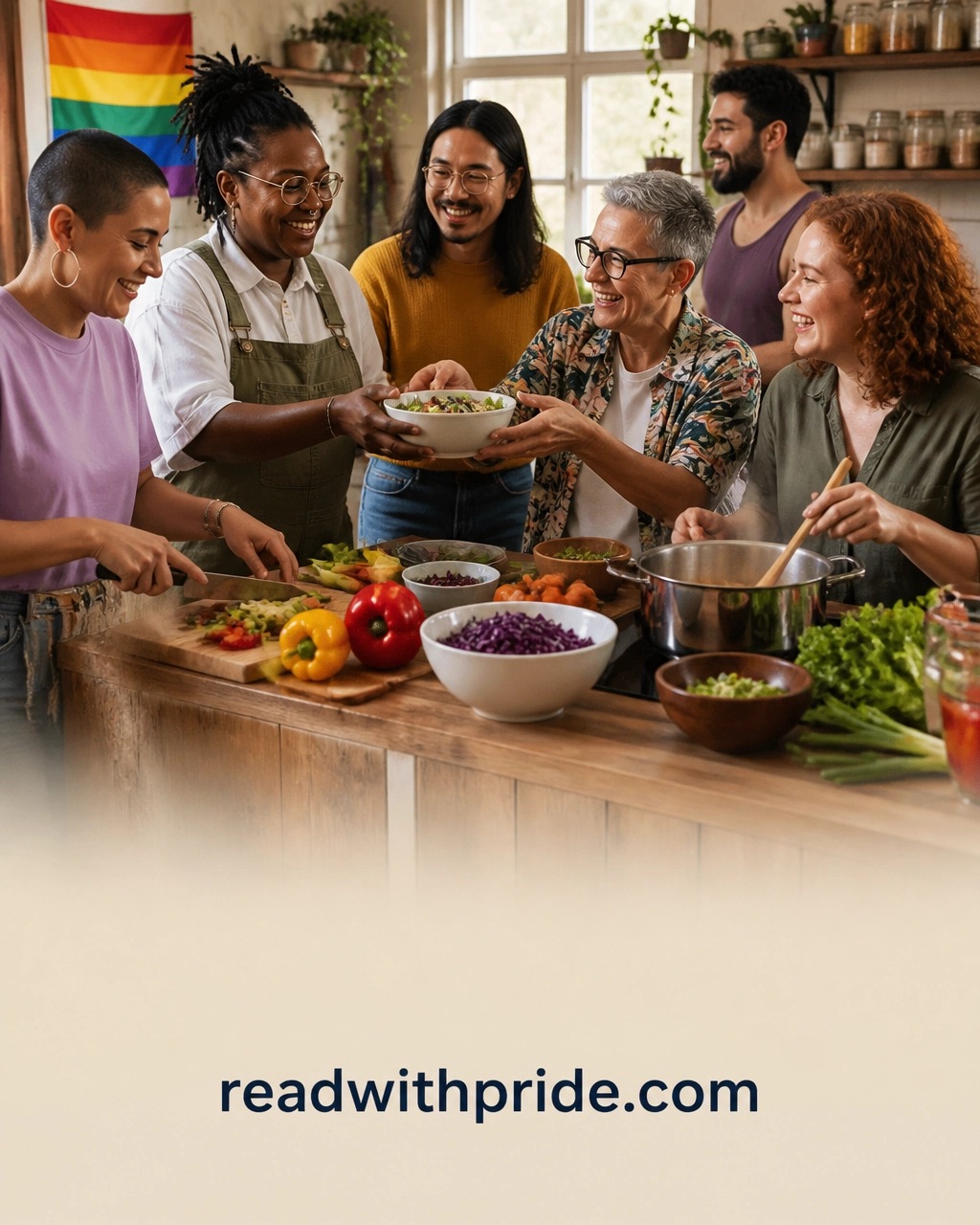
There is something wonderfully queer about cooking together. Someone brings three kinds of hot sauce. Someone else arrives with a family recipe and absolutely no measurements. A third person is in charge of music, despite having added the same dramatic power ballad four times.
Then, somehow, dinner happens: and so does community.
Shared cooking is one of the loveliest queer hobbies because it gives people a reason to gather without demanding instant vulnerability. You can chop, stir, taste, laugh, and let conversation unfold at its own pace. For anyone navigating loneliness, new friendships, or the complicated emotional terrain of coming out stories, a welcoming table can feel like a small, delicious miracle.
The romance trope potential is frankly enormous
A tiny kitchen is practically a character in its own right. There is the classic forced proximity setup: two men reach for the same wooden spoon, bump elbows, and suddenly the chilli is not the only thing simmering.
Then comes rivals-to-lovers. One person insists beans belong in chilli. The other considers this a personal attack and may be correct. Add a competitive cooking challenge, a suspicious amount of eye contact, and one reluctant compliment about knife skills. Congratulations: you have the opening chapters of several excellent MM romance books.
And slow burn? Shared bowls are perfect for it. A quiet conversation while washing rice. A favourite spice remembered weeks later. The gradual realisation that someone always saves you the crispy bits. These are the everyday details that make gay romance novels, lesbian romance, and other queer love stories feel tender, lived-in, and wonderfully specific.

How to host an inclusive queer potluck
You do not need a professional kitchen, a huge budget, or a suspiciously curated collection of matching serving dishes. You need a clear invitation and a little thoughtful planning.
1. Make the welcome explicit.
Say that the gathering is LGBTQ+ affirming, trans-inclusive, and beginner-friendly. Include a simple code of conduct: no homophobia, transphobia, racism, ableism, fatphobia, or unwanted touching. People should know they are welcome before they arrive: not after proving they belong.
2. Make bringing food optional.
A potluck should not become an audition for a cooking show. Let people bring a dish, ingredients, drinks, or nothing at all. Keep staple foods available so cost and food insecurity do not become barriers.
3. Label dishes clearly.
Ask guests to note common allergens and dietary details such as vegan, vegetarian, gluten-free, halal, or nut-free. A little card beside each dish can prevent a lot of anxiety.
4. Build in different ways to participate.
Some people will want to cook. Others may prefer setting the table, choosing music, washing up, or chatting in a quieter corner. Every role counts. Community is not measured by how long someone can stand beside an oven.

Turn dinner into a cooking club
If the first gathering goes well, make it a regular thing. Try a monthly theme such as “chosen family recipes,” “budget comfort food,” “breakfast for dinner,” or “foods that got us through a difficult week.”
Keep the group small enough for conversation, and rotate responsibilities so one person does not become the permanent provider, organiser, dishwasher, and emotional support chef. A ten-minute opening check-in can help: What food feels like home? What is your funniest kitchen disaster? What are you currently craving?
You might even pair the meal with a queer book club discussion. Pick a story from Read with Pride, bring snacks inspired by its setting, and let the conversation wander between recipes, relationships, and representation. It is an easy way to connect reading with real life: and discover your next favourite piece of gay fiction, LGBTQ+ novels, or heartfelt queer fiction.

Find your people, one plate at a time
The best gatherings are not flawless. Someone will forget the serving spoons. The dessert may collapse. The “quick” recipe will take four hours and require a pan nobody owns.
That is the point.
A queer cooking club creates room for friendship, skill-sharing, mutual care, and the kind of ordinary joy that keeps communities going. Whether you are searching for LGBTQ+ fiction 2026, C Section 2026, coming out stories, or simply a place to feel less alone, connection can begin with something as simple as “Want to help me stir this?”
After dinner, explore the curated collection of MM romance books, gay romance novels, lesbian romance, and LGBTQ+ ebooks at Read with Pride. You can also browse the LGBTQ+ blogs and articles or follow Read with Pride on Instagram and Facebook.
Bring a dish. Bring a book. Bring your beautifully chaotic self.
#ReadWithPride #QueerHobbies #LGBTQCommunity #QueerCooking #QueerPotluck #MMRomance #GayRomanceNovels #QueerBookClub #LGBTQFiction2026 #QueerLoveStories

Leave a Reply
You must be logged in to post a comment.