

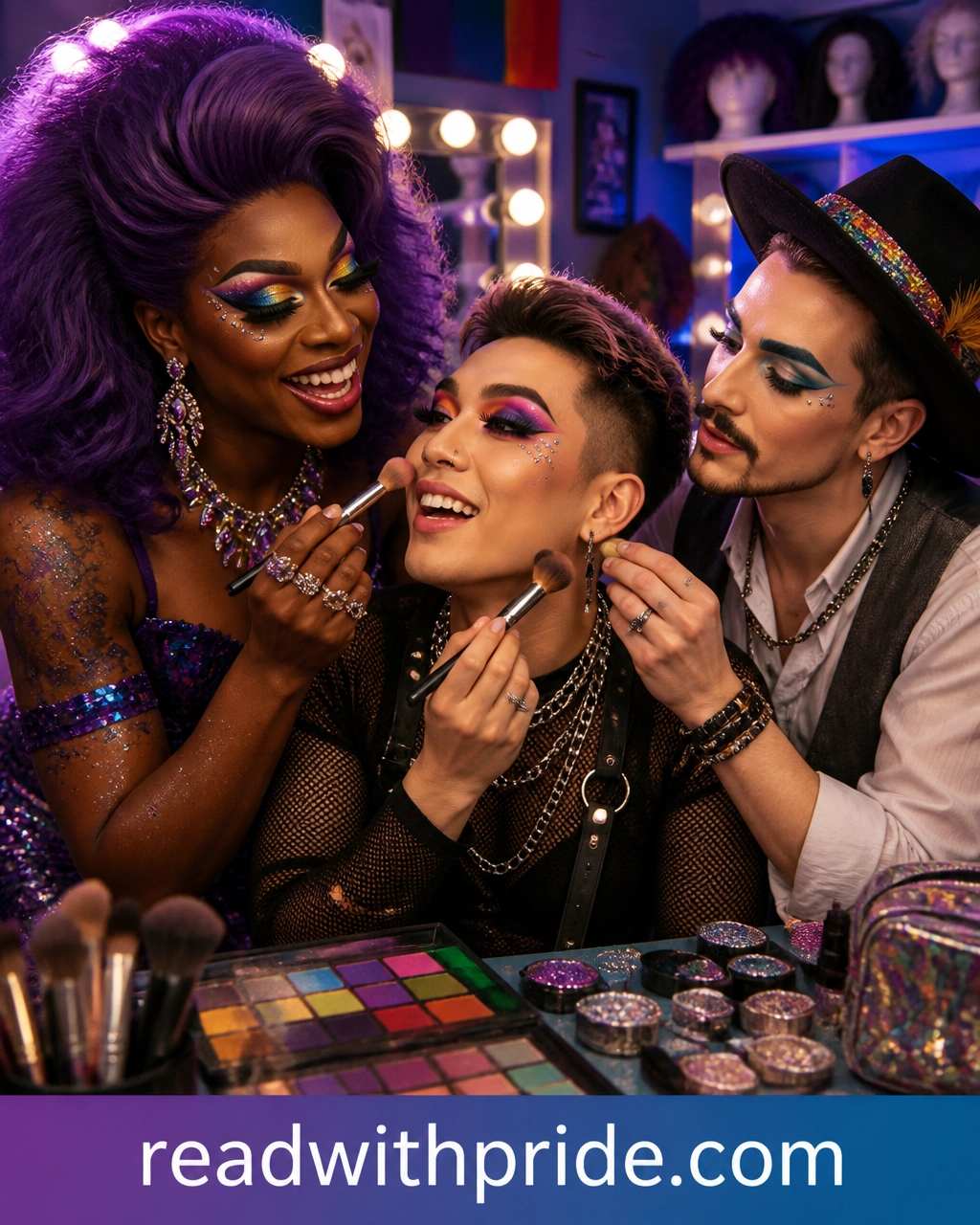
There is a special kind of magic in a room full of people passing around makeup brushes, glitter, lash glue and increasingly dramatic opinions about eyeliner.
One person is learning to contour. Another is testing a new drag king persona. Someone else is backstage, fixing a wig while organising the playlist, the snack rota and everyone’s emotional wellbeing. This is drag artistry as a queer hobby: creative, practical, gloriously expressive and surprisingly good at helping people find their people.
You do not need to perform on a huge stage. You do not need a perfect face, an expensive wardrobe or a fully developed stage name. You only need curiosity, a little time and a space where experimentation is welcomed.
Drag workshops are community in action
An inclusive makeup workshop can be as simple as a few friends around a table, a local class hosted by a queer artist or an online tutorial where everyone pauses every five minutes to say, “Wait, how did you do that?”
The joy is in learning together.
Drag queens, drag kings, nonbinary performers and everyone between can bring completely different approaches to makeup and presentation. One person may love a sculpted, polished look. Another may prefer camp, chaos and enough glitter to be visible from space. Both are valid. The point is not to copy one idea of beauty. It is to discover what makes you feel powerful, playful or wonderfully unlike your everyday self.
A good workshop should make room for different comfort levels. Some people may want to perform. Others may be there to practise makeup, style wigs, sew costumes, take photographs or simply cheer everyone on. Backstage skills count. So does making the tea.

Find your drag house: or help build one
Drag houses are often imagined as performance families, but the idea can be broader. A drag house or performance collective might include artists, stylists, makeup lovers, costume-makers, photographers, choreographers, stage managers and loyal suppliers of emergency safety pins.
That sense of shared purpose can be powerful, especially for queer people looking for connection after difficult experiences, including coming out stories that did not go as planned. A welcoming group can offer encouragement without demanding that anyone explain their entire identity before joining the group chat.
Start small:
- Choose a regular meeting time, such as the first Sunday of each month.
- Rotate activities between makeup tutorials, wig styling, costume crafts and low-pressure performance practice.
- Make participation optional: watching, helping and cheering are all legitimate roles.
- Agree on boundaries around photos, pronouns, touch, products and feedback.
- Keep the focus on joy rather than perfection.
You might meet through a queer social group, a community venue or an online LGBTQ+ network. Platforms such as Lex local groups and Meetup’s LGBTQ+ communities can help you find events and creative connections near you. Always check the details of a group and choose spaces that clearly communicate inclusive policies.
The romance tropes are practically writing themselves
Naturally, any room with shared mirrors, heightened emotions and one functioning powder compact has the energy of a romance novel.
There is forced proximity backstage, when two performers are squeezed into the same tiny prep area and discover that the only thing more intense than the spotlight is sharing setting spray.
There are rivals-to-lovers vibes over the last available mirror, the best wig or who gets to close the show. Competitive? Perhaps. Flirtatious? Almost certainly.
Then comes the slow burn: one person patiently demonstrating a cut crease while the other pretends not to notice how close they are standing. By the fourth workshop, they have mastered blending. By the sixth, they are sharing playlists. By the eighth, the entire drag house is exhausted by their refusal to admit they are in love.
But the biggest trope of all is found family. A drag house can become the place where people are remembered, celebrated and encouraged to take up space. It is the emotional heart of many queer love stories: and of real queer life too.

Make the space genuinely inclusive
Inclusivity is more than putting a rainbow flag on the wall and calling it a day. It lives in the details.
Use people’s correct names and pronouns. Do not assume everyone wants to be addressed by a drag name outside performance. Ask before touching someone’s face, hair, wig or costume. Make clear that gender expression is not a test of identity. A person can be a drag king without being a man, a drag queen without being a woman, or a performer without choosing a label at all.
Consider accessibility too. Offer seated options, good lighting, fragrance-free products where possible and breaks between activities. Let people know whether the venue has step-free access, accessible toilets and quiet areas. A workshop can be glamorous and thoughtful at the same time. In fact, the thoughtfulness is part of the glamour.
Most importantly, do not treat beginners as entertainment. Everyone starts somewhere. Today’s nervous first attempt at lipstick might become tomorrow’s unforgettable stage look: or simply a lovely afternoon with new friends. Both outcomes are worth celebrating.
Bring queer creativity back to the page
Drag artistry reminds us that stories are not only something we consume. They are something we embody, share and build together.
If you love the emotional intensity of a backstage slow burn, the sparkle of a found-family storyline or the delicious tension of rivals-to-lovers, explore MM romance books, gay romance novels and LGBTQ+ fiction 2026. Read with Pride is a home for gay fiction, LGBTQ+ novels and queer love stories, including heartfelt, emotional and steamy reading for grown-up romance fans.
You can also browse the Read with Pride LGBTQ+ blogs and articles, follow Instagram and connect on Facebook.
And if your own queer story is waiting in the wings, new LGBTQ+ writers worldwide can open an account and publish unlimited books free for one year. Only bank card transaction fees apply. It is part of the Free Global Publishing Portal series: and a brilliant opportunity to put your gay fiction, LGBTQ+ novels or queer love stories in front of readers who are ready to find them.
Paint a face. Strike a pose. Find your people. Then tell us what you created.
#ReadWithPride #QueerHobbies #DragArtistry #DragMakeup #LGBTQCommunity #MMRomanceBooks #GayRomanceNovels #QueerFiction #LGBTQFiction2026 #QueerBookClub #ComingOutStories #QueerLoveStories #CSection2026

Leave a Reply
You must be logged in to post a comment.