

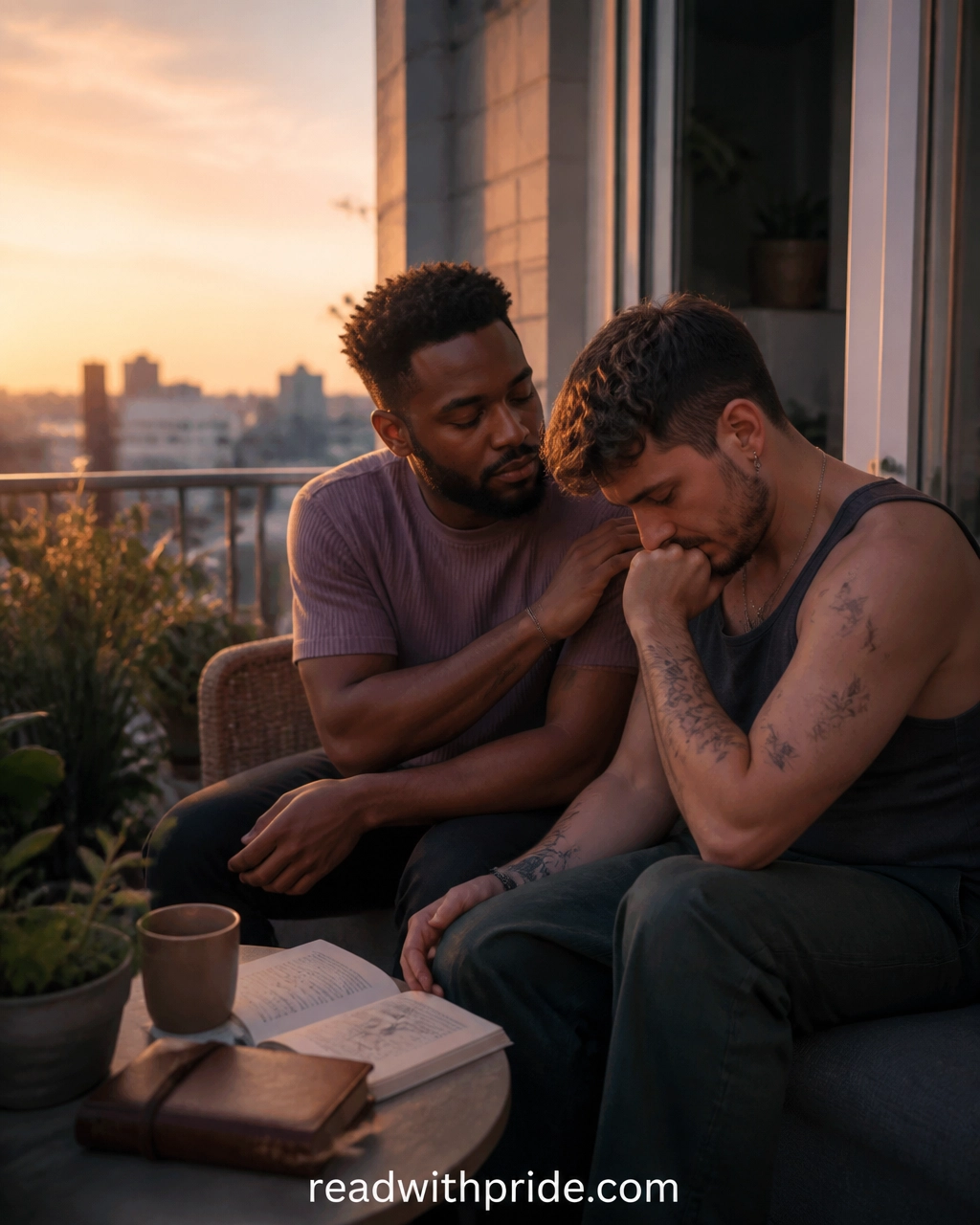
There is a kind of grief that does not always come with a clear beginning or an obvious ending.
It might follow the loss of a partner, friend, chosen-family member, queer elder, mentor, or community space. It might come from estrangement, heartbreak, years spent hiding, or a future you once imagined but can no longer reach in the same way.
Sometimes grief is personal. Sometimes it is collective. Sometimes it arrives on an ordinary Tuesday because, frankly, emotions have never been especially respectful of calendars.
This is where queer healing can begin: not by pretending the pain did not happen, but by making room for the whole truth. We can honour what we have lost while still creating future visions rooted in safety, tenderness, belonging, and choice.
Grief deserves recognition, not a deadline
LGBTQ+ grief is not always recognised by the people around us.
You may be mourning a relationship that was dismissed as “just friendship”. You may be grieving family acceptance that never came, a community lost to distance or discrimination, or the younger version of yourself who deserved more freedom.
You may also be grieving the energy it took to survive: monitoring your voice, managing other people’s reactions, translating your identity, or making yourself smaller to stay safe.
None of this means you are broken. It means something mattered.
Healing does not require you to rush past grief so you can become inspirational. You do not have to turn every painful experience into a lesson, a campaign, or a tidy story of triumph. Sometimes healing looks like therapy or journaling. Sometimes it looks like cancelling plans, crying in the shower, eating something simple, or reading a few pages until your nervous system remembers that not every moment is an emergency.
You are allowed to heal slowly. You are allowed to be angry. You are allowed to laugh ten minutes after crying. Joy does not betray what you have lost.

LGBTQ+ resilience is not a performance
The word “resilience” can be affirming, but it can also become another demand placed on LGBTQ+ people: be strong, stay positive, recover quickly, and make your suffering meaningful.
That is a lot to ask of anyone.
LGBTQ+ resilience does not mean being indestructible. It does not mean coping alone or recovering on someone else’s timetable. It means finding ways to remain connected to your humanity after being told that your humanity was the problem.
Resilience can look quiet:
- Asking for support before reaching crisis point.
- Setting a boundary without writing a three-page apology.
- Resting without treating rest as a reward.
- Letting trusted people witness your sadness.
- Choosing an affirming space instead of proving you can survive an unsafe one.
- Finding a therapist, support group, or friend who understands queer lives.
- Beginning again without pretending the ending did not hurt.
Resilience is also collective. It lives in the friend who brings dinner, the neighbour who checks in, the queer elder who shares a story, and the group chat that sends one perfectly timed voice note and a meme that is far too specific.
Chosen family makes hope practical
Hope can sound abstract until it has a face, a phone number, or a spare key.
Chosen family can include friends, partners, ex-partners, neighbours, colleagues, mentors, online friends, and community members. It does not have to resemble a traditional family to be real. It needs trust, mutual respect, care, and room for everyone to show up honestly.
Chosen family can offer:
- Witnessing: remembering what you have survived.
- Affirmation: treating your identity, relationships, and grief as real.
- Practical care: meals, lifts, childcare, company at appointments, or somewhere safe to sleep.
- Joy: shared rituals, reading, cooking, birthdays, and doing nothing together.
- Continuity: helping you imagine growing older and still belonging.
Read with Pride’s Alternative Family collection explores LGBTQ+ families, belonging, and unconditional love. These stories remind us that queer futures are not only about political progress. They are also about messy kitchens, birthday traditions, spare mugs, and someone knowing exactly how you take your tea.
Future visions can begin very small
When life has demanded constant vigilance, imagining the future can feel risky. What if we hope for something and lose it? What if the world changes again?
You do not need a ten-year plan. Start with one gentle question:
What would make tomorrow feel a little more like home?
Your answer might be enormous: safe housing, affirming healthcare, family acceptance, legal protection, or freedom from violence.
It might also be ordinary:
- Waking up without bracing yourself before checking your phone.
- Sharing a home with people who respect your boundaries.
- Seeing queer elders treated with dignity.
- Having friends who come over without needing a special occasion.
- Reading openly without worrying who is watching.
- Growing up knowing that your identity is not a problem to solve.
Try writing a short future postcard to yourself. Describe one ordinary day in a life where you feel safe enough to relax. Who is nearby? What are you reading? What no longer occupies your thoughts?
Even if your search history is a chaotic mix of “LGBTQ+ fiction 2026,” “C Section 2026,” and “best MM romance,” your future does not need to be perfectly organised to be meaningful.

Stories help us practise possibility
Stories cannot erase grief, and they are not a replacement for professional support. But they can offer language, recognition, and company.
A coming out story can remind us that identity unfolds differently for everyone. Lesbian romance can make room for desire, humour, tenderness, and complexity between women. MM romance books and gay romance novels can show men learning to trust, communicate, ask for care, and build lives beyond survival.
At Read with Pride, LGBTQ+ ebooks include gay fiction, LGBTQ+ novels, queer fiction, gay literature, lesbian romance, M/M books, and heartfelt queer love stories. Whether you want a slow burn, chosen family, second chances, or a comforting happy ending, reading can help expand the map of what feels possible.
You can also explore the Read with Pride LGBTQ+ blogs and articles or join a queer book club conversation with readers who understand why representation matters.

Hope does not erase grief
It is possible to miss someone and still build a beautiful life.
It is possible to feel furious about injustice and still laugh with your friends. You can carry complicated memories and still fall in love, make art, change careers, start a family, or discover one of the new gay books on your reading list.
Hope is not denial. It is a decision not to let loss become the only honest ending available to queer people.
Take a moment today to name:
- One thing you are grieving.
- One person, practice, or story helping you carry it.
- One future possibility you would like to make room for.
You do not have to feel hopeful every minute. You only need to leave a little space for the possibility that your life can contain more than what hurt you.
Discover healing LGBTQ+ ebooks and queer love stories at Read with Pride, including gay romance books, lesbian romance, emotional MM fiction, and affirming stories for every stage of life. Follow Read with Pride on Facebook and Instagram for more LGBTQ+ reading, queer authors, gay book recommendations, and thoughtful conversations about queer life.
Your future does not have to look like anyone else’s. It only has to feel more like yours.
#QueerHealing #FutureVisions #LGBTQResilience #ReadWithPride #QueerFiction #LGBTQFiction2026 #GayFiction #MMRomance #GayRomanceNovels #QueerLoveStories #ComingOutStories #QueerBookClub #LGBTQBooks #ChosenFamily #QueerJoy

Leave a Reply
You must be logged in to post a comment.