

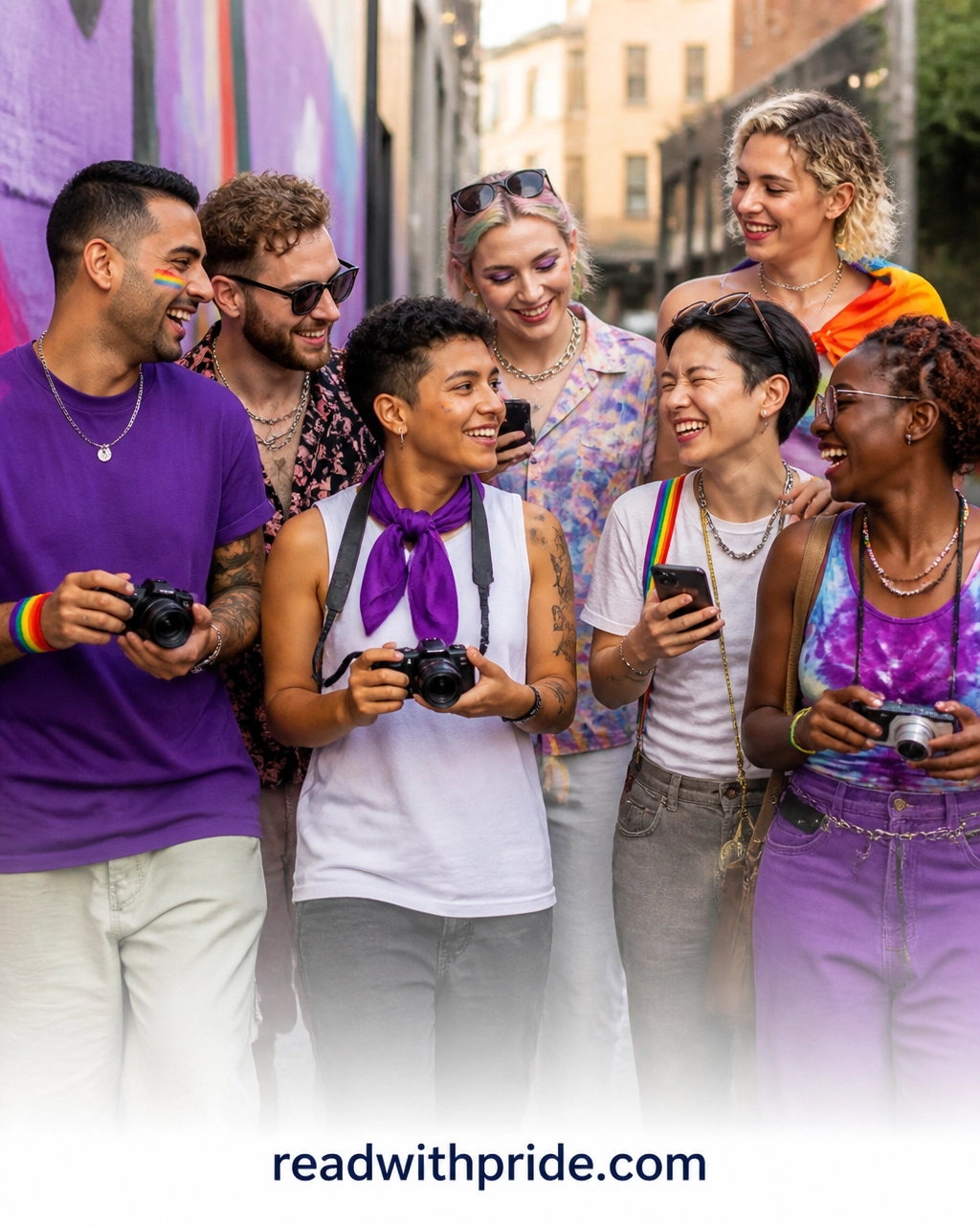
There is a special kind of magic in walking around with a camera and a group of people who understand that “wait, the light is gorgeous here” is a perfectly reasonable reason to stop in the middle of the pavement.
A queer photography club or photo walk is one of those brilliant queer hobbies that makes connection feel natural. You have something to look at, something to talk about and, if the conversation gets awkward, a very convincing excuse to photograph a lamppost.
At Read with Pride, we believe community building can begin anywhere: around a craft table, in a dance studio or while chasing the perfect reflection in a rainy shop window.
Why a queer photo walk works so well
Photography gives people a shared focus without demanding constant small talk. Beginners can use a phone. Experienced photographers can bring a beautifully overcomplicated camera setup that appears to require its own user manual. Everyone can participate.
A photo walk might explore:
- Pride murals and local queer history
- Reflections, shadows or night lights
- Chosen family and everyday queer joy
- Accessible parks, markets or neighbourhood streets
- Portraits created only with clear consent
- The tiny details that make a place feel like home
The activity creates gentle opportunities to connect. You might begin by comparing camera settings and end up discussing coming out stories, favourite gay fiction or where to find the best coffee nearby. That is the quiet brilliance of hobby-based community: friendship can develop without anyone needing to announce, “Hello, I am now attempting to make friends.”

Add a few MM romance tropes for dramatic effect
Every photo walk has the potential to become a tiny romantic subplot. We are not saying you should arrive expecting the opening chapter of an MM romance books bestseller. We are simply saying that the narrative possibilities are excellent.
- Forced proximity: Two people are assigned to document the same location. There is only one available bench. Naturally, they must share it.
- Slow burn: You keep seeing the same person at monthly walks. First you exchange editing tips. Then snacks. Then possibly feelings.
- Enemies-to-lovers: You disagree passionately about whether blurry photos can be “intentional.” One heated debate later, you are sharing an umbrella.
- Found family: You arrive knowing nobody and leave with a group chat, three invitations and someone insisting you take home leftover cake.
These are the same delicious mm romance tropes many readers love in gay romance novels and queer love stories. The difference is that a photo club lets you experience the community version: with fewer dramatic misunderstandings and considerably more lens caps.
Make the group genuinely inclusive
The best queer hobbies are welcoming to different identities, access needs and social styles. A good photo walk does not assume everyone can walk long distances, afford specialist equipment or feel comfortable being photographed.
Before the event, share clear information about the route, toilets, seating, transport, terrain and quieter alternatives. Invite people to use phones, instant cameras or no camera at all. Make consent essential: ask before photographing people, and ask again before sharing images online.
Use names and pronouns respectfully. Be explicitly trans-inclusive, anti-racist and welcoming to gay, bi, lesbian, queer, nonbinary and questioning participants. Some people will chat continuously. Others will quietly photograph a pigeon for forty minutes. Both are valid contributions.

Turn photographs into conversation
After the walk, meet in an accessible café, library or community room for an informal image share. Nobody needs to deliver a professional critique. Try simple prompts instead:
- What caught your eye?
- What story does this image suggest?
- Did the place feel welcoming?
- What would you photograph differently next time?
This can naturally grow into a queer book club, especially when members bring along their favourite LGBTQ+ ebooks or discuss the visual worlds inside LGBTQ+ novels. Browse Read with Pride’s LGBTQ+ blogs and articles for conversation starters covering queer life, relationships and reading.
For photographers who also write, the Free Global Publishing Portal offers a route to share queer creative work, from gay fiction and coming out stories to memoir, poetry and other LGBTQ+ fiction 2026 projects.
And if your internet rabbit holes somehow include C Section 2026, a camera club is an excellent way to look up from the search bar and remember that real people are usually more interesting than algorithms.

Find your people, one frame at a time
You do not need a huge organisation or a flawless plan. Choose a date, pick a short route, write clear community guidelines and invite a few people. Your first walk may be small. Someone may forget their memory card. Someone else may photograph the same tree from twelve angles.
That is not failure. That is community beginning.
Ready to find more MM romance books, gay romance novels, LGBTQ+ fiction and heartfelt queer stories? Visit readwithpride.com, follow Read with Pride on Instagram and connect with us on Facebook.
#ReadWithPride #QueerHobbies #CommunityBuilding #PhotographyClub #PhotoWalk #MMRomance #GayRomanceNovels #GayFiction #QueerBookClub #LGBTQFiction2026 #QueerLoveStories #LGBTQReading

Leave a Reply
You must be logged in to post a comment.