

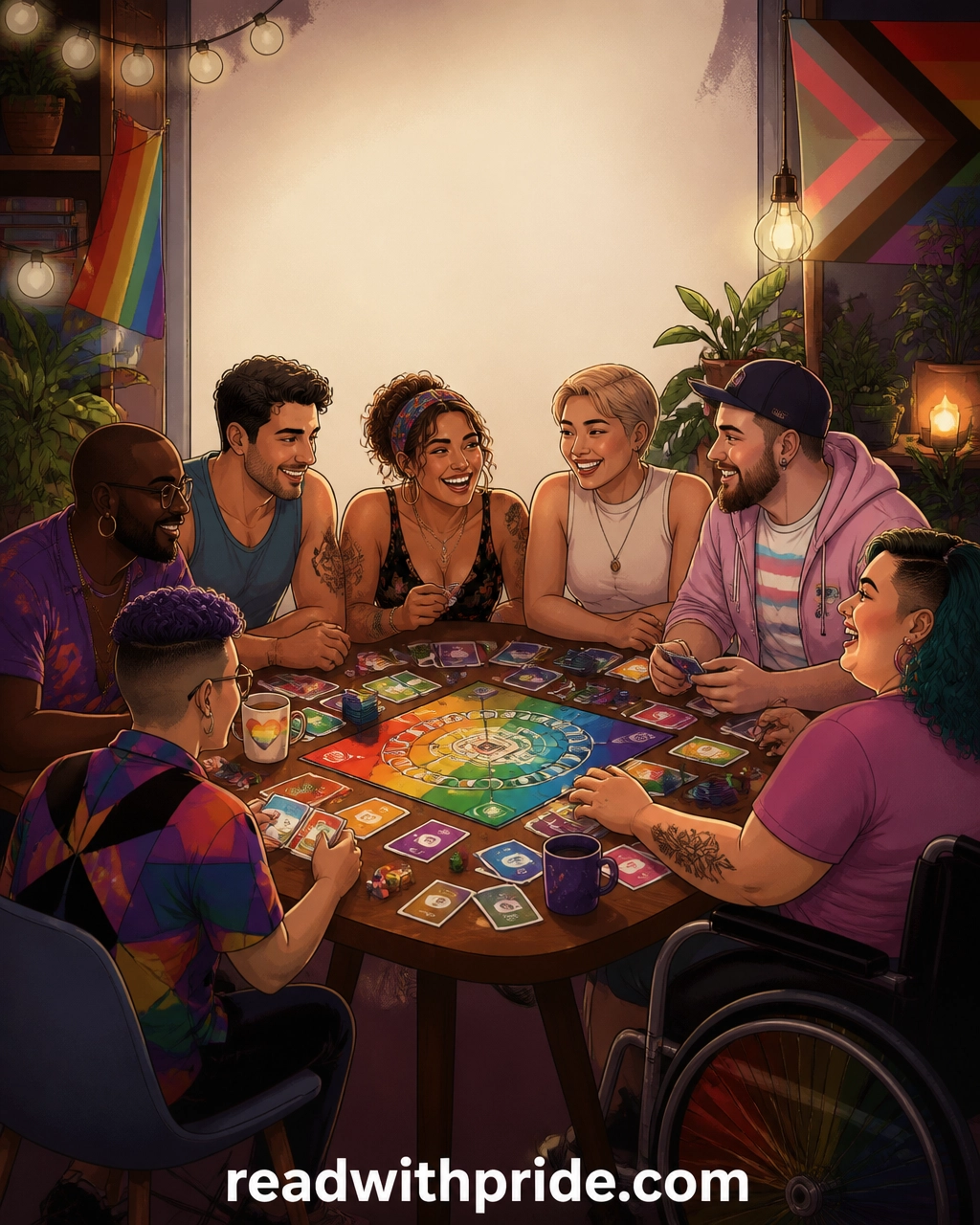
There is something beautifully queer about sitting around a table with strangers, learning the rules together, and discovering that somebody else also gets emotionally attached to the tiny wooden pieces.
Tabletop games and board game nights are brilliant queer hobbies because they create connection without demanding instant intimacy. You can talk, laugh, strategise, quietly observe, or focus entirely on whether your carefully planned little kingdom is about to collapse. No networking voice required.
For LGBTQ+ people, that low-pressure structure can make a real difference. A game night can welcome gay, bi, lesbian, trans, nonbinary, ace, aro, disabled and neurodivergent people while creating space for friendship, chosen family and genuine community building.
Why the game table works so well
Games give people something to do with their hands while conversations unfold naturally. You do not have to arrive with a five-year friendship plan. You can simply ask, “What does this card do?” and suddenly you are sharing snacks, swapping stories and making plans for next week.
Cooperative games can soften the pressure of competition. Storytelling games can invite creativity without requiring anyone to disclose personal experiences. Short games allow people to join for twenty minutes, while longer campaigns can build the sort of continuity that makes a community feel like home.
It is also a lovely reminder that queer community is not one single experience. Some people come for friendship. Some come for a break from isolation. Some are questioning. Some are tired. Some are looking for people who understand why chosen names, pronouns, access needs and boundaries are not awkward extras but basic respect.
MM romance tropes, but make them tabletop
The best MM romance tropes translate surprisingly well to the game table. In fact, the dice may be doing more emotional labour than some fictional love interests.
- Forced proximity: Two players sit beside each other for a three-hour campaign and discover they make an excellent team. Someone passes the snacks. Someone explains the rules. Someone develops a totally inconvenient crush.
- Enemies to lovers: Friendly rivalry gets intense. One player steals the best resource. The other vows revenge, then quietly helps them survive the final round. Naturally, everyone else notices first.
- Slow burn: You attend every month. You learn each other’s favourite games, comfort snacks and preferred communication styles. The relationship develops one rematch at a time.
- Found family: The campaign ends, but the group keeps meeting. The table becomes a place where people remember your pronouns, check your access needs and save you a seat.
That emotional arc is part of why readers who love MM romance books, gay romance novels and queer love stories often enjoy roleplaying and narrative-led games too. Both offer tension, tenderness, big feelings and the occasional dramatic betrayal over a handful of tokens.

How to start an inclusive game night
You do not need a huge venue or an encyclopaedic knowledge of modern board games. You need a clear invitation and a little thoughtful planning.
- Choose an accessible venue. Look for step-free entry, accessible bathrooms, wide pathways and tables with enough room for mobility aids.
- Publish community guidelines. State that homophobia, transphobia, biphobia, racism, ableism, harassment and unwanted flirting are not welcome. Respect names, pronouns and boundaries.
- Offer sensory-friendly options. Keep music low, avoid harsh lighting where possible and provide a quiet corner. Mention scent expectations and breaks in the event description.
- Bring free or loaner games. Nobody should need to spend money to participate. Ask attendees to donate games only if they genuinely want to.
- Welcome every experience level. Say clearly: “No experience needed. Rules will be explained.” Have a host available to teach games without making newcomers feel like they have wandered into an exam.
- Offer different ways to join. Playing, observing, helping with setup or taking a quiet break should all count as participating.

If you are organising a themed night, try prompts that invite conversation without demanding disclosure. A card might ask, “What makes a place feel like home?” or “Design your ideal chosen family.” You can even include something wonderfully mysterious like C Section 2026 and let the table decide what it means. Chaos is, after all, a classic tabletop tradition.
From game night to lasting community
The magic is rarely just in winning. It is in being expected. It is in someone messaging to ask whether you are coming. It is in finding a table where your identity is not treated as a debate topic and your access needs are not treated as an inconvenience.
That kind of belonging belongs in our wider reading lives too. Whether you are searching for gay fiction, LGBTQ+ novels, coming out stories, lesbian romance, LGBTQ+ fiction 2026 or heartfelt queer love stories, Read with Pride is here for stories that make room for the full, complicated, joyful LGBTQ+ experience.

Explore Read with Pride, browse the LGBTQ+ blogs and articles, and find your next read for a cosy queer book club discussion. LGBTQ+ authors can also explore the Free Global Publishing Portal.
Follow the community on Instagram and Facebook. Then invite your people, clear the table, shuffle the cards and make room for one more.
#ReadWithPride #QueerHobbies #CommunityBuilding #MMRomanceBooks #GayRomanceNovels #GayFiction #QueerBookClub #LGBTQFiction2026 #QueerLoveStories #ComingOutStories #LGBTQNovels #TabletopGaming #QueerCommunity #InclusiveGaming

Leave a Reply
You must be logged in to post a comment.