

readwithpride.com
There is a special kind of satisfaction in fixing something with your own hands. A loose bike brake becomes reliable. A torn jacket gets another chapter. A wobbly chair stands proudly once more. And, somewhere between the screwdriver tray and the tea station, you discover that the person showing you how to use a soldering iron is also very funny.
Welcome to the wonderful world of queer hobbies, where practical skills can become genuine community building.
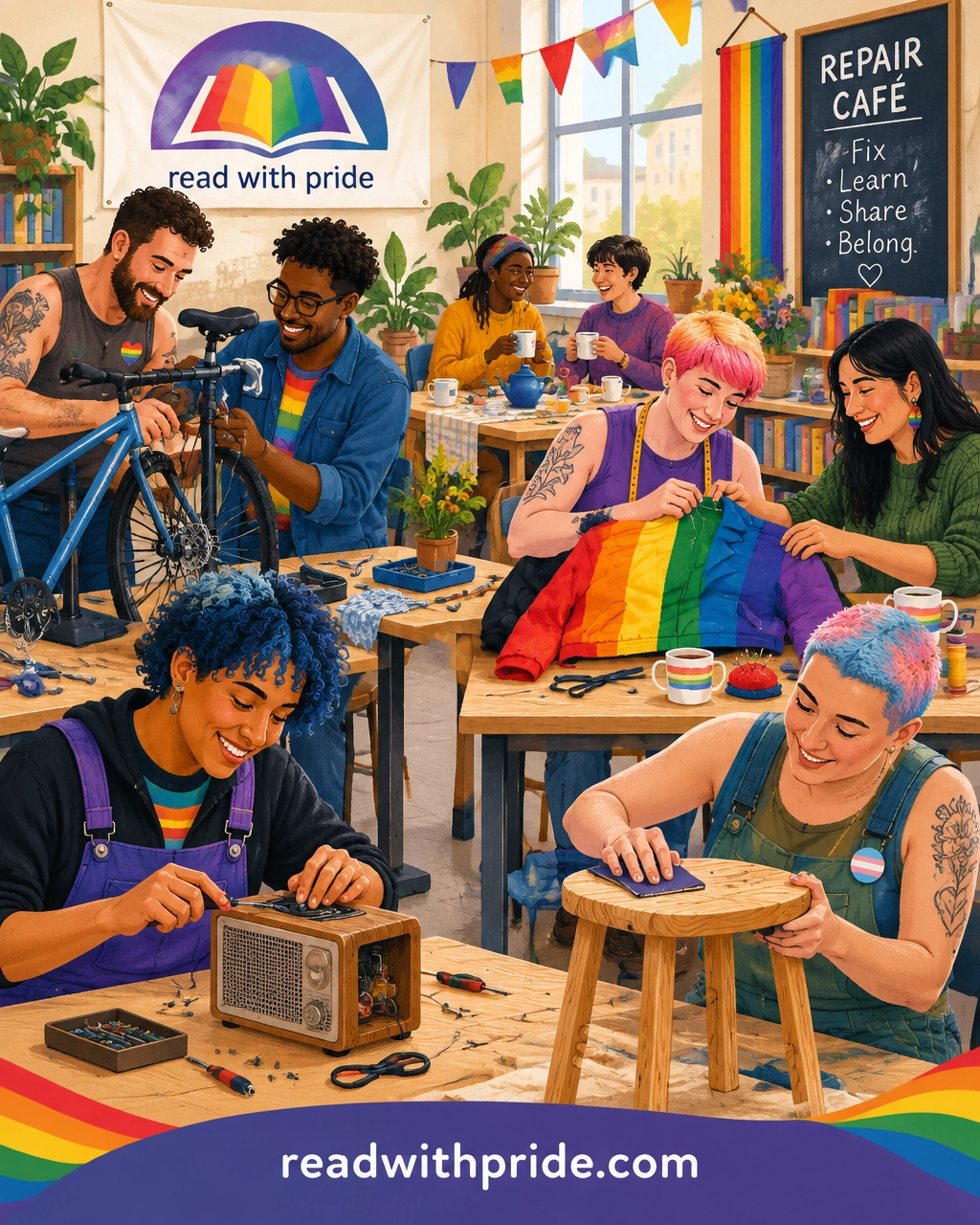
A community repair café is part workshop, part social gathering and part tiny neighbourhood revolution. People bring broken bikes, small electronics, clothes, lamps, furniture and tools. Volunteers help repair them, ideally while teaching the owner how the fix works. No one needs to arrive as an expert. Curiosity is enough.
Repair cafés can also become welcoming LGBTQ+ spaces: places where gay, lesbian, bisexual, trans and nonbinary people can learn, organise and share resources without having to explain their existence before picking up a wrench.

Why repair cafés are brilliant queer hobbies
Repair is practical, but it is also relational. You stand beside someone, ask questions, pass the pliers and celebrate a tiny victory when the old radio makes a noise that is hopefully music.
These spaces support mutual aid because they make useful knowledge available without turning every skill into a paid service. They can also connect with tool libraries, sewing circles, bike co-ops and neighbourhood organising. One person brings a sewing machine. Another knows furniture repair. Someone else makes excellent coffee and remembers everyone’s pronouns.
That is community care with a toolbox.
A queer-friendly repair café should make its values visible:
- Use an inclusive code of conduct.
- Respect names and pronouns.
- Keep events free or donation-based where possible.
- Make the venue accessible and clearly signposted.
- Recruit LGBTQ+ volunteers, not just LGBTQ+ attendees.
- Offer quiet spaces, seating and clear explanations for beginners.
- Treat teaching as important as completing the repair.
MM romance tropes, but make it a workbench
Naturally, repair cafés are packed with MM romance tropes.
Forced proximity: There is one soldering iron, two volunteers and a suspicious amount of eye contact.
Slow burn: First, they share a workbench. Then they learn each other’s coffee orders. Six monthly repair sessions later, somebody finally admits the feelings are not “just good teamwork.”
Grumpy/sunshine: One person says the chair is beyond saving. The other arrives with wood glue, optimism and a playlist.
Enemies to lovers: They have competing opinions about which screwdriver is “the good one.” The tension is unbearable. The toolbox is divided.
Found family: The repair café becomes the place where people know your name, save you the good biscuits and cheer when your bike finally stops making that alarming noise.
The best gay romance novels understand that love is often built through small acts of attention. Repair cafés do too.

How to start a queer-friendly repair café
Start small. You do not need a warehouse, twenty expert volunteers and a grant application written in flawless bureaucratic poetry.
- Gather two or three organisers. Decide whether your first event will focus on bikes, clothing, electronics, furniture or general repairs.
- Find an accessible venue. Try a library, community centre, makerspace or LGBTQ+ hub with tables, good lighting and safe power access.
- Recruit skill-sharers. Ask local sewing groups, bike enthusiasts, makers and DIY beginners. “Willing to learn” counts.
- Create safer-space guidelines. State clearly that harassment and discrimination are not welcome.
- Plan the event flow. Use a welcome desk, quick triage, repair stations and a social area with tea.
- Check safety and insurance. Follow local rules, assess electrical risks and avoid repairs beyond the volunteers’ competence.
- Share the skills. Encourage repairers to explain what they are doing rather than silently taking over.
- Ask what people need next. The community may want a tool library, skill-swap evening or monthly bike clinic.

Fix something. Find someone. Build something.
You do not have to arrive with a perfect hobby identity. You can learn one stitch, tighten one bolt or ask one apparently obvious question. That is how skills grow: and how people find one another.
For more queer hobbies, reading inspiration and community-minded stories, browse Read with Pride, visit the LGBTQ+ blogs and articles, and follow Instagram and Facebook.
For the full reading rabbit hole: MM romance books, gay romance novels, coming out stories, queer book club ideas, LGBTQ+ fiction 2026, C Section 2026, gay fiction, LGBTQ+ novels and queer love stories: Read with Pride is ready when you are.
#QueerHobbies #CommunityBuilding #RepairCafe #MutualAid #LGBTQCommunity #MMRomance #ReadWithPride #QueerLoveStories

Leave a Reply
You must be logged in to post a comment.