

There are days when grief feels like a room with no obvious exit. You wake up carrying it. You make breakfast carrying it. You answer a message, go to work, scroll through the news, and somehow it is still there, sitting quietly beside you like an uninvited guest who has decided to stay for dinner.
On those days, people sometimes say, “Give it time,” or “Stay strong.” They usually mean well. But healing is not a performance, and LGBTQ+ resilience does not mean being endlessly brave, cheerful, or self-sufficient.
Sometimes healing means letting someone sit beside you while you cry. Sometimes it means accepting the soup, the lift home, the late-night phone call, or the message that simply says, “No need to reply. I’m here.”
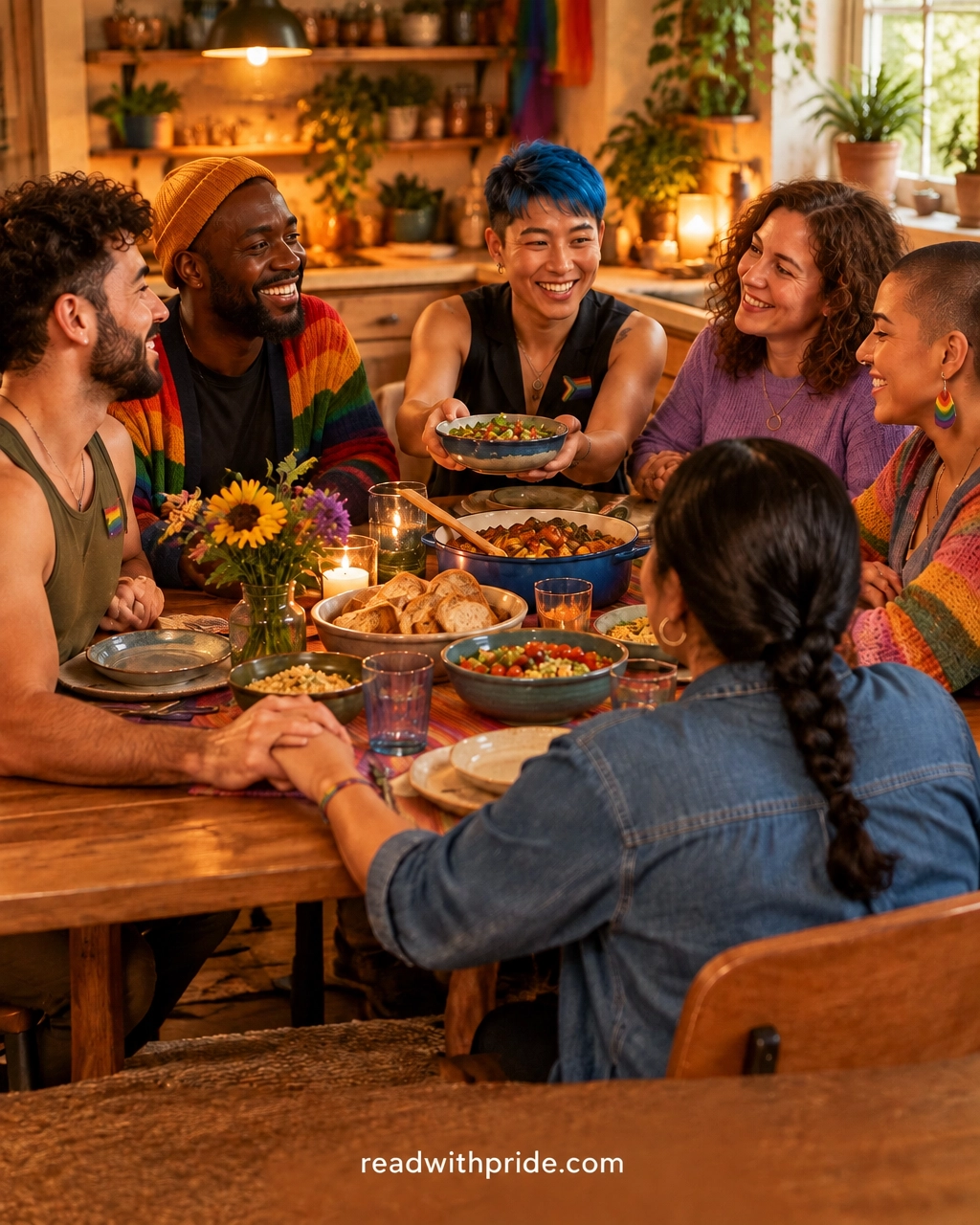
This is the heart of queer healing: we do not have to carry everything alone. Our future visions become clearer when we imagine them together, supported by chosen family, queer community, and the shared rituals that help us remember, rest, and begin again.
Grief is rarely only one thing
Queer people can experience many different kinds of loss.
There is the grief of losing someone we love. There is the grief of a relationship ending, a friendship changing, or a chosen family member moving away. There is the loss of home, safety, health, financial stability, or a sense of belonging.
There can also be grief around identity and family. Some coming out stories end with celebration and relief. Others involve rejection, silence, housing insecurity, or years of trying to earn acceptance from people who were never willing to offer it. Some people grieve the coming out stories they never felt safe enough to live.
Queer communities also carry collective grief: the loss caused by discrimination, illness, violence, poverty, stigma, and institutional neglect. Not every relationship is recognised equally by relatives, workplaces, hospitals, or legal systems. Not every person gets to mourn openly, using the name, pronouns, or relationship language that feels right.
When grief is dismissed, healing becomes harder. We need spaces that can say, clearly and without hesitation:
Your relationship mattered. Your loss matters. Your love mattered. You matter.
That kind of recognition is not indulgent. It is care.
Chosen family makes room for the whole story
Chosen family is not a consolation prize for people who have difficult relationships with biological relatives. It is family built through trust, commitment, affection, history, and everyday acts of care.
Chosen family might include a partner, an ex, a best friend, a neighbour, a community elder, a housemate, a mentor, a colleague, or the person who always knows when your “I’m fine” means absolutely nothing of the sort.
In times of grief, chosen family can provide what formal systems sometimes overlook:
- Someone who understands the relationship you have lost.
- A person who knows which traditions feel comforting and which feel alienating.
- Practical support with meals, transport, paperwork, childcare, or housing.
- A place where you do not need to explain your identity before you are allowed to hurt.
- The gentle reminder that you are still part of something.
Community care does not erase grief. It does something more realistic and more generous: it makes grief less lonely.

Shared rituals help us carry what words cannot
Rituals give feelings somewhere to go. They do not have to be religious, elaborate, or perfectly organised. In fact, the best queer rituals are often wonderfully low-budget and slightly improvised.
A ritual might be:
- Cooking someone’s favourite meal and sharing it with friends.
- Lighting a candle on an anniversary or meaningful date.
- Making a playlist and inviting people to add one song each.
- Planting flowers, herbs, or a tree in someone’s memory.
- Creating a small memory box with photographs, notes, ticket stubs, or personal objects.
- Gathering for a moment of silence, storytelling, music, or laughter.
- Writing a letter that does not need to be sent.
- Reading a chapter from a beloved book together.
- Meeting monthly for a queer book club where complicated feelings are welcome.
The point is not to create a neat ending. Grief does not need a tidy conclusion, and healing is not a one-time event with a certificate at the end.
A ritual simply says: This mattered, and we are willing to remember it together.
It can also say: We are still here.
Queer community care is built from ordinary actions
It is easy to imagine community care as something huge: a mutual-aid network, a support group, a community centre, a public campaign. Those things matter enormously, but care also lives in smaller moments.
It is the friend who sends a reminder to drink water. The person who comes with you to an appointment. The neighbour who leaves groceries outside your door. The group chat that remains active even when you do not have the energy to participate.
It is asking, “What would help today?” instead of assuming. It is respecting someone’s boundaries around touch, conversation, advice, and privacy. It is knowing that support does not always mean fixing.
For some people, connection looks like a crowded kitchen. For others, it is a quiet video call, a moderated online group, or sitting in the same room without speaking. Community should be flexible enough to include introverts, disabled people, people with caring responsibilities, people who are questioning, and people who are not ready to explain themselves.
There is no single correct way to belong.
Stories can help us imagine beyond survival
Books cannot solve every problem. A novel is not a replacement for therapy, medical care, emergency support, or safe housing. But stories can offer companionship, language, and a glimpse of what might be possible.
A tender gay love story can remind us that love may be patient and ordinary. Lesbian romance can create space for desire, joy, and self-discovery. Queer fiction can reflect complicated families, chosen kinship, difficult histories, and the hope of becoming more fully yourself.
At Read with Pride, readers can explore LGBTQ+ ebooks, gay fiction, lesbian romance, emotional MM romance books, and stories that make room for both raw desire and genuine tenderness.
If you are looking for a heartfelt story about old wounds and beginning again, The Unspoken Chapter: A Second Chance MM Romance offers a relationship shaped by memory, forgiveness, and difficult honesty. For readers drawn to expansive future visions, The Majority Rule: Love in 2150 explores love, power, family, and queer futurity after oppression.
These stories do not ask us to forget what came before. They help us imagine what could come next.

Future visions begin with small details
A better queer future can include major changes: safer healthcare, housing security, legal protection, accessible mental health support, and freedom from discrimination.
It can also begin with smaller, deeply personal images:
- A home where your identity is never treated as a problem.
- A partner, friend, or family member who knows how to support you without taking over.
- A school where LGBTQ+ children see their families represented with respect.
- A care home where older queer people do not have to return to the closet.
- A community garden where people of different generations grow food together.
- A queer book club that becomes a steady point of connection.
- A morning when you do not immediately brace yourself for bad news.
- A future where being ordinary and being queer are allowed to exist in the same sentence.
This is where LGBTQ+ resilience becomes more than survival. Resilience can mean protecting joy, sharing resources, making art, telling the truth, setting boundaries, and building relationships that give people room to breathe.
Hope is not pretending everything is fine. Hope is saying, “Things are not fine yet, and we are still allowed to imagine better.”

A gentle practice for today
If you are grieving or feeling isolated, you do not need to solve your whole life tonight. Try these three questions:
-
What am I carrying?
Name the loss, change, fear, or loneliness without judging its size. -
Who or what helps me carry it?
Think about a person, ritual, story, group, professional, pet, place, or routine. -
What small future detail can I make room for?
It might be a shared meal, a walk, a message, a chapter of a book, or one hour without pretending.
If you cannot think of an answer, that does not mean you are failing. Sometimes the first act of healing is admitting that you need help finding one.
Support resources if you are in distress
If you feel unsafe, believe you may harm yourself, or are in immediate danger, contact local emergency services or go to the nearest emergency department.
- In the United States, call or text 988 Suicide & Crisis Lifeline. LGBTQ+ people and allies can access free, confidential support by phone, text, or chat, 24 hours a day.
- LGBTQ+ young people in the United States can contact The Trevor Project by calling 1-866-488-7386, texting START to 678-678, or using online chat.
- In the United Kingdom and Republic of Ireland, Samaritans can be reached free at any time on 116 123.
- For ongoing support, consider an LGBTQ+-affirming therapist, bereavement service, peer group, or trusted person in your chosen family. You do not have to wait until things become unbearable before reaching out.
Resources can change, so check each organisation’s website for current availability and eligibility.
We heal together, and we imagine together
Queer healing is not about leaving grief behind as quickly as possible. It is about learning how to carry memory without allowing loss to close every door.
We can remember the people and possibilities that shaped us while still making room for joy. We can honour the families we lost by building more welcoming ones. We can transform isolation into ritual, ritual into connection, and connection into a future where more people are held.
Whether you arrived searching for queer healing, LGBTQ+ fiction 2026, C Section 2026, gay fiction, LGBTQ+ novels, or queer love stories, you are welcome here. Read a story that helps you feel seen. Share it with someone who needs company. Start a queer book club. Send the message. Make the meal. Sit together.
Explore the Read with Pride collection for gay romance novels, MM romance books, lesbian romance, coming out stories, and more LGBTQ+ fiction. Follow Read with Pride on Facebook and Instagram for reading recommendations, community reflections, and new releases.
Read with pride. Carry what matters. Make room for what comes next.
#ReadWithPride #QueerHealing #FutureVisions #LGBTQResilience #MMRomanceBooks #GayRomanceNovels #ComingOutStories #QueerBookClub #LGBTQFiction2026 #CSection2026 #GayFiction #LGBTQNovels #QueerLoveStories

Leave a Reply
You must be logged in to post a comment.