

readwithpride.com
There is something delightfully queer about fermentation. You gather a few humble ingredients, add patience, create a little controlled chaos, and end up with something tangy, alive, and much more interesting than when you started. Honestly, that is also a decent description of a group chat.
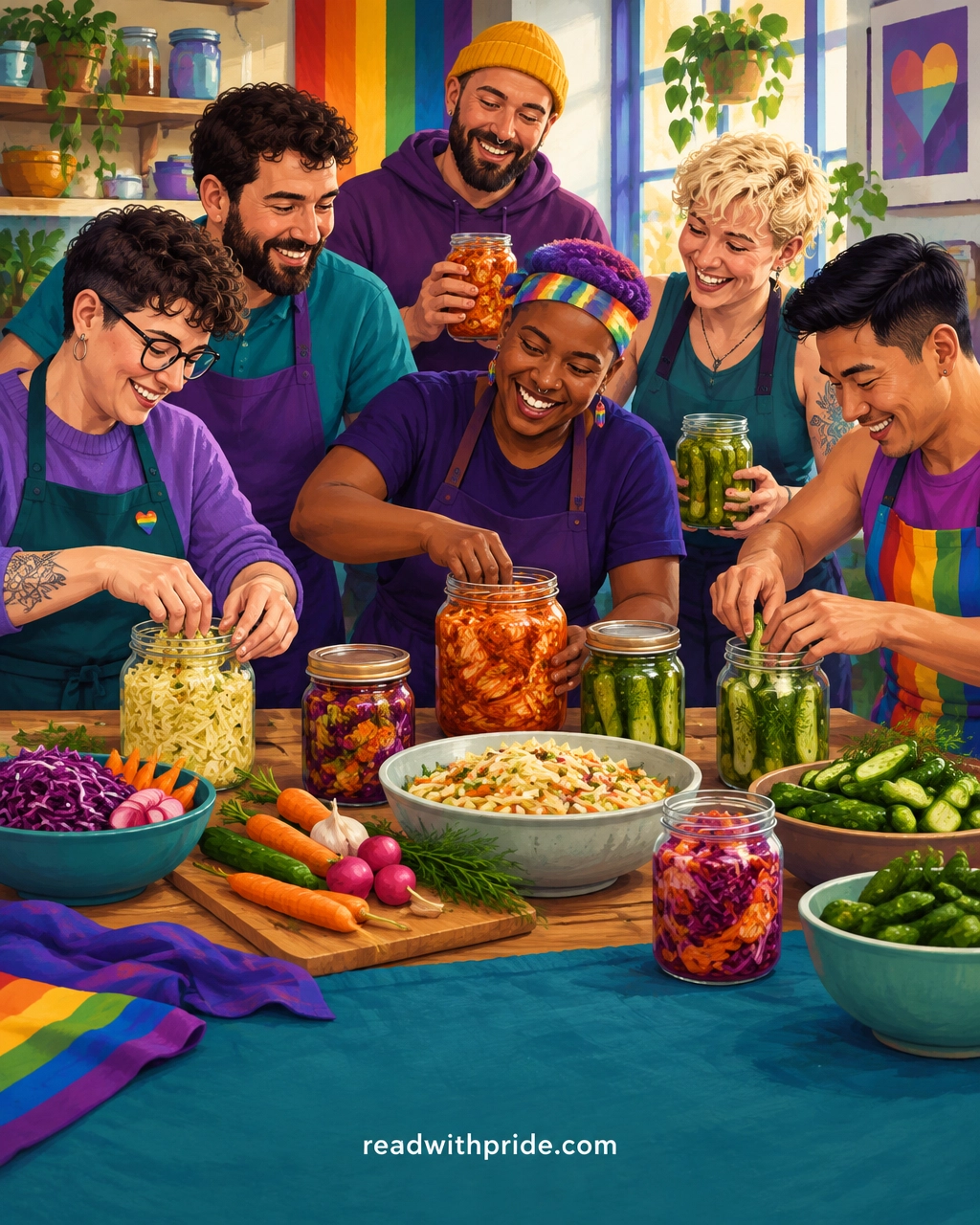
Fermentation is one of those queer hobbies that makes connection feel natural. You have something to do with your hands, something to learn together, and, eventually, something delicious to share. No forced small talk required. Just jars, cabbage, salt, and the gentle realisation that you have accidentally made three new friends.
Fermentation is community building with snacks
A queer fermentation club can be as low-pressure as you like. Meet monthly in a community kitchen, LGBTQ+ centre, library room, or someone’s generously sized kitchen. One person demonstrates sauerkraut, pickles, kimchi, yoghurt, sourdough, or kombucha; everyone else joins in at their own pace.
Watching counts. Asking questions counts. Arriving late with a fizzy drink and excellent gossip counts.
The best groups make room for different access needs, budgets, dietary requirements, sensory preferences, and skill levels. Label ingredients clearly, offer non-fermented snacks, and make it completely fine to participate without tasting anything. Community should feel welcoming: not like a competitive cooking show where everyone is silently judging your brine.

Skill swaps, shared kitchens, and mutual aid
Fermentation becomes even more joyful when it connects to other forms of care. Try a skill-swap evening where members teach one another recipes, jar sterilising, vegetable preparation, food photography, or how to design a tiny recipe zine.
A community kitchen can turn surplus produce into shared batches of pickles or sauerkraut. A jar-and-tool library can help people borrow equipment instead of buying everything at once. A “bring what you can, take what you need” table can connect food-sharing with wider queer mutual aid.
Always share ingredients and allergens clearly, follow reliable food-safety guidance, and discard anything with visible mould, a rotten smell, or an unpleasantly slimy texture. The goal is community care, not gastrointestinal treachery.

Fermentation, translated into MM romance tropes
Naturally, fermentation has excellent MM romance tropes built right in:
- Forced proximity: Two people are assigned one counter, one cutting board, and one suspiciously enthusiastic jar of kimchi.
- Grumpy/sunshine: One insists on weighing every gram. The other names the sourdough starter and brings glittery labels.
- Slow burn: The batch takes three weeks. So does admitting that the “extra jar” was obviously made for him.
- Enemies to lovers: They disagree passionately about salt ratios, then discover they are both right in different ways.
- Found family: The club remembers everyone’s allergies, celebrates tiny victories, and sends emergency soup when someone has a terrible week.
- Coming out stories: A hobby becomes the first safe place where someone can show up exactly as they are.
That is the magic of queer hobbies: the activity matters, but the belonging matters more.

How to start your own queer fermentation group
- Choose one beginner-friendly project. Try sauerkraut, quick pickles, or brined carrots.
- Invite a small group. Start with three to eight people and keep it relaxed.
- Set clear expectations. Share cost, access information, ingredient lists, and community guidelines.
- Make sharing optional. People can take their jar home, swap it, or simply enjoy the company.
- Create a recurring rhythm. Monthly gatherings build stronger community than one enormous launch.
- Connect it to reading. Finish with a recipe exchange, a queer book club chat, or a few pages from your current read.
For more queer joy, explore Read with Pride for MM romance books, gay romance novels, coming out stories, gay fiction, LGBTQ+ novels, and queer love stories. Browse the LGBTQ+ blog archive for more queer hobbies and community inspiration, then follow Instagram and Facebook.
Whether you are searching for LGBTQ+ fiction 2026, a new queer book club pick, or even the mysterious C Section 2026, there is room at the table: and probably a jar with your name on it.
#ReadWithPride #QueerHobbies #CommunityBuilding #MMRomanceBooks #GayRomanceNovels #QueerFiction #LGBTQPlusFiction2026 #QueerLoveStories #FermentationClub #FoundFamily

Leave a Reply
You must be logged in to post a comment.