

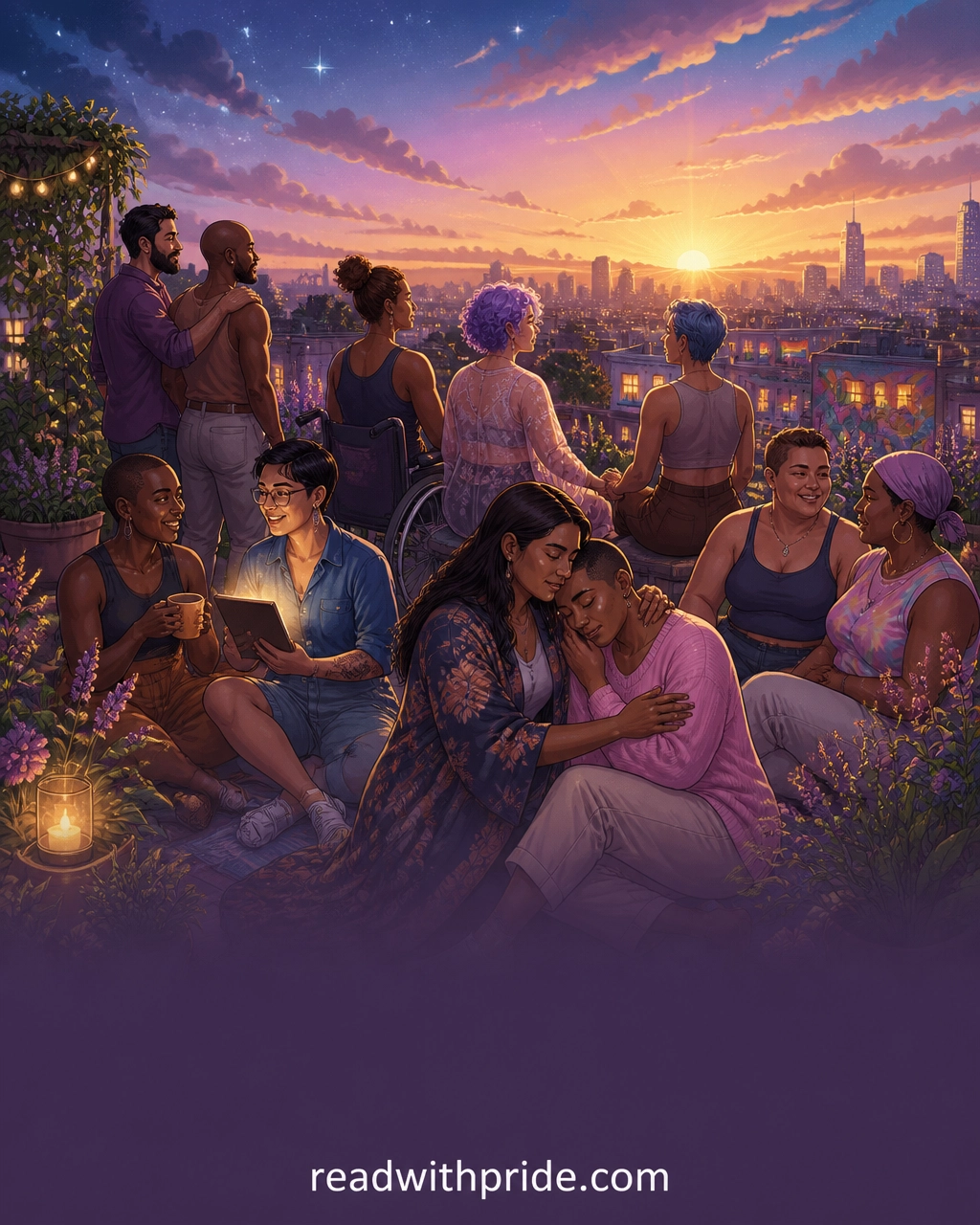
There is a difference between privately wishing for a better life and saying, out loud, that you believe one is possible.
The first can feel safe. A quiet hope can stay tucked inside a journal, a late-night thought, or the imaginary version of your future you visit when the present feels too heavy. The second is braver. Speaking about the life you want means allowing someone else to hear your longing. It means risking disappointment, especially if loss has already taught you to expect less.
For many LGBTQ+ people, that risk is real.
We may carry grief for a partner, friend, relative, mentor, or chosen-family member. We may mourn years spent hiding, a relationship that was never recognised, or a version of ourselves that had to stay quiet to stay safe. Sometimes we grieve a future we once imagined and can no longer have.
And yet, queer healing asks us to consider something beautifully unreasonable: what if hope is not naïve? What if it is an act of courage?
Grief can change the shape of the future
Queer grief is not always easy for other people to recognise.
Someone may dismiss the importance of a partner who was treated as “just a friend”. A family member may not understand why estrangement still hurts years later. People may tell us to be grateful for how far society has come, as though progress automatically repairs everything we lost along the way.
It does not.
You are allowed to grieve the childhood you needed but did not receive. You are allowed to mourn the time spent hiding your identity, translating your relationships, or trying to become acceptable to people committed to misunderstanding you. You are allowed to feel the weight of collective loss when you think about queer people from earlier generations who never got the chance to live openly.
Grief does not mean you are failing at healing. It means something mattered.
There is no requirement to turn pain into a lesson before you are allowed to rest. Some days, queer healing may look like therapy, journaling, or talking with your chosen family. Other days, it may look like cancelling plans, eating something simple, crying in the shower, or reading a few pages of gay fiction until your nervous system remembers that not every moment is an emergency.

LGBTQ+ resilience is not a performance
The word “resilience” can be affirming, but it can also become another demand placed on marginalised people.
Be strong. Stay positive. Keep going. Make your suffering meaningful.
That is a lot to ask of anyone.
LGBTQ+ resilience does not mean being unbreakable. It does not mean coping alone or recovering on someone else’s timetable. It means finding ways to remain connected to your humanity after being told that your humanity was the problem.
Resilience can look quiet:
- Asking for support before you reach crisis point.
- Setting a boundary without writing a three-page apology.
- Letting trusted people see that you are sad.
- Choosing an affirming space instead of proving you can survive an unsafe one.
- Resting before burnout makes the decision for you.
- Finding a therapist, support group, or friend who understands queer lives.
- Laughing without feeling guilty because you are still grieving.
- Beginning again without pretending the ending did not hurt.
Resilience is also collective. It lives in the friend who brings dinner, the person who checks in after an appointment, the queer elder who shares a story, and the group chat that produces one perfectly timed voice note and a meme that is far too specific.
We do not heal in isolation. Even when the inner work is personal, care becomes more sustainable when it is witnessed and shared.
Hope becomes real when we say it out loud
This is the fresh, difficult magic of future visions: they give hope a voice.
A future vision is not a glossy fantasy where nobody struggles and every group chat is emotionally mature. It is a practical picture of life beyond constant survival.
It might sound like:
- “I want a home where my partner is welcomed without explanation.”
- “I want queer elders to be cared for by people who know their history.”
- “I want young people to grow up surrounded by affirming adults.”
- “I want healthcare that treats my whole life with dignity.”
- “I want a community where disabled queer people are not an afterthought.”
- “I want to fall in love without assuming that happiness must end in loss.”
- “I want a bookshelf full of stories where queer characters get to be ordinary, complicated, hilarious, ambitious, and loved.”
Saying these things out loud can feel vulnerable. Hope exposes what we want, and wanting something means acknowledging that we do not have it yet.
But hope also gives us direction. We cannot build a future we refuse to imagine. A dream spoken between friends can become a plan. A plan shared by a community can become a movement. A movement repeated across generations can change what the next person believes is possible.
That is not wishful thinking. That is future-building.
Chosen family makes optimism practical
Hope can sound abstract until it has a face, a phone number, or a spare key.
Chosen family helps turn future visions into everyday life. It can include partners, close friends, ex-partners, neighbours, colleagues, mentors, queer elders, online friends, or the person who knows you need food before you have worked out how to ask.
Chosen family may offer:
- Witnessing: remembering what you have survived.
- Affirmation: treating your identity, relationships, and grief as real.
- Practical care: lifts, meals, childcare, company at appointments, or somewhere safe to sleep.
- Joy: creating rituals around birthdays, holidays, reading, cooking, or doing nothing together.
- Continuity: helping you imagine growing older and still belonging.
A queer book club can be part of that ecosystem too. So can a creative circle, community garden, online reading group, or monthly dinner where everyone brings a dish and at least one person forgets the cutlery.
Care does not have to be dramatic to be transformative. Repeated care becomes culture.

Queer stories help us practise possibility
Stories cannot erase loss, and they are not a replacement for professional support. But they can give us language, company, and a place to imagine.
A coming out story can remind someone that identity unfolds differently for everyone. A lesbian romance can offer tenderness, desire, humour, and complexity between women. MM romance books can show men learning to trust, communicate, ask for reassurance, and build a life that is more than survival.
The best gay romance novels do not need to pretend the world is simple. They can hold grief alongside desire, fear alongside intimacy, and history alongside hope. A slow burn can remind us that healing and connection do not have to happen instantly. A found-family story can help us notice the people already showing up for us.
At Read with Pride, LGBTQ+ ebooks make room for the full range of queer life: gay books, lesbian romance, M/M books, queer fiction, LGBTQ+ novels, gay literature, MM fiction, and romantic gay novels with emotional depth.
You can browse the Read with Pride LGBTQ+ blogs and articles for more reflections on identity, relationships, community, and healing. Readers looking for support around anxiety and self-worth can also explore Beyond Survival: A Practical Guide to LGBTQI+ Anxiety.

Try a future postcard
You do not need a ten-year plan to begin imagining something better. Try writing a short future postcard to yourself.
Describe one ordinary day in a life where you feel safe enough to relax.
Where do you wake up? Who is nearby? What can you hear? What no longer occupies your thoughts? What kind of love surrounds you? What are you reading? Who knows how you take your tea?
The details matter because they turn hope into something you can recognise.
Your postcard might mention affirming healthcare, family acceptance, safety, or housing. It might mention a garden, a partner, a creative project, or a room where nobody questions your name. It might simply say: “I have friends who come over without needing a reason, and we keep extra mugs for them.”
That is a future vision too.
Even if your search history is a chaotic mix of “LGBTQ+ fiction 2026,” “C Section 2026,” and “best MM romance,” you are welcome to imagine a life that feels more like home. Hope does not have to be perfectly organised to be meaningful.
Hope is a courageous promise
Hope does not erase grief. It sits beside it.
You can miss someone and still build a beautiful life. You can feel furious about injustice and still laugh with your friends. You can carry complicated memories and still fall in love, make art, change careers, start a family, join a queer book club, or discover a new favourite among the 2026 gay books on your reading list.
The point is not to become endlessly optimistic. The point is to refuse the idea that loss is the only honest ending available to queer people.
Every boundary plants honesty. Every chosen-family meal plants belonging. Every queer story expands the map. Every coming out story told with care gives someone else more language. Every act of tenderness says that our futures are worth protecting.

A gentle invitation for today
Name three things:
- One thing you are grieving.
- One person, practice, or story helping you carry it.
- One future possibility you are brave enough to say out loud.
You do not have to solve everything today. You do not have to feel hopeful every minute. Just make a little room for the possibility that your life can contain more than what hurt you.
Explore affirming LGBTQ+ ebooks at Read with Pride and discover gay romance books, lesbian romance, MM romance books, heartfelt gay fiction, emotional MM books, queer love stories, and LGBTQ+ fiction created for readers who want to feel seen.
Follow Read with Pride on Facebook and Instagram for more LGBTQ+ reading, queer authors, gay book recommendations, new gay releases, and thoughtful conversations about queer life.
If grief feels overwhelming, unsafe, or impossible to navigate alone, please reach out to an LGBTQ+-affirming mental health professional, trusted person, local support group, or crisis service. You deserve care that recognises your identity, your relationships, and the full shape of your loss.
Your future does not have to look like anyone else’s. It only has to feel more like yours.
#QueerHealing #FutureVisions #LGBTQResilience #ReadWithPride #LGBTQFiction2026 #QueerFiction #GayFiction #MMRomance #GayRomance #QueerLoveStories #ChosenFamily #QueerJoy #LGBTQReading #QueerBookClub #LGBTQBooks

Leave a Reply
You must be logged in to post a comment.