

readwithpride.com
There is a particular kind of hope that grows after loss.
Not the shiny, motivational-poster kind. Not the “everything happens for a reason” sort that makes you want to launch a cushion across the room. This is quieter hope. It arrives slowly, sometimes while washing a mug, answering a message, or remembering something that once felt impossible.
It says: I am still here. I am still becoming. There may be more life ahead.
For LGBTQ+ communities, healing can be complicated by the fact that some of our grief is personal, while some of it is shaped by the world around us. We may mourn a person, a relationship, a home, a version of ourselves, or years spent hiding. We may grieve the family we needed but did not receive, the coming out stories that ended in rejection, or the ordinary milestones we were told would never belong to us.
Queer healing does not ask us to minimise any of that. It asks us to tell the truth, and then gently consider what we might grow from the ground that remains.
Grief does not have to become the whole story
Loss changes us. That does not mean it gets to define us forever.
When someone in our chosen family dies, when a relationship ends, or when an old dream no longer fits, grief can make the future feel blank. The plans we had may suddenly seem ridiculous or unreachable. Even joy can feel suspicious, as though laughing means we have forgotten the person or the life we lost.
But grief and joy are not enemies. They can share a room. They can even share a cup of tea, although grief may insist on choosing the most inconvenient chair.
A person can miss someone deeply and still want to fall in love again. They can honour the past and begin something new. They can carry sadness while noticing sunlight on the kitchen floor. None of these things cancels the others.
The Read with Pride series on queer healing and future visions returns to this idea often: healing is not about going back to who we were before. It is about learning how to live honestly with what happened while making space for what could happen next.
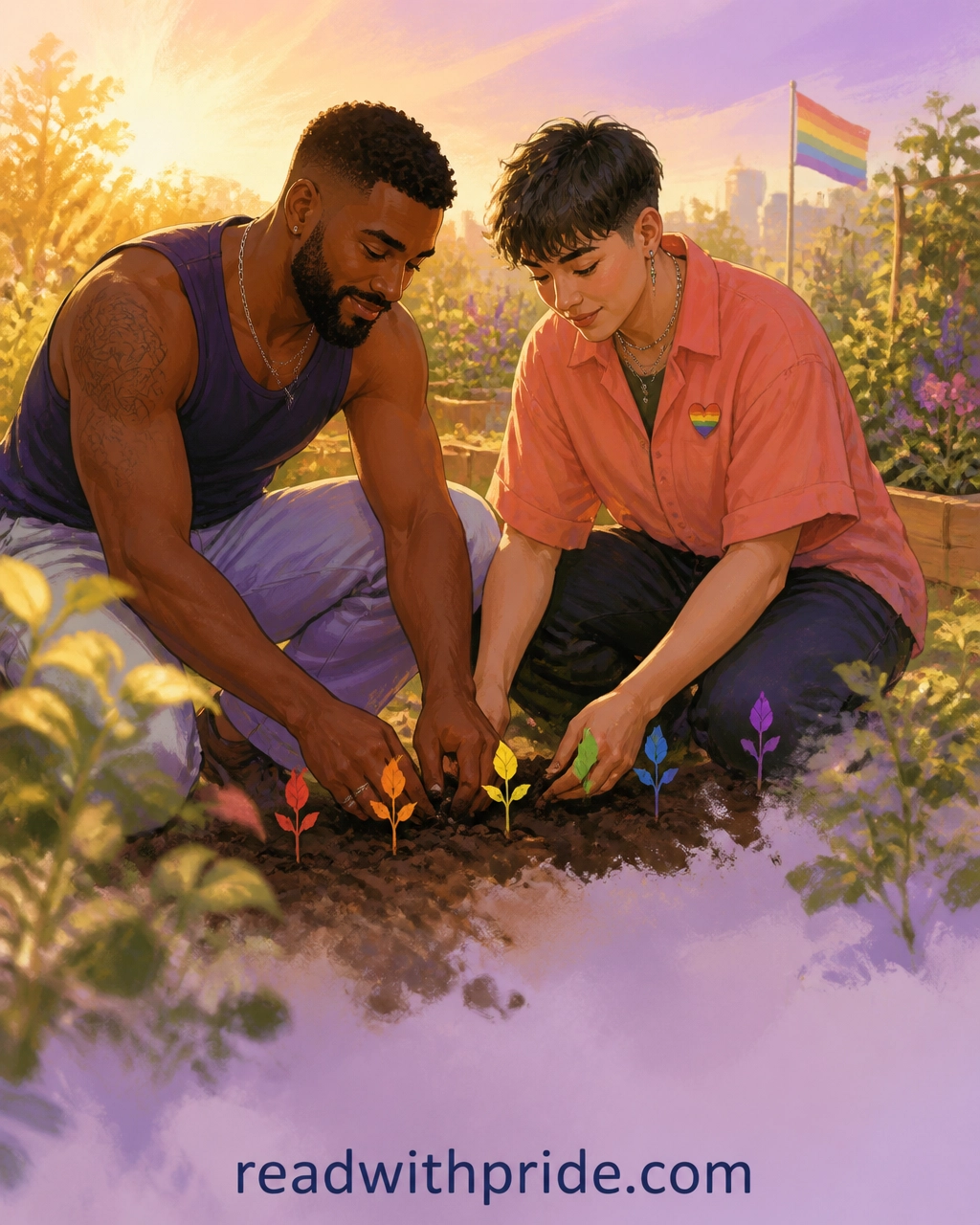
Turning scars into seeds
“Turning our scars into seeds” is not a demand to be grateful for painful experiences. Nobody needs to thank rejection, discrimination, violence, illness, or loss for making them stronger.
Instead, the metaphor gives us a question:
What can I choose to grow now?
Perhaps a scar becomes a boundary. Perhaps it becomes a clearer understanding of what safety feels like. Perhaps it teaches us to stop chasing approval from people committed to misunderstanding us.
Sometimes the seed is community. Sometimes it is rest. Sometimes it is a new creative project, a healthier relationship, or the decision to ask for help before everything becomes unbearable.
This is where LGBTQ+ resilience becomes something more generous than simply surviving. Resilience is not being endlessly tough. It is not smiling through pain so other people can feel comfortable. It may look like turning off your phone, cancelling plans, eating something easy, or telling a trusted person, “Today is not a good day.”
It may look like beginning again without pretending the ending did not hurt.

Healing is easier when someone witnesses it
Many queer people learn early how to edit their own stories. We become skilled at deciding what to reveal, when to explain, and how much of ourselves a room can handle.
That habit can follow us into grief.
We might say we are fine because the person we lost was not recognised by everyone as family. We might avoid talking about an ex-partner because relatives never accepted the relationship. We might feel embarrassed that a breakup still hurts, especially if other people treated the relationship as temporary or less serious.
A healing community makes room for the full truth. It asks who your family is instead of assuming. It uses the language you use for your relationships. It understands that a best friend, former partner, housemate, mentor, or community elder may hold a central place in your life.
Support does not always require a perfect speech. Often, it is practical:
- Sitting beside someone during a difficult phone call.
- Bringing food without asking them to host you.
- Remembering an anniversary or important date.
- Using the name and pronouns that feel right.
- Asking, “Do you want advice, company, or a distraction?”
- Accepting that the answer may change from one hour to the next.
This is community-centred queer healing: not fixing someone, but helping them feel less alone while they find their way.
Future visions begin with small possibilities
When the present feels painful, imagining a distant, perfect future can feel impossible. So start smaller.
What would make tomorrow feel a little safer? What would make your home feel more like yours? Who do you want nearby when life becomes complicated? What kind of love, friendship, creativity, or belonging deserves more room?
Future visions do not need to be enormous. They can be deeply ordinary:
- A home where nobody has to explain their identity before being welcomed.
- A partner who knows how to sit with silence.
- A group chat that responds with care instead of judgement.
- A queer book club where disagreement does not become cruelty.
- A workplace where people can bring their whole selves to Monday morning.
- An older age that includes friendship, romance, purpose, and community.
- A neighbourhood where LGBTQ+ people are not merely tolerated but genuinely at home.
Queer futures are not only about escaping hardship. They are about building lives filled with tenderness, pleasure, creativity, and choice.
That includes the freedom to imagine queer love stories with happy endings. It includes gay romance novels, lesbian romance, queer fiction, and LGBTQ+ novels where our lives are not reduced to tragedy. Stories can hold pain, of course. But they can also offer possibility. A gay love story can remind us that devotion is not naïve. MM romance books can give readers space to explore tenderness, desire, commitment, and the beautiful chaos of being known. Lesbian romance can show women choosing one another with confidence and joy.
Reading is not a replacement for support, but it can be a form of companionship. The right story can sit beside us when we do not have the words.
Let books help you imagine what comes next
At Read with Pride, queer stories make room for many kinds of experience. You can browse queer fiction, discover heartfelt gay fiction, explore emotional MM books, or find gay romance books that bring both raw desire and emotional depth to the page.
There is room for the reader who wants a soft, comforting romance and the reader who wants a steamy MM romance with complicated feelings and excellent tension. There is room for gay historical romance, MM historical romance, gay fantasy romance, lesbian love stories, and contemporary queer relationships that feel recognisably messy in the best way.
Whether you are searching for LGBTQ+ fiction 2026, building a list of new gay releases, looking for a queer book club pick, or typing something wonderfully specific such as “C Section 2026” into a search bar, stories can help us remember that the future is not one fixed destination. It is something we keep creating.
One page at a time. One conversation at a time. One act of care at a time.

A gentle practice for planting hope
If you have the energy, try writing three short sentences today:
- I am grieving…
- I am healing through…
- I am making room for…
Do not force the answers to sound wise. “I am grieving the fact that this still hurts” is a complete sentence. So is “I am healing through naps, soup, and one friend who gets it.” You are allowed to begin with the small things.
The final sentence may feel difficult. That is okay. A future vision does not need to be fully formed. “I am making room for a day that feels less heavy” is enough. So is “I am making room for love.” So is “I am making room for myself.”
Seeds do not look like forests when you plant them.
They look small. They look vulnerable. They need time, patience, water, and sometimes a little protection from people who keep stepping on the soil.
But they are still beginnings.
If grief feels overwhelming, unsafe, or impossible to carry alone, please reach out to an LGBTQ+-affirming therapist, grief counsellor, local support organisation, trusted person, or emergency service in your area. Asking for help is not a failure of LGBTQ+ resilience. It is one of its most courageous forms.

You do not have to heal on a schedule. You do not have to become who you were before. You are allowed to grow differently, love differently, rest often, and imagine a future that is kinder than the past.
Explore Read with Pride for LGBTQ+ ebooks, gay literature, M/M books, lesbian romance, and queer love stories that celebrate the lives we are living: and the ones we are still brave enough to envision.
Follow Read with Pride on Facebook and Instagram for more LGBTQ+ reading, community conversations, and stories to carry with you.
#QueerHealing #FutureVisions #LGBTQResilience #ReadWithPride #MMRomanceBooks #GayRomanceNovels #ComingOutStories #QueerBookClub #LGBTQFiction2026 #GayFiction #QueerLoveStories

Leave a Reply
You must be logged in to post a comment.