


A reader sees your cover. They notice your title. Then they read your blurb.
That small block of text has one important job: to help the right reader recognise that your book may be exactly what they have been searching for.
For queer authors, a strong blurb can do even more. It can signal representation, emotional intensity, genre, and the kind of reading experience waiting inside. Whether you write gay books, MM romance, gay psychological thrillers, or deeply personal queer fiction, your description is an invitation.
It tells readers: This story understands the kind of journey you want to take.
If you are ready to place your work in front of an audience actively looking for LGBTQ+ fiction, Read with Pride offers LGBTQ+ authors a dedicated home for their books, including a publishing portal free for one year.
The emotional promise of a great blurb
A blurb is not a chapter summary. It is not a biography of every character. It is not a complete account of everything that happens.
A blurb is an emotional promise.
For a romance, that promise might be:
- You will experience a powerful attraction between two men.
- You will watch guarded characters learn to trust one another.
- You will feel the pressure of secrecy, family expectations, or public scrutiny.
- You will follow a love story shaped by vulnerability, resilience, and hope.
For a thriller or psychological drama, the promise might be tension, danger, obsession, transformation, or the revelation of a carefully hidden truth.
Emotionally invested readers want more than a premise. They want to know how a book will make them feel. Your blurb should give them a glimpse of that feeling without giving away the journey.
The anatomy of a converting blurb
A reliable blurb usually contains five essential elements. They do not have to appear as five separate paragraphs, but each should be present.
1. The hook
Your opening line should create curiosity immediately.
A strong hook often introduces a contradiction, an unusual situation, or an emotional wound.
Compare:
Leo is a detective in Los Angeles.
with:
Detective Leo Valenti hears every thought in Los Angeles: until he meets the one man whose mind is silent.
The second version creates a question. Why is this man’s mind silent? What does the silence mean to Leo? Can he trust someone he cannot read?
A hook does not need to shout. It needs to open a door.
2. The character and what he wants
Give readers a specific character, not a vague description.
Who is he? What does he want? What is he afraid of losing?
In an MM romance, the emotional centre may be a man who wants safety but fears intimacy, a man desperate to live honestly, or a man who has built a successful life while hiding a fundamental part of himself.
Make his desire active. “He wants to be happy” is too broad. “He wants one relationship in which he does not have to edit himself” is more immediate and emotionally meaningful.
3. The stakes
What stands in the way of the relationship or the central goal?
The obstacle might be a rival, a secret, a dangerous investigation, a hostile community, a demanding family, a professional conflict, or the protagonist’s own fear.
The stakes should answer a reader’s unspoken question: Why does this matter?
A great blurb makes the cost of failure clear. The characters may lose their safety, careers, families, reputations, freedom, or chance at love.
4. The emotional promise
Tell readers what kind of experience they can expect without reducing the book to a list of tropes.
You might promise:
- A slow-burn MM romance
- A high-angst gay love story
- A character-driven queer psychological thriller
- A tender story of chosen family
- An emotionally intense journey towards self-acceptance
- A suspenseful gay romance with hard-won hope
This is also where you can speak directly to readers who are searching for emotional MM books or LGBTQ+ fiction with depth.
5. The closing line
End with a sentence that leaves the reader leaning forward.
A question can work well:
When the truth threatens to destroy everything, will he risk losing the life he built to become the man he truly is?
A bold emotional statement can work just as effectively:
Sometimes the person who changes your life is the one person you cannot hide from.
The closing line should not repeat the opening. It should raise the emotional pressure.
Speak to the emotionally invested reader
Many readers searching for gay romance books are not simply looking for “two men fall in love.” They are searching for a particular emotional experience.
They may want a slow-burn MM romance about trust and vulnerability. They may be looking for high-angst gay love stories with complicated characters. They may want queer fiction that explores identity without treating queerness as a problem to be solved.
Use the language your ideal reader is already using. Phrases such as emotionally compelling MM romance books, heartfelt gay fiction, character-driven LGBTQ+ fiction, and gay psychological thriller can help the right audience understand your book.
Be specific about the emotional journey:
Perfect for readers who love intense MM romance books, morally complicated heroes, and gay love stories where trust must be earned.
That is more useful than:
This book is for everyone.
Specificity is not exclusion. It is recognition.
Why a dedicated LGBTQ+ marketplace gives your blurb the right context
On a generic retail platform, your book may appear beside thousands of titles competing for attention across every genre. A reader may need to work hard to understand where your story belongs.
On Read with Pride, your description appears in a marketplace built around LGBTQ+ reading. Readers are already browsing for gay books, queer authors, MM romance, gay novels, and LGBTQ+ ebooks.
That context matters.
A phrase such as “slow-burn MM romance with found family and emotional healing” is immediately meaningful to a reader browsing a dedicated LGBTQ+ marketplace. The same phrase may be less visible or less understood when surrounded by unrelated titles.
A dedicated platform also helps create connection between authors and readers. It gives queer authors a place to present their work without having to explain why these stories matter before readers even reach the description.
There is a familiar success-story pattern across queer publishing communities: an author already has a powerful book, but the right readers only begin finding it when the blurb clearly communicates the story’s emotional centre and reaches the audience looking for it.
Sometimes the difference is not the manuscript. It is the invitation.
A working example from Dick Ferguson’s catalogue
Consider the opening of MINDCAPE: A Gay Mind-Reader Romance:
Detective Leo Valenti hears every thought in LA. Then he meets the one man whose mind is silent: and his whole world changes.
This works because it combines character, unusual premise, romance, and emotional disruption in two sentences.
The full description then gives readers a clearer picture of Leo’s isolation, introduces Roberto Castellano, and explains the danger surrounding Roberto’s family. It promises a gay romance thriller with mind-reading, art theft, psychic conflict, slow-burn tension, and found family.
Most importantly, the blurb keeps returning to the emotional question beneath the supernatural concept:
When you can hear everyone’s thoughts, how do you learn to trust the one person you can’t?
That is the story’s emotional engine. The psychic ability is intriguing, but trust is what makes the premise matter.
You can explore Dick Ferguson’s author storefront on Read with Pride for further examples of how genre, conflict, character, and emotional promise can work together in a book description.
Practical blurb tips for queer authors
Write three versions
Do not expect your first draft to be the final one.
Write:
- A short version of around 50 words
- A standard version of around 100–150 words
- A fuller version for your storefront, website, newsletter, or promotional material
Writing different versions helps you identify the story’s true centre. If you cannot shorten the description without losing everything, you may still be summarising rather than selling the emotional experience.
Avoid plot dumps
A blurb should not explain every location, secondary character, twist, or subplot.
Focus on the protagonist, the central relationship, the primary conflict, and the cost of failure. Leave room for discovery.
Protect the spoilers
Readers want tension, not answers. Do not reveal the identity of the villain, the final separation, the secret inheritance, or the exact way the relationship resolves.
Promise the emotional destination without drawing the entire map.
Test it with beta readers
Give your three versions to trusted beta readers or members of your writing community. Ask:
- What kind of book do you think this is?
- What emotion did you feel first?
- What question would make you click?
- Which version would make you want to read more?
- Did anything feel unclear or misleading?
The goal is not to make every reader love the blurb. It is to help the right reader recognise the book.
Give your book a welcoming place to land
Once your blurb is ready, you can create your author storefront, upload your book through the dashboard, and publish through Read with Pride.
The upload process is designed to be simple and can take around five minutes once your files and description are prepared. The current publishing portal is free for one year, with no upfront publishing cost; only transaction fees apply when a sale is made.
Read with Pride also maintains a no-censorship policy for spicy content, allowing authors to describe and share adult LGBTQ+ work honestly while still presenting it responsibly to readers.
The important point is choice. You decide how to describe your story, who it is for, and what emotional promise you want to make.
Final blurb checklist
Before publishing, ask yourself:
- Does the first line create curiosity?
- Is the main character specific and memorable?
- Can readers tell what he wants?
- Is the central male/male relationship clear?
- Does the conflict create meaningful stakes?
- Have I communicated the emotional experience?
- Does the blurb reflect the correct genre and heat level?
- Have I included useful phrases such as MM romance, gay romance, or queer fiction naturally?
- Have I avoided plot dumps and spoilers?
- Does the final line leave the reader wanting more?
- Have beta readers confirmed that the description is clear?
- Does the blurb sound like my book?
Your story deserves more than a hurried summary. Give readers a reason to pause, feel, and click.
When the description is ready, publish your LGBTQ+ book free on Read with Pride. Help readers searching for gay book recommendations, emotional MM books, gay authors, queer authors, and LGBTQ+ reading discover the story only you can tell.
Images used in this post

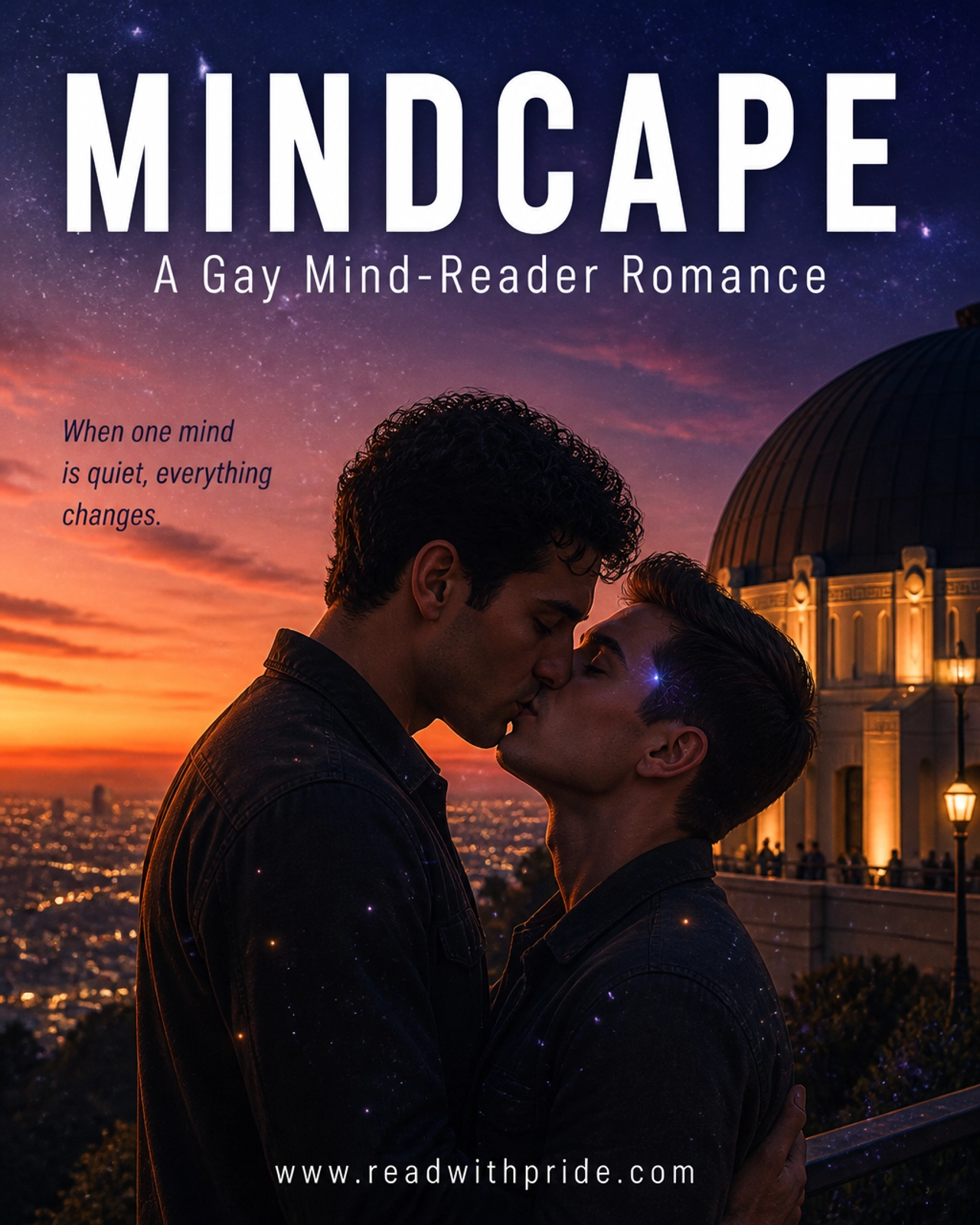

Image placement suggestions
- Hero image: Place directly beneath the title to introduce the idea of two people shaping a story and its emotional promise together.
- Blurb anatomy illustration: Place after “The anatomy of a converting blurb” to visually represent the five building blocks.
- MINDCAPE cover: Place within “A working example from Dick Ferguson’s catalogue” as the real catalogue example.
- Beta-reader illustration: Place after “Test it with beta readers” to reinforce collaboration and feedback.
- Keep all image alt text descriptive and focused on the emotional or editorial purpose of the image.
Follow us on social media
Follow Dick Ferguson and Read with Pride for LGBTQ+ books, writing conversations, new releases, and reading recommendations:
#ReadWithPride #Readwithpride #QueerAuthors #GayAuthors #MMAuthors #QueerFiction #LGBTQPlusFiction #MMRomance #GayRomance #GayBooks #GayLoveStories #EmotionalMMBooks #LGBTQReading #GayBookRecommendations #LGBTQAuthors #PublishingWithPride
Three future blog post options for Dick Ferguson
- From Manuscript to Marketplace: How Queer Authors Choose the Right Categories and Keywords for Read with Pride
- Build a Reader Community Around Your Book: A Queer Author’s Guide to Author Storefronts and Reader Connection
- Beyond the First Sale: How LGBTQ+ Authors Can Turn One Book into a Lasting Read with Pride Platform

Leave a Reply
You must be logged in to post a comment.