

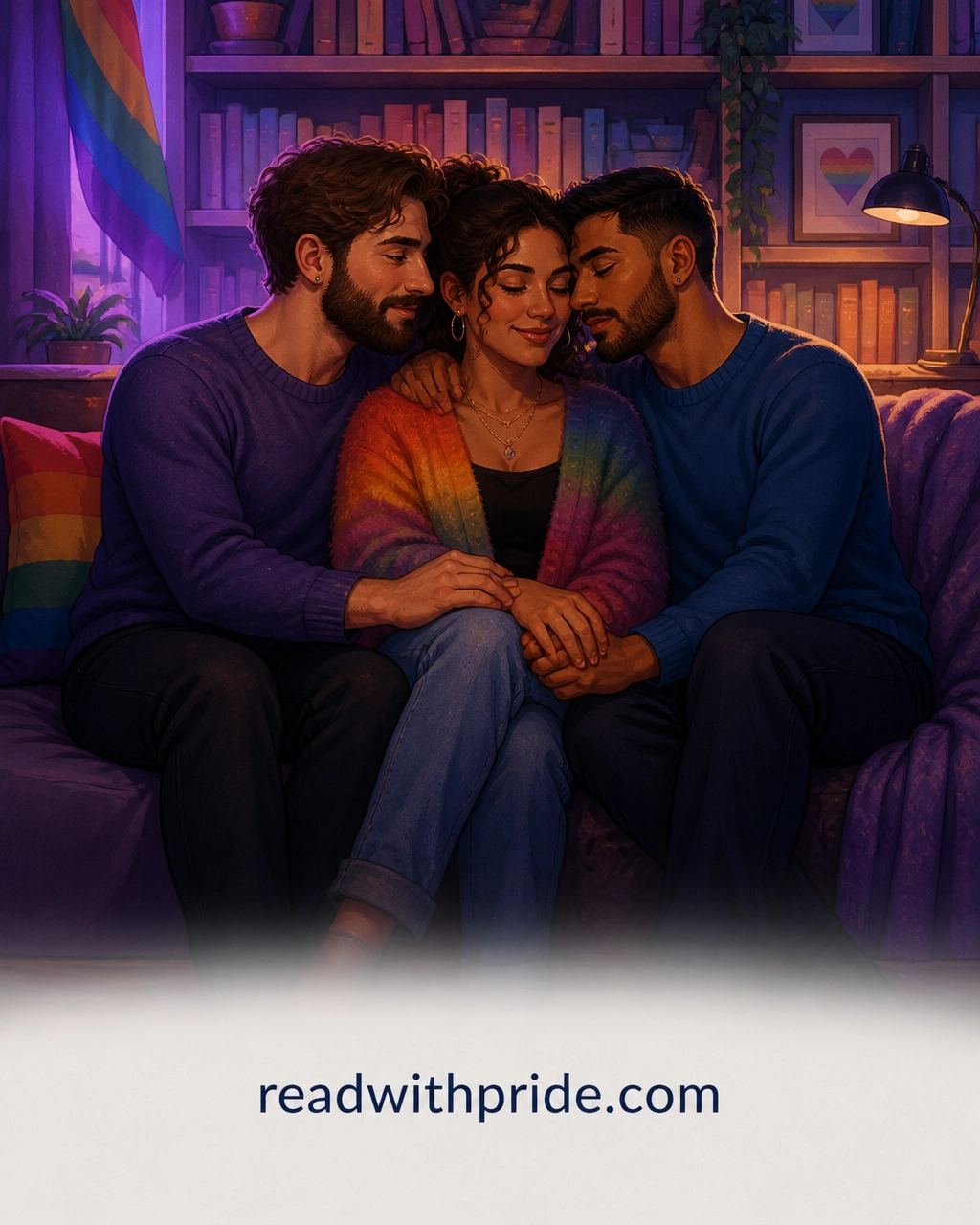
readwithpride.com
There is a relationship timeline many of us are handed before we are old enough to question it: meet someone, date, move in, get engaged, marry, buy a home, and perhaps add a dog with a name like Pickle.
But queer relationships have never needed to follow one approved route.
Some people choose monogamy because exclusivity feels meaningful, grounding, and joyful. Others build open relationships, polyamorous partnerships, or another form of ethical non-monogamy. Some share a home. Others remain deeply committed across separate households. Some build a life around romantic partnership, while others place friendship, chosen family, community, or creative work at the centre.
None of these choices is automatically more serious or more authentic than the others.
The milestone is not selecting the “right” relationship shape. It is learning how to design one honestly, with consent, communication, care, and room for everyone involved to remain fully themselves.
At Read with Pride, these questions sit at the heart of queer fiction, gay romance novels, lesbian romance, and the MM romance themes readers return to again and again: trust, desire, vulnerability, commitment, and the courage to create a life that feels true.
Queer Life Milestones Do Not Follow One Script
For LGBTQ+ people, relationship milestones may arrive in a different order or at a different age than expected.
Coming out may happen before a first queer relationship, or long afterwards. Someone may build a chosen family before finding a partner. A person may discover their sexuality or gender while already married. Another may date openly for the first time at forty, fifty, or beyond.
There is no deadline for any of it.
Research into LGBTQ+ identity development recognises that milestones such as self-discovery, coming out, identity labels, and relationships can happen in many different sequences. The National Library of Medicine’s overview of LGBTQ+ identity development offers useful context for understanding why queer lives cannot be reduced to one tidy timeline.
A relationship milestone might be a first kiss or a shared lease. It might also be the first time you introduce someone as your partner, ask a friend to be your emergency contact, create a household with more than two adults, or realise that your chosen family is not a temporary support system. It is simply family.
Queer love does not become less significant because it takes an unexpected route. Sometimes the unexpected route is where the good story begins.
Monogamy Can Be an Intentional Choice
Monogamy is often treated as the default setting, as if every couple automatically understands what it means. In reality, monogamous relationships benefit from the same clear conversations as any other structure.
What does exclusivity mean to us?
Does it include romantic feelings for other people? Flirting? Dating apps? Emotional intimacy? Friendships with exes? Private messages? Different couples will answer these questions differently, and that is entirely the point.
A healthy monogamous partnership is not built on assumptions. It is built on shared understanding.
The same principle applies to gay romance novels and MM romance books. The most compelling commitment is rarely a vague promise to be together forever. It is often a specific, vulnerable conversation about what trust looks like, what each person needs, and how they will handle change.
Sometimes the most romantic line is not “I will never want anyone else.”
It is: “Let’s talk honestly about what we are promising one another.”

Polyamory and Ethical Non-Monogamy Are Built, Not Assumed
Polyamory and ethical non-monogamy are broad terms covering many different relationship arrangements. Polyamory generally involves the possibility of multiple consensual romantic relationships, while ethical non-monogamy can include open relationships, relationship anarchy, and other forms of consensual non-exclusivity.
There is no single way to do it.
Some people have a primary partnership and additional romantic connections. Some prefer relationships without a hierarchy. Some share information and social spaces with one another’s partners, while others maintain more independent connections. Some relationships include co-parenting, shared homes, or deeply involved chosen-family networks.
The ethical part matters.
Everyone needs the freedom to understand the arrangement, consent to it, ask questions, express boundaries, and change their mind. Non-monogamy should not be used as a surprise announcement after one partner has already made a unilateral decision. Nor should someone feel pressured to accept a structure because they are afraid of losing the relationship.
Important conversations may include:
- What does each person want from the relationship?
- What information needs to be shared, and when?
- What safer-sex agreements feel appropriate?
- How will time, attention, and practical care be managed?
- How can jealousy be discussed without shame?
- What privacy does each person need?
- How will new relationships affect existing commitments?
- When will everyone revisit the agreement?
There may be calendars. There may be shared notes. There may even be colour coding. Romance is not dead; it has simply discovered project management.
The point is not to eliminate every difficult emotion. Jealousy, insecurity, fear, and uncertainty can still appear. The point is to create a relationship culture where those emotions can be discussed rather than weaponised.
This makes open relationships and polyamory rich territory for MM romance themes. Characters may have to challenge possessiveness, learn to ask for reassurance, and discover that love is not proven by ownership. It is demonstrated through honesty and care.
Designing a Relationship on Your Own Terms
Choosing a relationship structure is not a one-time declaration. It is an ongoing process.
People change. Health changes. Work changes. Families grow. Identities evolve. A relationship agreement that felt perfect two years ago may need a thoughtful update today.
That does not mean the relationship has failed. It means the people inside it are paying attention.
A useful starting point is asking what you want your life to centre around. Is it a long-term partner? Several romantic relationships? Friendship? Community? Parenting? Creative work? A shared home? Separate homes? A mixture that does not fit neatly into any label?
You may also ask which milestones feel meaningful to you:
- A commitment ceremony without legal paperwork.
- A shared home with partners and chosen family.
- An annual celebration of the day you met.
- A first holiday designed from scratch.
- A care plan for illness or ageing.
- A regular relationship check-in.
- A queer book club that becomes a vital community ritual.
- A promise to remain connected even when a romantic relationship changes form.
There is no hierarchy that says one milestone matters more than another. A wedding can be meaningful. So can a spare key, an emergency contact form, or the first time someone is welcomed into the group chat.

Communication Is a Life Milestone Too
We often talk about relationship milestones as events: first dates, anniversaries, moving in, engagements. But communication itself can be a milestone.
The first honest conversation about monogamy.
The first time you discuss opening a relationship without anyone being punished for asking.
The first time you name jealousy instead of acting it out.
The first disagreement that ends in repair rather than withdrawal.
The first time you admit, “This agreement no longer works for me.”
These moments may not look dramatic from the outside, but they can transform a relationship.
Good communication does not mean agreeing about everything. It means creating enough trust for disagreement to exist without becoming a threat. It means listening to understand, not merely waiting for your turn to defend yourself.
Repair is part of this work. A meaningful apology recognises impact, not just intention. A changed agreement needs to be followed by changed behaviour. And sometimes the most loving decision is acknowledging that a relationship needs a new shape, or that it needs to end.
Queer romance understands this emotional architecture beautifully. In slow-burn stories, trust grows through repeated conversations. In second-chance romances, love becomes possible when characters address what happened rather than pretending the past never existed. In forced-proximity stories, sharing space can reveal all the feelings people hoped to avoid.
The kiss matters. But so does the conversation afterwards.
Chosen Family Makes Room for Every Kind of Love
Relationship design rarely happens in isolation. Partners exist within communities, families, friendships, and networks of care.
A polycule may include partners, metamours, friends, co-parents, and former partners. A monogamous couple may depend on a wide circle of chosen family. A single person may build a rich life with no romantic partner at all.
These connections deserve attention too.
Chosen family is built through repeated action: checking in, sharing meals, remembering important dates, offering practical support, and making room for people who do not fit traditional family roles. It may include a partner’s partner, an ex who remains beloved, a queer elder, a neighbour, or the friend who always knows when to send soup instead of advice.

In lesbian romance, MM fiction, and wider LGBTQ+ novels, chosen family often gives characters the courage to pursue love on their own terms. It reminds us that romance does not have to replace friendship or community. Healthy love makes more room, not less.
The Love We Design Is Still Love
There is no single correct way to build a queer life.
You can choose monogamy, polyamory, an open relationship, relationship anarchy, separate homes, a shared household, or a structure you are still learning how to name. You can change your mind. You can create rituals that would make no sense to anyone else and perfect sense to you.
That is the beauty of chosen relationship shapes.
The goal is not to make your love legible to everyone watching. The goal is to make it honest, mutual, safe, nourishing, and workable for the people living it.
Explore Read with Pride for MM romance books, gay romance novels, lesbian romance, gay fiction, queer fiction, and LGBTQ+ novels filled with emotional depth and desire. You can also browse the LGBTQ+ blogs and articles or explore the family and relationships collection for more stories about belonging and connection.
Whether you are searching for coming out stories, a queer book club read, LGBTQ+ fiction 2026, queer love stories, or even the wonderfully specific phrase C Section 2026, there is room here for your curiosity.
Follow Read with Pride on Instagram and connect with us on Facebook for more LGBTQ+ reading, relationship reflections, and new queer releases.
Love does not need one approved shape.
It needs room to become itself.
#ReadWithPride #Readwithpride #QueerRelationships #LifeMilestones #MMRomanceThemes #MMRomanceBooks #GayRomanceNovels #ComingOutStories #QueerBookClub #LGBTQFiction2026 #GayFiction #LGBTQNovels #QueerLoveStories #Polyamory #EthicalNonMonogamy #Monogamy #LesbianRomance #QueerFiction #ChosenFamily #LGBTQReading
{“@type”:”BlogPosting”,”image”:[“https://cdn.marblism.com/isOBBEY0L6s.webp”,”https://cdn.marblism.com/urCvXWiMr4X.webp”,”https://cdn.marblism.com/0TLpP0NfDA4.webp”,”https://cdn.marblism.com/nsu2Yz_PI2M.webp”],”author”:{“url”:”https://readwithpride.com”,”name”:”Read with Pride”,”@type”:”Organization”},”@context”:”https://schema.org”,”headline”:”LGBTQ+ Relationships and Life Milestones: Choosing Our Own Shapes — Monogamy, Polyamory, and the Love We Design”,”keywords”:[“Read with Pride”,”MM romance books”,”gay romance novels”,”coming out stories”,”queer book club”,”LGBTQ+ fiction 2026″,”C Section 2026″,”gay fiction”,”LGBTQ+ novels”,”queer love stories”,”queer relationships”,”life milestones”,”MM romance themes”,”polyamory”,”ethical non-monogamy”,”monogamy”],”publisher”:{“url”:”https://readwithpride.com”,”logo”:{“url”:”https://cdn.marblism.com/3frC7pIx901.jpg”,”@type”:”ImageObject”},”name”:”Read with Pride”,”@type”:”Organization”},”inLanguage”:”en”,”description”:”An inclusive reflection on queer relationships, monogamy, polyamory, ethical non-monogamy, communication, chosen family, and designing relationship milestones on your own terms.”,”dateModified”:”2026-09-06″,”datePublished”:”2026-09-06″,”articleSection”:”LGBTQ+ Relationships and Life Milestones”,”mainEntityOfPage”:{“@id”:”https://readwithpride.com”,”@type”:”WebPage”}}

Leave a Reply
You must be logged in to post a comment.