

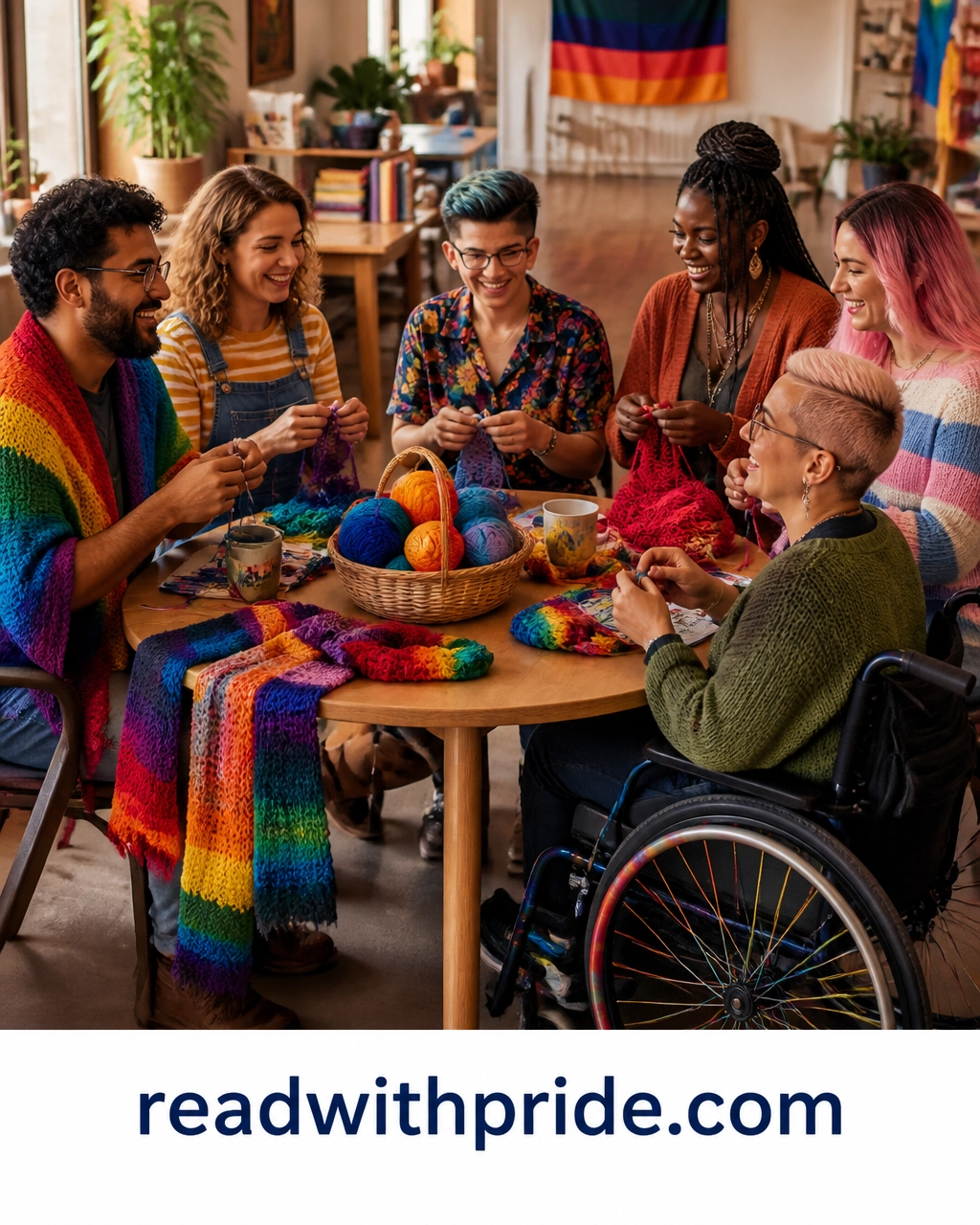
There is something wonderfully queer about making a giant tangle of yarn, declaring it intentional, and inviting people over to help. Knitting and crochet circles: sometimes affectionately called “stitch and bitch” groups: are more than crafty meetups. They are low-pressure spaces for conversation, creativity, and the kind of community building that does not require anyone to make eye contact while discussing their feelings.
For many LGBTQ+ people, a shared hobby can become a gentle route into connection. You arrive with a half-finished scarf and leave knowing someone’s pronouns, favourite colour, and extremely strong opinions about chunky yarn.
Why craft circles are brilliant queer hobbies
Knitting and crochet give people something to do with their hands while conversation unfolds naturally. That can be a relief if traditional socialising feels intense, noisy, or dependent on small talk. You can chat, listen, concentrate, or simply sit among friendly people while your project slowly becomes recognisable.
These circles can also create belonging across generations and identities. Gay, bi, lesbian, trans, nonbinary, questioning, ace and queer makers can meet without needing to explain why a welcoming space matters. A shared project offers an easy starting point: “What are you making?” is often much less intimidating than “Tell us your life story.”
There is room for every level of experience, too. Some people arrive with advanced colourwork. Others are holding a crochet hook like it has personally betrayed them. Both belong.

How to start an inclusive stitch circle
You do not need a fancy venue or an encyclopaedic knowledge of fibre arts. Start small and make the welcome obvious.
- Choose an accessible space. Try a library, LGBTQ+ community centre, café, yarn shop, or online video room. Check seating, lighting, noise, toilets, transport and step-free access.
- Welcome all portable crafts. Knitting and crochet are the stars, but embroidery, mending, cross-stitch, beading, drawing and visible darning can join the party.
- Lower the cost of entry. Keep spare hooks, needles, yarn and beginner-friendly patterns available. A small communal supply box can make a huge difference.
- Set clear community guidelines. Use people’s names and pronouns. Challenge racism, transphobia, homophobia, ableism and harassment. Decide whether allies are welcome, and explain that queer people remain centred.
- Make attendance flexible. Let people arrive late, leave early, craft quietly, use headphones, or skip conversation. Consistency matters, but perfection is not a membership requirement.
A regular schedule helps transform a meetup into a community. Every second Tuesday can become a tiny anchor in a difficult week.

The MM romance tropes hiding at the craft table
Naturally, the craft circle is also excellent territory for MM romance tropes.
- Forced proximity: Two people are assigned the same table, share one pair of scissors, and must cooperate on a community blanket. Tragic. Romantic.
- Slow burn: They meet every week. One brings extra stitch markers. The other remembers their coffee order. Nobody says anything for six months.
- Enemies to lovers: They disagree passionately about knitting tension, colour palettes and whether blocking is “really necessary.” Sparks fly. Someone drops a skein.
- Found family: The group becomes the place where everyone celebrates birthdays, breakups, new jobs, coming out stories and the dramatic recovery of a lost needle.
These are the same emotional ingredients readers love in MM romance books, gay romance novels and other queer love stories: trust built gradually, care shown through practical gestures, and people discovering they do not have to face life alone.
If your reading list includes LGBTQ+ fiction 2026, gay fiction, LGBTQ+ novels or a particularly heartfelt queer romance, a craft circle makes a lovely companion activity. You can even form a queer book club that discusses a chapter between rows of crochet. For readers who found this post through the intriguingly mysterious search term “C Section 2026,” consider this your sign to take a creative break and find your people.

Inclusion is the whole point
An inclusive circle is not simply one that says “everyone welcome” and hopes for the best. Ask what people need. Offer quiet areas, sensory-friendly options, seating choices and clear information before the event. Make room for disabled, neurodivergent and chronically ill makers. Respect cultural differences in craft traditions, clothing, language and family structures.
Some people may be newly out. Some may be questioning. Some may not want to discuss identity at all. Community should offer connection without demanding disclosure.
Stitch, read and connect with Read with Pride
Ready to bring more queer creativity into your week? Browse Read with Pride for gay fiction, queer love stories, MM romance and LGBTQ+ reading inspiration. Explore the LGBTQ+ blogs and articles category for more community-focused conversations, or visit the Free Global Publishing Portal if you have a queer story waiting to reach readers.
Follow Read with Pride on Instagram and Facebook, then invite someone to your next stitch circle. Bring yarn. Bring curiosity. Bring the slightly chaotic energy of a chosen family in progress.
#QueerHobbies #CommunityBuilding #MMRomanceTropes #ReadWithPride #LGBTQFiction2026 #QueerLoveStories #GayFiction #QueerBookClub

Leave a Reply
You must be logged in to post a comment.