

readwithpride.com
There is a special kind of magic in arriving somewhere with a book in your bag and discovering that everyone else has also brought strong opinions about fictional people who desperately need to communicate.
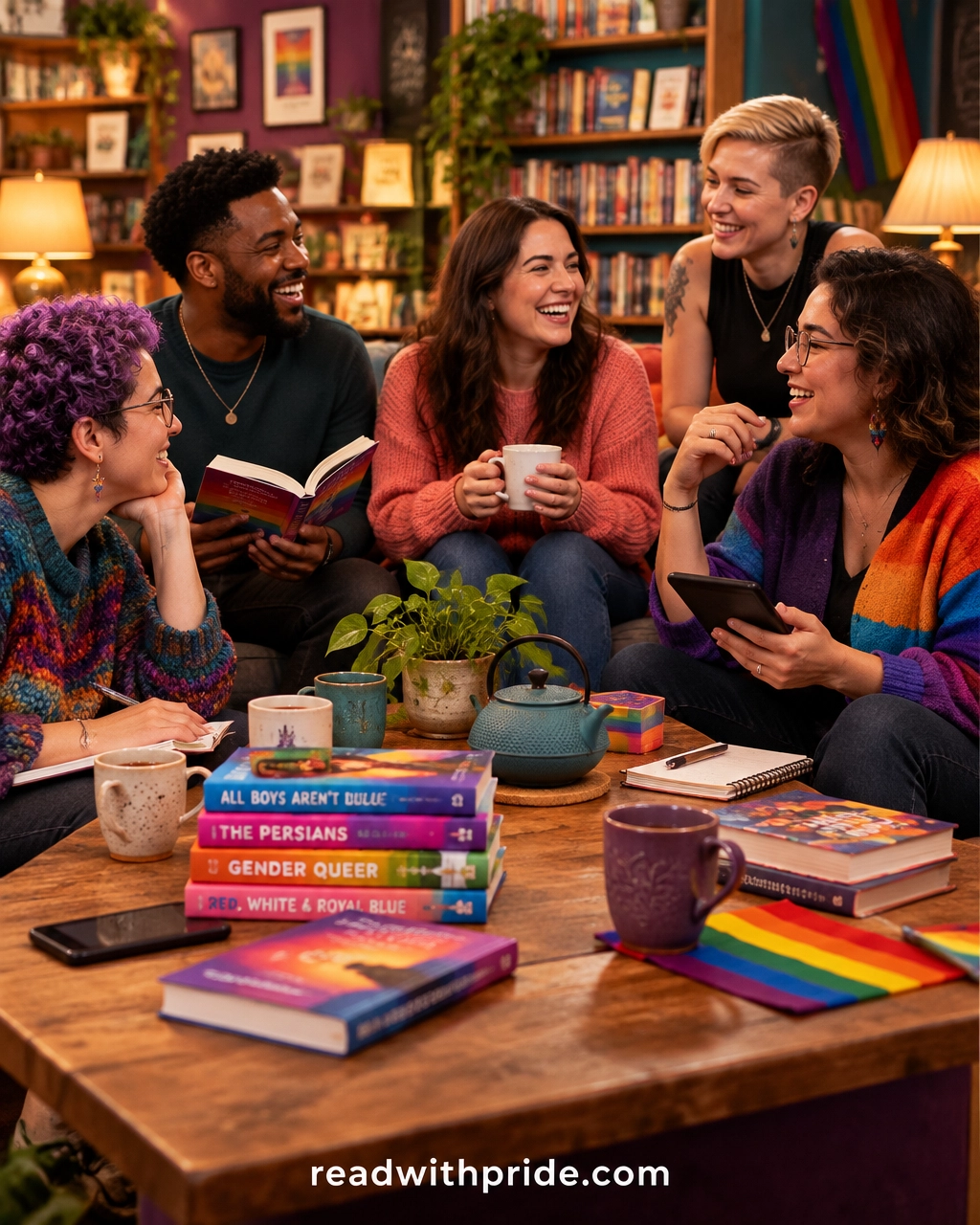
Welcome to the wonderful world of queer hobbies, where reading can be more than a quiet evening activity. A queer book club or reading circle can become a low-pressure way to meet people, share stories, build confidence, and create genuine community building moments, without needing to perform a perfectly polished introduction.
You can simply show up, turn the page, and let the conversation begin.
Why a queer book club feels different
A book gives people something to talk about straight away. No awkward “so, what do you do?” interrogation required. You can start with the plot, the characters, or the very important question of why nobody in the story has considered sending one honest text message.
For LGBTQ+ readers, the shared reading list can also create space for representation. Discussing coming out stories, queer identity, chosen family, and queer love stories with people who understand, or genuinely want to learn, can feel affirming in a way that ordinary small talk rarely does.
A queer book club may include gay, lesbian, bisexual, trans, nonbinary, questioning, and allied readers. The best groups make room for different experiences, reading speeds, opinions, and levels of participation. You can lead the discussion, listen quietly, or arrive having read only three chapters and an impressively detailed synopsis.
All are valid literary lifestyles.

MM romance tropes are basically book club dynamics
The best MM romance books are powered by relationships, and so are the best reading circles. In fact, several beloved mm romance tropes describe exactly how book club friendships grow.
Found family
Many queer reading groups begin as a handful of strangers and slowly become something warmer. You learn who brings snacks, who always chooses the emotional read, who highlights entire pages, and who says “I’m fine” before discussing the most devastating chapter in the book.
Over time, regular meetings can create a chosen family: people who remember your birthday, recommend stories for your particular mood, and save you a seat.
Slow burn
Friendship does not have to happen instantly. Some members will chat from the first meeting; others need time to feel comfortable. That is the beauty of a slow burn. Trust grows conversation by conversation, often through shared jokes, thoughtful questions, and the relief of being around people who do not require explanations for every part of your life.
Forced proximity
A book club provides the gentlest possible version of forced proximity: you are all in the same room because you agreed to discuss chapter eight. Suddenly, you are sharing tea, comparing notes, and learning that the quiet person across the table has an extremely passionate theory about the villain.
It is structured connection, which can be a lifesaver for shy readers, newly out people, or anyone who finds unplanned socialising exhausting.
Enemies to lovers
Not every disagreement becomes romance, and please keep the consent, boundaries, and emotional maturity firmly in place: but spirited book debates can be delightfully dramatic. You may disagree about a character’s choices, the ending, or whether a slow burn was genuinely slow or simply taking the scenic route.
Healthy disagreement can build connection when everyone stays curious and respectful.
Choose your reading-circle style
A queer book club does not need to meet in a grand literary salon. Try a café, library, community centre, living room, or online space. You could choose one title each month, read short stories, swap gay book recommendations, or create themed sessions around gay fiction, LGBTQ+ novels, lesbian romance, queer fantasy, or gay romance novels.
At Read with Pride, readers can explore LGBTQ+ ebooks, gay books, MM romance books, queer fiction, and stories that put LGBTQ+ characters at the centre. Browse for your next read, then bring it to your group with one question: “What did this story make you feel?”
That question can take you surprisingly far.

Start your own queer reading circle
Keep it simple:
- Pick a welcoming location or video platform.
- Choose a first book with accessible themes and clear content notes.
- Make attendance flexible: life is busy, and not everyone reads at the same speed.
- Set respectful discussion guidelines.
- Include different identities, genres, authors, and reading experiences.
- End with a recommendation round so everyone leaves with a new title.
You can even create a monthly theme: LGBTQ+ fiction 2026, heartfelt gay fiction, steamy MM romance, lesbian love stories, coming-of-age fiction, or “characters who should have gone to therapy before making that decision.”
And if someone arrives searching for “C Section 2026” but leaves with three queer novels and a new group chat, consider it a community-building success.

Turn the page and find your people
Reading is already a brilliant hobby. Reading with others can make it feel like a doorway.
Whether you love emotional MM romance, gay romance novels, sapphic fiction, coming out stories, or queer love stories with a generous happily-ever-after, community makes the experience richer. You do not have to know everyone immediately. You only need one shared story and a little curiosity.
Find your next read at readwithpride.com, then follow Read with Pride on Instagram and Facebook for more LGBTQ+ reading inspiration.
Bring your book. Bring your opinions. Bring snacks if you are emotionally prepared to share them.
#ReadWithPride #QueerHobbies #CommunityBuilding #QueerBookClub #MMRomanceBooks #GayRomanceNovels #ComingOutStories #LGBTQFiction2026 #GayFiction #LGBTQNovels #QueerLoveStories #QueerReading #GayBooks #QueerFiction #LGBTQPlusEbooks #MMRomance #LesbianRomance

Leave a Reply
You must be logged in to post a comment.