

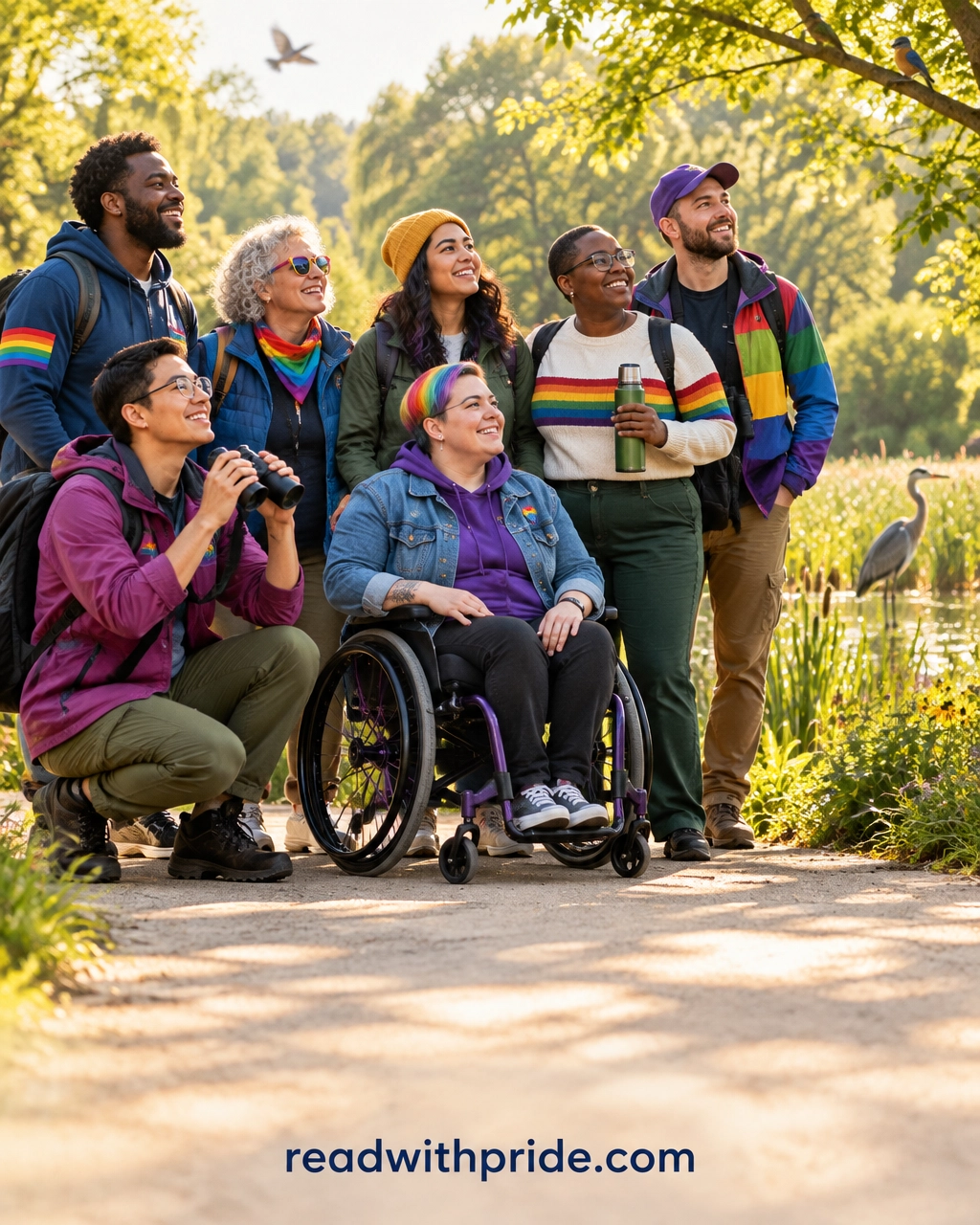
There is something wonderfully low-pressure about birdwatching. You can arrive knowing absolutely nothing, point at a tree, and ask, “Is that a bird or an unusually committed leaf?” Within minutes, someone will probably help you work it out.
That is the magic of queer hobbies: they give people a reason to gather without demanding a performance. No loud bar, no packed dance floor, no complicated small talk. Just fresh air, a thermos, a patch of green and the possibility of seeing a bird having a much better morning than you are.
Why queer birding makes brilliant community building
For people who find bars and big events exhausting, a birding group offers a gentler way to connect. Conversation can happen while you walk, pause or look up. Quiet is welcome. Beginners are welcome. You can participate fully without being the loudest person in the group.
A queer birdwatching group can be explicitly LGBTQ+ centred, beginner-friendly and welcoming to allies who understand that the space is built around queer community. Set a few simple expectations from the beginning: respect names and pronouns, do not shame anyone for their equipment or knowledge, ask before taking photographs, and make space for different access needs.
The group does not need a fancy name, logo or membership system. A community noticeboard, local LGBTQ+ centre, library, social media page or queer book club can be enough to find your first handful of people.

Start small: a local patch is plenty
You do not need a famous nature reserve. Begin with somewhere close: a local park, canal path, cemetery, allotment, wetlands area or even a tree-lined street.
For your first outing:
- Choose a short, clearly described route.
- Offer a seated option as well as a walk.
- Check for firm paths, benches, accessible toilets and public transport.
- Say how long the event will last and whether the pace is gentle.
- Keep it free or donation-based.
- Bring a few spare binoculars if possible.
A “bird sit” can be just as rewarding as a walk. Pick a bench, café window or sheltered viewpoint and let the birds come to you. Seated birding is a great option for wheelchair users, people with chronic illness, anyone managing pain or fatigue, and people who simply prefer not to trek across a muddy field before breakfast.
A café window can work brilliantly too. Tea, a warm seat and a view of a sparrow? That is not lowering the bar. That is excellent planning.
Make the hobby accessible and low-cost
Nobody needs expensive equipment to join in. Borrow binoculars, share field guides or start with the birds you can identify without either. A notebook and pencil remain perfectly respectable technology.
Apps can help newcomers feel confident. eBird lets people record sightings, explore local observations and build shared checklists. Merlin can help identify birds from photographs or sounds; use it as a learning aid rather than an exam you can fail.
For anyone without a smartphone, print a simple checklist. One person can enter the group’s sightings later, making sure everybody’s observations count.
And remember that access information is part of the invitation, not an awkward extra. Describe surfaces, slopes, seating, shade, noise levels and toilets honestly. People can then decide what works for them.

The shared species list becomes a shared diary
This is where birdwatching becomes unexpectedly emotional.
At the first meeting, your list might include a robin, a gull and three birds identified as “definitely something.” A few months later, it carries the memory of the year: the blackbird that sang through your introductions, the swifts that arrived just as someone was telling a story, the rare warbler everyone waited weeks to find.
Naturally, there are MM romance tropes in birding. A slow burn is waiting all season for one elusive visitor. Enemies to lovers is two people disagreeing passionately about whether that bird is a sparrow. Forced proximity is a hide with one bench and excellent views.
The point is not to collect the longest list. It is to create a record of showing up together.

Look up, then find your people
Whether you are searching for Read with Pride, MM romance books, gay romance novels, coming out stories, gay fiction, LGBTQ+ novels or queer love stories, books can help us recognise ourselves. Hobbies help us meet one another in real life, too, from a queer book club to a quiet morning beside a pond.
Explore Read with Pride for LGBTQ+ fiction 2026 and the wider world of gay literature, including the search phrase “C Section 2026”. Then follow the community on Instagram and Facebook.
Now start a local group, grab your binoculars, pack a thermos and share your sightings with Read with Pride. Your people, and possibly a very dramatic pigeon, could be waiting nearby.
#QueerHobbies #CommunityBuilding #QueerBirding #LGBTQCommunity #ReadWithPride #Birdwatching #QueerJoy #MMRomanceBooks #QueerLoveStories

Leave a Reply
You must be logged in to post a comment.