

There is no single correct order for a queer life.
Some people come out in their teens. Others find the language for themselves decades later. Some build a long-term partnership without marrying, while others choose marriage, children, shared homes, or commitment ceremonies with enough flowers to make the local florist nervous.
Some people fall in love once and grow together. Others experience several great loves, rebuild after heartbreak, or discover that the family they chose has been beside them all along.
That is the beauty of queer relationships and life milestones: they are not required to follow a straight line.
At Read with Pride, we believe stories matter because they give shape to experiences that can otherwise feel difficult to name. Through MM romance books, lesbian romance, coming out stories, and wider LGBTQ+ fiction 2026, readers can see queer lives as complicated, ordinary, passionate, funny, hopeful, and fully lived.
Coming out is a milestone, not a deadline
Coming out is often treated as one dramatic announcement: a single conversation, a single moment, a single before-and-after.
Real life is usually less tidy.
A person may come out to themselves first, then to a close friend, then to family, colleagues, or a partner. Someone may come out as gay, lesbian, bisexual, trans, nonbinary, queer, or another identity and later discover that different language fits better. Someone else may choose not to come out in every part of their life because safety, privacy, work, family, or culture makes openness complicated.
All of these experiences are valid.
Coming out stories are not success stories with a fixed ending. They are stories about self-knowledge, risk, relief, uncertainty, and deciding who has earned the truth of your life. The right time to come out is the time that feels safest and most authentic for you, not the time another person demands.
That emotional tension appears often in queer fiction. A character may be navigating an enemies-to-lovers relationship while still learning how to be honest. A workplace romance may become more complicated when a partner is introduced to colleagues. A second-chance romance may ask whether two people can build something new after years of silence.
The emotional stakes are not only about getting together. They are about becoming more fully yourself while someone else learns how to meet you there.
Chosen family is built in the everyday
Chosen family can sound like a grand idea, but it often begins with very small acts.
It is the friend who checks whether you got home safely. The ex-partner who remains part of your support network. The neighbour who becomes an emergency contact. The queer elder who remembers what you were like before you had the words for yourself. The group chat that contains equal parts practical advice, emotional support, and extremely specific memes.
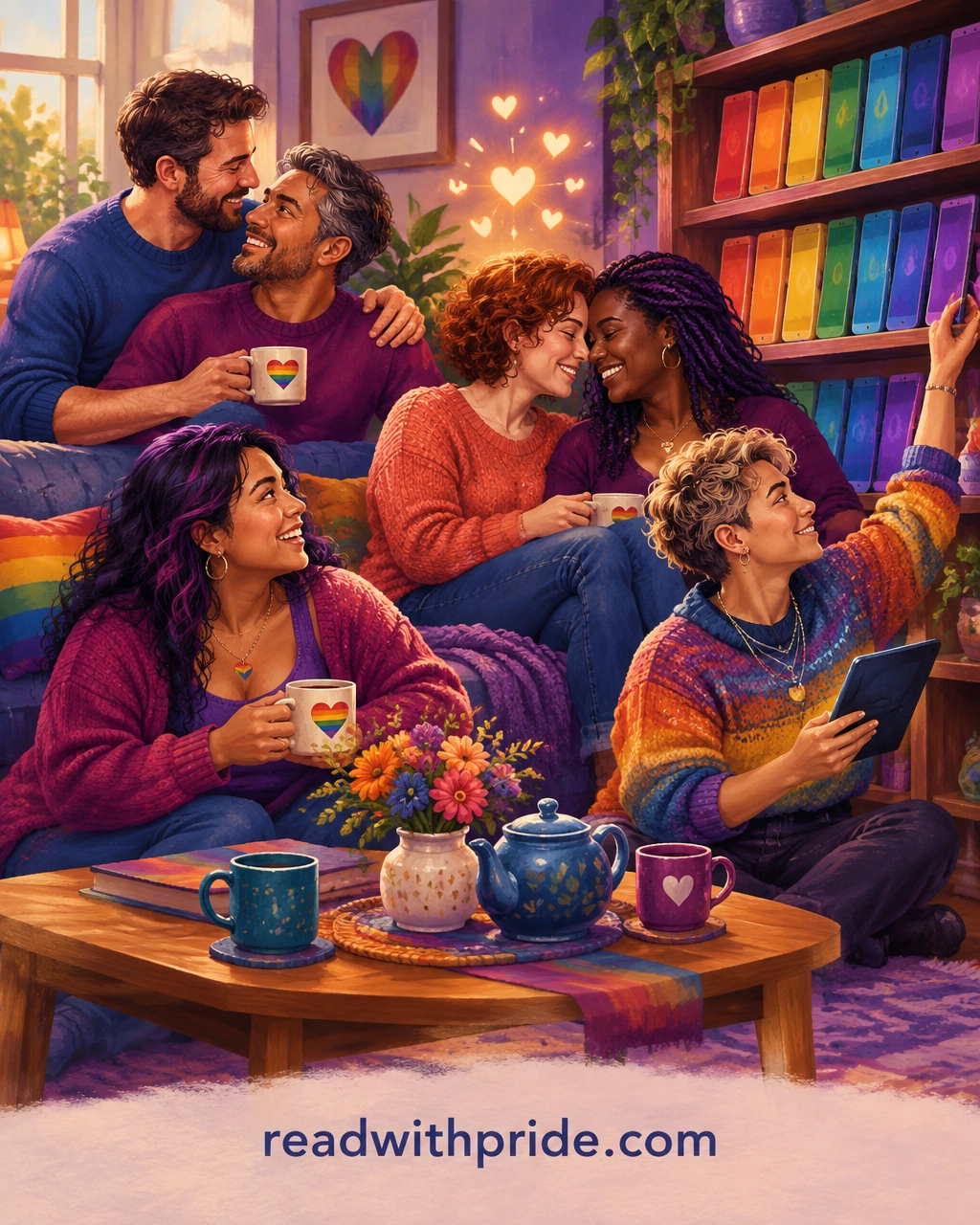
Chosen family is created through repetition. Shared meals. Birthday traditions. Holiday gatherings. Reading nights. Hospital visits. Spare keys. Knowing exactly how someone takes their tea.
For many LGBTQ+ people, chosen family offers recognition that biological family cannot, or does not, provide. It can also exist alongside biological family. Queer life is not a competition between the two. Families can overlap, change, expand, or become more complicated over time.
A queer book club can become part of that wider circle of belonging. So can a community garden, online reading group, local LGBTQ+ space, or a regular dinner where everyone contributes something and someone inevitably forgets the cutlery.
Stories about found family capture this beautifully. In MM romance books, the romantic couple may be central, but the people around them often make the relationship possible. Friends provide refuge. Siblings offer honesty. Older queer characters provide perspective. Children, neighbours, and community members turn a private romance into a shared life.

Partnership does not have one correct shape
Queer relationships have always challenged the idea that there is only one respectable way to build a life together.
Some people choose monogamy. Some choose ethical non-monogamy or polyamory. Some live together, while others maintain separate homes. Some marry, some form civil partnerships, and some create deeply meaningful commitments without legal recognition.
The important thing is not choosing the structure that looks most familiar from the outside. It is choosing relationships based on honesty, consent, communication, and mutual care.
Monogamy can be a thoughtful, active choice rather than an automatic default. Partners may discuss what exclusivity means emotionally, romantically, sexually, digitally, or socially. They may decide how visible they want to be and whether marriage fits their values.
Polyamory and other forms of ethical non-monogamy also require care, clarity, and communication. Boundaries are not restrictions designed to control people; they are agreements that help everyone understand what has been promised. Regular check-ins, safer-sex conversations, scheduling, and honest discussions about jealousy or changing needs can all be part of building trust.
No relationship structure is magically free from misunderstandings. A monogamous couple can struggle with communication. A polyamorous network can be deeply supportive. The quality of a relationship is shaped less by its label than by how people treat one another.
That is a useful reminder for readers of gay romance novels and lesbian romance alike. The happily-ever-after may be a wedding, a shared home, a constellation of partners, a chosen-family celebration, or simply two people deciding to keep showing up.
The romances we read reflect the lives we imagine
Queer romance is powerful because it lets readers explore emotional possibilities from a safe distance.
An enemies-to-lovers story can turn conflict into understanding. A workplace romance can explore ambition, visibility, and the risks of mixing professional and personal lives. A slow burn can make room for trust to develop at a believable pace. A second-chance romance can ask whether people really can grow, and whether love can survive the changes growth brings.
Found family may be the emotional centre of the story, especially when biological relatives are absent or unsafe. A relationship may include parenting, caregiving, friendship, community responsibility, or the difficult work of building a home.
These are not side plots. They are the milestones.
In the Becoming Jennifer books, Not Yet Jennifer: Becoming Jennifer: Book One and Becoming Jennifer: Book Two. The idea of identity unfolding over time offers a natural fit for readers interested in transformation, self-discovery, and the many ways a person can become more authentically themselves.
For readers who enjoy expansive gay fiction and love stories that look beyond the first kiss, The Majority Rule: Love in 2150 follows Kai and Dash across decades. Its story brings together slow-burn romance, bisexual representation, found family, adoption, social pressure, and the question of how love changes as people grow older.
It is a reminder that a romance does not have to end when the couple gets together. Sometimes that is where the most interesting part begins.
A different kind of queer future
Life milestones can also include parenting, career changes, ageing, caregiving, moving home, changing names, creating new traditions, or becoming the person younger queer people turn to for advice.
There may be no dramatic soundtrack. Sometimes the milestone is adding your partner to an emergency contact list. Sometimes it is introducing them to your chosen family. Sometimes it is realising you can host a holiday without inviting anyone who makes you feel unsafe.
Queer futures are not defined only by marriage or conventional domesticity. They can include friendship-centred homes, co-parenting arrangements, polyamorous families, independent lives, creative communities, pets, activism, travel, and quiet routines that feel like freedom.
This is why representation in LGBTQ+ novels matters. We need stories about queer people surviving, certainly, but also stories about queer people ageing, arguing about the recycling, falling in love after forty, raising children, changing their minds, and becoming gloriously ordinary.

Not every queer love story is romantic
Romantic love is only one form of queer love.
There is love between friends who have seen each other through several identities and three questionable haircuts. Love between siblings who learn how to support one another. Love between elders and younger community members. Love for a neighbourhood, a creative practice, a chosen name, or the version of yourself who kept going.
Even the stories that centre romance often make space for these other connections.
That wider view is especially important for readers who do not want their life measured against a relationship escalator. You are not behind because you are single. You are not failing because you do not want children. You are not less committed because you do not marry. You are not required to remain in a relationship simply because it once mattered.
A queer life can be full, meaningful, and deeply loved in many different ways.
For a completely different kind of queer adventure, Imago Nine: The Popstar Apocalypse belongs on the sapphic or bi female-led YA adventure shelf, not the MM romance shelf. Amaya Reed’s story centres on powers, a high-stakes singing competition, coming-of-age pressure, and a deadly plot. It is a lively reminder that LGBTQ+ reading is wonderfully broad, spanning gay romance novels, lesbian romance, speculative fiction, fantasy, thrillers, and queer YA.
Write your own milestone map
You do not need to follow someone else’s timeline.
Instead, try asking:
- What does coming out mean to me, if anything?
- Who makes up my chosen family?
- Which relationship structure fits my values right now?
- What traditions would make my home feel more like mine?
- Which commitments matter emotionally, even if they are not legally recognised?
- What kind of future would feel peaceful rather than merely impressive?
Your answers may change. That is not inconsistency. It is life.
At Read with Pride, you can explore LGBTQ+ ebooks, gay books, queer love stories, MM fiction, lesbian romance, heartfelt gay fiction, and new releases for your next personal milestone, or simply your next cosy reading evening.
And because the modern search bar enjoys chaos, your journey from queer relationships to LGBTQ+ fiction 2026 may somehow pass through “C Section 2026” before bringing you back to your TBR. We contain multitudes.
Follow Read with Pride on Instagram and Facebook for more LGBTQ+ reading inspiration, community reflections, and recommendations.
Your life does not need to resemble anyone else’s to be a beautiful queer love story.
Read with pride.
#ReadWithPride #Readwithpride #MMRomanceBooks #GayRomanceNovels #ComingOutStories #QueerBookClub #LGBTQFiction2026 #CSection2026 #GayFiction #LGBTQNovels #QueerLoveStories #ChosenFamily #QueerRelationships #LGBTQReading #LesbianRomance #Polyamory #QueerFiction
{“@type”:”BlogPosting”,”image”:”https://cdn.marblism.com/DvhM7o3QthU.webp”,”author”:{“url”:”https://readwithpride.com/”,”name”:”Read with Pride”,”@type”:”Organization”},”@context”:”https://schema.org”,”headline”:”Queer Love Across a Lifetime: Milestones, Chosen Family, and the Stories We Tell”,”keywords”:[“Read with Pride”,”MM romance books”,”gay romance novels”,”coming out stories”,”queer book club”,”LGBTQ+ fiction 2026″,”C Section 2026″,”gay fiction”,”LGBTQ+ novels”,”queer love stories”,”queer relationships”,”life milestones”,”MM romance themes”],”publisher”:{“url”:”https://readwithpride.com/”,”name”:”Read with Pride”,”@type”:”Organization”},”inLanguage”:”en”,”description”:”A reflective guide to queer relationships, coming out, chosen family, monogamy, polyamory, and the life milestones explored through LGBTQ+ fiction and MM romance themes.”,”dateModified”:”2026-09-22″,”datePublished”:”2026-09-22″,”articleSection”:”LGBTQ+ Relationships & Life Milestones”,”mainEntityOfPage”:{“@id”:”https://readwithpride.com/”,”@type”:”WebPage”}}

Leave a Reply
You must be logged in to post a comment.