

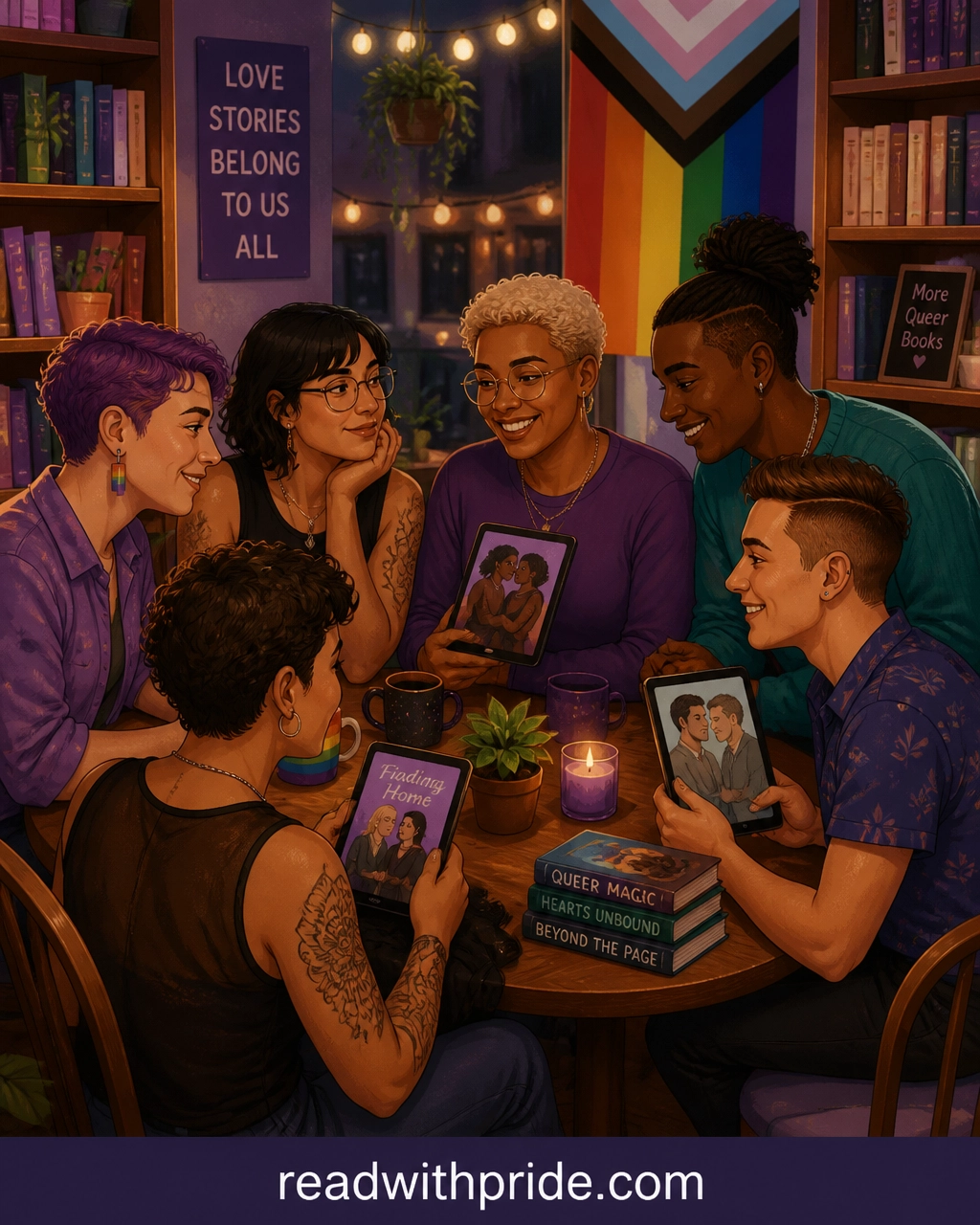
There’s a reason queer hobbies can feel like tiny miracles.
A reading group might look like six people, a group chat, and one very opinionated debate about whether a certain MM romance trope counts as “slow burn” if the characters kiss on page 40. (It does not. We have standards.)
But underneath the snacks, screenshots, and enthusiastic voice notes, something bigger is happening. Queer hobbies create connection. They help us find chosen family, share our experiences, and build communities where nobody has to explain why a love story between two men or two women matters.
That’s the secret love story: not always romantic, but full of affection, trust, and care.
Queer hobbies are more than something to do
A hobby becomes queer through the people who gather around it and the space they create together.
Reading a novel alone can be comforting. Reading a gay romance novel with people who understand why a particular scene made you pause, laugh, or stare dramatically into the middle distance? That’s community building.
Queer hobbies offer low-pressure ways to meet people. You can join a book club without opening with your entire life story. You can simply say, “I’m here because I love MM romance books and have feelings about enemies-to-lovers,” and let the conversation grow from there.
Over time, those conversations become check-ins, celebrations, mutual support, and the kind of friendships that make ordinary Tuesdays feel less ordinary.
Why book clubs become chosen family
Queer reading groups are powerful because stories give us a shared language.
A book can help someone name a feeling they’ve never said aloud. It can show a reader a relationship that feels familiar, hopeful, or wonderfully different from their own. It can remind us that queer lives are not side plots. They are full stories, with messy beginnings, joyful middles, and endings worth rooting for.
In a queer book club, members might discuss:
- Whether the enemies-to-lovers tension was delicious or simply exhausting
- Why forced proximity works so well in gay romance novels
- The emotional devastation of a truly excellent slow burn
- Which character needs therapy, a nap, or both
- How queer fiction reflects real experiences of identity, intimacy, and belonging
The discussion matters as much as the book. Everyone brings their own perspective, memories, humour, and reading history. A single story becomes many stories at once.

The romance is in the rituals
Community doesn’t usually arrive with a dramatic soundtrack. It grows through repetition.
It’s the same people showing up each month. The familiar meeting link. The member who always brings too many snacks. The running joke about fictional men refusing to communicate. The quiet message afterwards that says, “Hope you’re doing okay.”
These small rituals are the emotional architecture of queer community.
A reading group can also become a place to celebrate milestones: coming out, starting a new relationship, moving to a more affirming city, finding queer friends for the first time, or simply surviving a difficult week.
That’s why queer hobbies feel like secret love stories. They turn shared interests into shared care.
How to build a more connected queer reading group
You don’t need a huge membership list or a perfect venue. Start small and make the invitation clear.
1. Name the space
Call it a queer book club, LGBTQ+ reading group, lesbian romance circle, or MM fiction meetup. Clear language helps people know they are welcome.
2. Choose stories with range
Mix steamy MM romance books with heartfelt gay fiction, lesbian romance, queer fantasy, historical romance, and contemporary stories. Variety keeps the group lively and makes room for different tastes.
3. Make participation flexible
Some people love leading discussions. Others prefer listening, sharing quotes, bringing snacks, or dropping thoughts into the chat later. All of those count.
4. Create conversation beyond the plot
Ask what felt familiar, what challenged expectations, and which relationships seemed healthiest: or most gloriously chaotic. Talk about the emotional journey, not just whether the ending delivered.
5. Keep the door open
A thriving group grows through kindness. Welcome new members, explain the group norms, respect content boundaries, and remember that accessibility is part of community care.

Your next chapter starts with an invitation
Queer hobbies are not distractions from real life. They are one of the ways queer life is made: through stories, laughter, creativity, and people choosing to show up for one another.
So start the book club. Post the invitation. Pick the trope everyone secretly loves. Bring the LGBTQ+ ebooks and the snacks. Let the conversation wander.
You never know who needs that invitation: and what beautiful community might begin because you sent it.
Explore more queer reading at Read with Pride, and follow the conversation on Instagram and Facebook.

#QueerHobbies #CommunityBuilding #MMRomance #GayRomance #LGBTQBooks #QueerFiction #ReadWithPride #ChosenFamily #QueerReading #BookClubLife

Leave a Reply
You must be logged in to post a comment.