

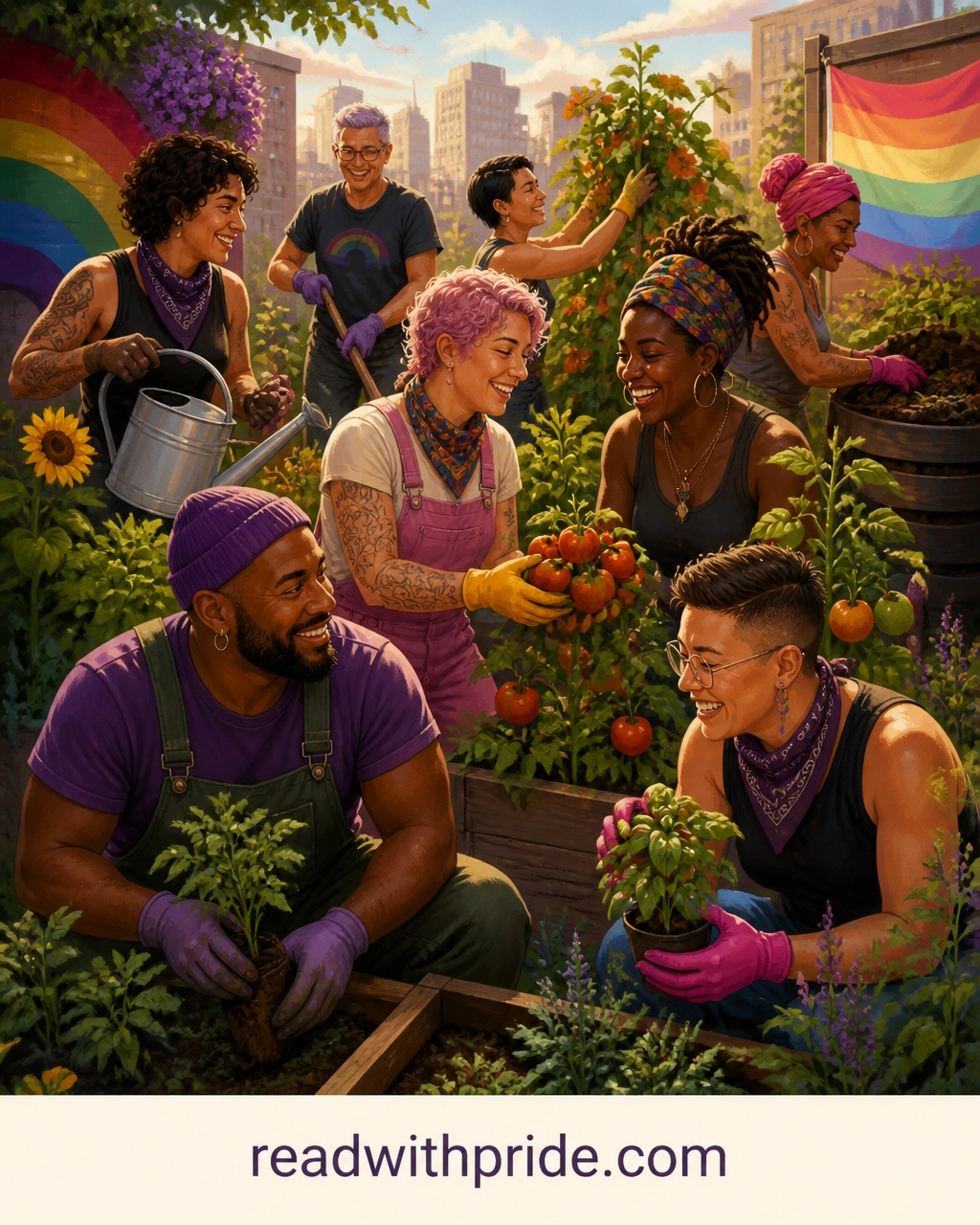
There is something deeply satisfying about putting your hands in the soil and discovering that, yes, you can keep a plant alive after all. Even the basil you bought with confidence and accidentally turned into a Victorian ghost.
Community gardening offers more than fresh herbs and excellent excuses to wear practical trousers. For many LGBTQ+ people, it is one of the most joyful queer hobbies around: a hands-on, outdoor activity that creates friendship, shared purpose, and a genuine sense of belonging.
Growing friendships alongside tomatoes
A community garden is a collection of shared plots, raised beds, tools, seedlings, and people who may arrive knowing absolutely nothing about courgettes. You do not need expert knowledge. You can water, weed, carry compost, label seedlings, or simply ask, “Is this supposed to look like that?”
That low-pressure participation is part of the magic. Unlike some social spaces, gardening gives everyone something to do with their hands while conversations unfold naturally. You can chat while planting lettuce, make friends while building a raised bed, or discover your new favourite person while both reaching for the same trowel.
This is community building in its most practical form. People share skills, food, tools, time, and often a slightly alarming number of tomato seedlings.
Queer-led growing projects around the world show how gardens can become affirming spaces for LGBTQ+ people, including trans, bisexual, lesbian, non-binary, and queer communities. Groups such as Rainbow Grow connect LGBTQ+ people through regular gardening sessions, while initiatives like the Big Gay Garden link food growing with mutual aid and food sovereignty.

The MM romance tropes practically write themselves
Let us be honest: community gardens are packed with mm romance tropes.
There is the grumpy/sunshine gardener pairing. One man arrives with a serious expression, immaculate gardening gloves, and strong opinions about compost ratios. The other brings bright socks, six varieties of tomato seedlings, and enough enthusiasm to power a small greenhouse.
Naturally, they are assigned the same plot.
Then comes forced proximity at the compost bin. They argue over whether the pile needs more leaves. Their hands brush while carrying a wheelbarrow. One says, “You are doing that wrong,” and the other replies, “You have been watching me for twenty minutes.”
We have all read this book. We would happily read it again.
Perhaps the romance begins as a slow-burn friendship built around sharing seedlings. One person gives the other a tiny plant “just in case you want to try.” Weeks later, they are exchanging gardening tips, favourite snacks, and increasingly personal stories beside the runner beans.
It is basically enemies-to-lovers MM romance, except the enemy is powdery mildew.
A garden can feed a whole community
The best queer community gardens are not only social spaces. They can also support mutual aid by sharing harvests with neighbours, food pantries, free food stands, or LGBTQ+ community networks.
A basket of homegrown greens may seem small, but collective care rarely arrives as one dramatic gesture. It is built through repeated, ordinary actions: swapping seeds, lending tools, cooking together, checking in on someone, or sending home more tomatoes than one person could possibly eat.
Gardens can also host skill-shares, potlucks, art sessions, seed-saving workshops, and relaxed meetups. The result is a space where people can learn something useful, meet chosen family, and leave with dirt under their nails and perhaps three new group-chat notifications.

How to find your patch of queer joy
Start by searching for “queer community garden,” “LGBTQ+ gardening group,” “gay gardening club,” or “mutual aid garden” alongside your town or city. Your local LGBTQ+ centre, community garden network, or neighbourhood organisation may already host sessions.
If nothing exists nearby, you can begin small:
- Ask an LGBTQ+ community centre about sharing a plot.
- Organise a seedling or plant swap.
- Create a monthly garden meetup.
- Set up a tool library or composting project.
- Agree on community guidelines that respect names, pronouns, access needs, and boundaries.
- Decide together how harvests will be shared.
You do not need a grand master plan. You need a few people, a patch of earth, and the willingness to learn as you go.

Grow something good
Community gardens remind us that connection does not have to be polished. It can be muddy, collaborative, occasionally chaotic, and surprisingly delicious.
Whether you are looking for a new hobby, a supportive social space, or inspiration for your next slow-burn MM romance, gardening offers room to grow at your own pace.
When you are ready for more queer stories, browse the LGBTQ+ ebook collection at Read with Pride, including gay romance books, lesbian romance, queer fiction, and emotionally rich MM romance. You can also explore the Read with Pride LGBTQ+ blog, then follow along on Facebook and Instagram.
Here’s to shared plots, chosen family, dramatic tomatoes, and love stories that take their sweet time.
#ReadWithPride #QueerHobbies #CommunityBuilding #QueerCommunity #CommunityGardening #LGBTQReading #MMRomance #MMRomanceBooks #GayRomance #LesbianRomance #QueerFiction #ChosenFamily #MutualAid #QueerJoy

Leave a Reply
You must be logged in to post a comment.