

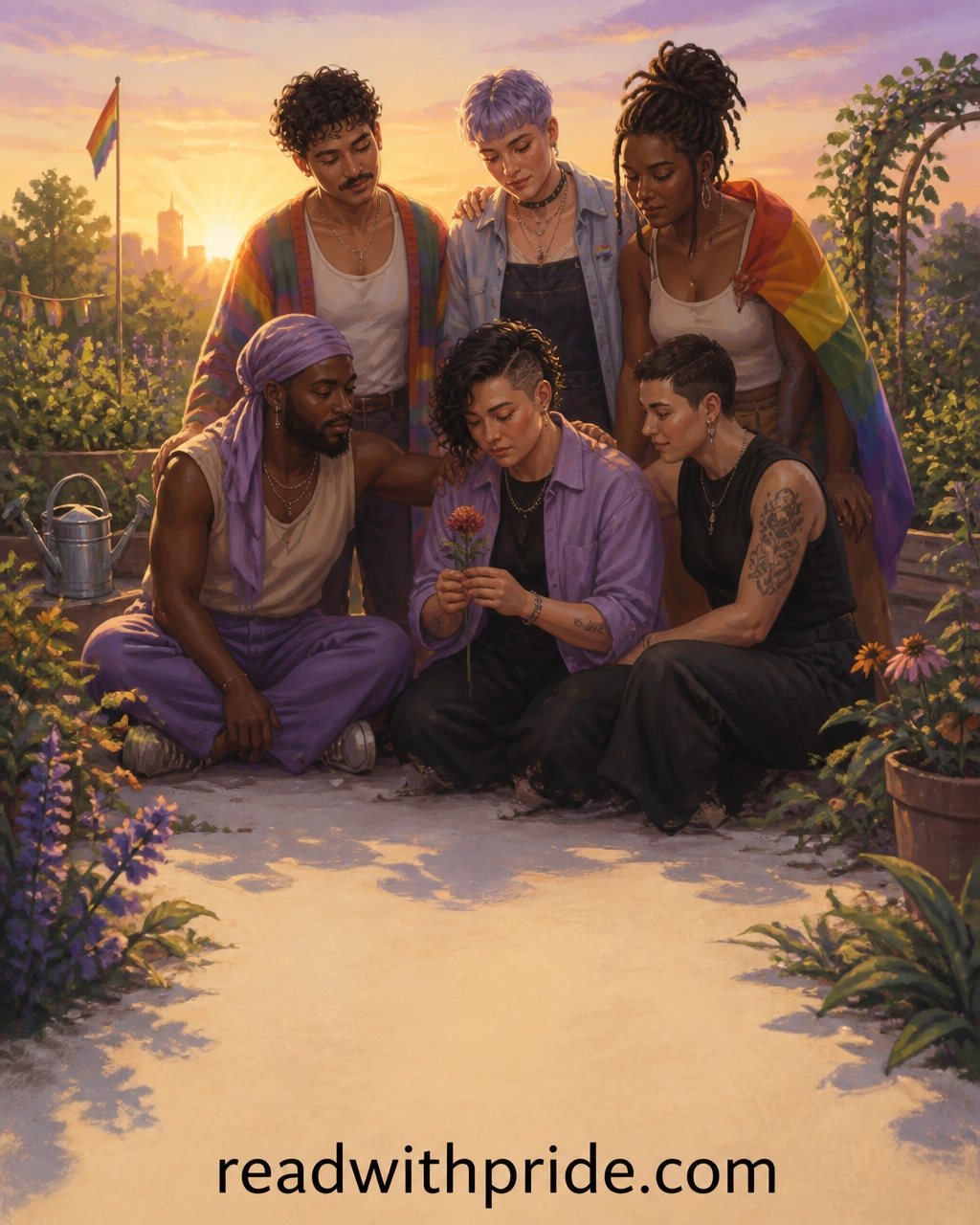
Loss can change the shape of a life.
Sometimes it arrives through death: the loss of a partner, friend, relative, mentor, or chosen-family member. Sometimes it looks like a breakup, estrangement, a lost home, a community that no longer feels safe, or the younger version of yourself you had to leave behind in order to survive.
For LGBTQ+ people, grief can also carry the weight of everything surrounding the loss. Maybe your relationship was hidden or misunderstood. Maybe your family refuses to acknowledge what has happened. Maybe the people around you expect a simple explanation for something that is anything but simple.
That is why queer healing is not about “getting over it.” It is about learning how to carry what happened without allowing it to erase what might still be possible.
And yes, that process can be painfully slow. It can also be surprisingly funny, deeply communal, gloriously untidy, and full of tiny moments when hope sneaks in wearing old sweatpants.
Queer grief is often layered
Grief is never one-size-fits-all, but queer grief can have additional layers that are difficult for others to see.
You may be mourning a person while also mourning the future you imagined with them. You may be grieving a relationship that could not survive prejudice, secrecy, distance, or family rejection. You may be processing the years you spent hiding, the chances you did not get, or the safety you should have been offered from the beginning.
Some LGBTQ+ losses are not widely recognised by society. A closeted relationship, for example, may have been profound and loving, even if other people never knew it existed. An estrangement from family may be a genuine loss, even when stepping away was necessary for your wellbeing. Gender transition can also involve complicated grief: not regret, but a tender reckoning with past selves, lost time, and the person you are becoming.
This kind of grief is sometimes called disenfranchised grief: pain that others fail to validate. Naming it can be powerful. You do not need to convince everyone that your loss matters before you are allowed to mourn it.
Your grief is real because your connection was real.

Healing does not mean leaving love behind
There is a popular idea that healing means closing a door and walking away from the past.
For many queer people, healing feels more like learning how to keep the door open without standing inside it forever.
You might still love someone who is gone. You might still remember a relationship that ended. You might still feel tenderness for the younger self who did not have the words, support, or freedom they needed. The goal is not to delete those feelings. It is to give them a place in your story that does not take up every room.
Writing can help. So can talking, making art, listening to music, cooking a familiar meal, visiting a meaningful place, or creating a private ritual. You might write a letter you never send. You might light a candle with your chosen family. You might plant something and watch it change through the seasons.
These practices do not need to look traditional to be meaningful. Queer communities have always created new rituals when old ones excluded us. We make memorials from photographs, playlists, recipes, jewellery, shared stories, and the slightly chaotic group chat that somehow contains both profound wisdom and seventeen reaction GIFs.
Meaning does not have to be grand. Sometimes it begins with remembering someone accurately.
Chosen family can hold what the world drops
One of the most important sources of LGBTQ+ resilience is connection.
Chosen family is not a replacement prize for people who have experienced rejection. It is family in its own right: built through care, loyalty, shared history, and the everyday decision to show up.
During grief, chosen family might help with practical things. They may bring food, answer difficult messages, sit beside you in silence, or make sure you leave the house occasionally. They may remember the details that other people overlook: how your loved one took their tea, which song they always played, or the exact story that makes everyone laugh even though they have heard it a hundred times.
Support does not always require a dramatic heart-to-heart. Sometimes it is someone saying, “I’m coming over,” and arriving with snacks.
If you are supporting someone who is grieving, try not to rush them towards positivity. Avoid phrases like “everything happens for a reason” or “they would want you to move on.” Instead, ask what would help today. Listen without trying to fix. Use the names and language that honour the person, relationship, and identity involved.
For more community-centred perspectives on queer relationships and belonging, Read with Pride’s article on the milestones that shape queer love and relationships offers a useful reminder: there is no single timeline for an LGBTQ+ life.
Future visions begin with small permissions
When grief is fresh, imagining the future can feel impossible.
You may not be ready to picture a new relationship, a different home, a career change, or a version of yourself who laughs easily again. That is okay. Hope is not a deadline.
A future vision does not need to be a five-year plan written in an expensive notebook. It can be one small permission:
- Permission to rest without earning it.
- Permission to feel joy without betraying the person or life you lost.
- Permission to ask for support.
- Permission to change your mind.
- Permission to want something new.
- Permission to imagine safety as ordinary.
Try asking yourself: What would feel kinder this week?
The answer might be a walk with a friend, a therapy appointment, a quiet evening offline, or finally putting away an object that is too painful to see. It might be reading a hopeful queer love story, joining an LGBTQ+ book club, or making plans for a future that currently exists only as a sketch.
Small hopes count. They are still hopes.

Queer fiction can help us rehearse possibility
Stories cannot remove grief, but they can offer language for experiences that feel difficult to explain.
In queer fiction, characters often face loss while refusing to become defined by it. They find new forms of family. They fall in love after heartbreak. They build homes that do not resemble the ones they were expected to want. They survive difficult chapters and discover that survival is not the only future available to them.
That is part of the comfort of LGBTQ+ ebooks and gay books: they can remind us that queer lives are not only stories of struggle. They are also stories of pleasure, friendship, creativity, desire, humour, domesticity, adventure, and becoming.
A heartfelt gay love story can offer emotional companionship. Lesbian romance can create space for tenderness and recognition. MM romance can show men learning to communicate, trust, and be cared for. Queer authors give us future visions in which LGBTQ+ people are not side characters in their own lives.
Read with Pride’s recent reflection, “Queer Healing and Future Visions: Holding Grief, Carrying Hope,” explores this same emotional territory: healing is not linear, and hope does not require us to pretend that the past did not hurt.
Imagining optimistic queer futures
Optimistic queer futures do not mean pretending the world is perfect.
They mean imagining a world where queer people have more choices, more safety, more rest, and more room to become complicated. A world where coming out is not treated as a public performance. Where chosen families are respected. Where queer elders are remembered. Where trans people can age with dignity. Where lesbian, gay, bisexual, and non-binary people can build relationships without constantly calculating risk.
Future visions can be personal and collective at the same time.
Maybe your future includes a kitchen filled with friends. Maybe it includes a quiet flat, a garden, a creative project, or a relationship shaped by honest communication. Maybe it includes activism, community care, mentoring younger queer people, or simply making your own life gentler than the one you inherited.
There is no requirement to be relentlessly strong. Resilience is not an obligation to endure everything with a smile. Sometimes resilience looks like choosing softness. Sometimes it looks like leaving. Sometimes it looks like asking someone else to carry the weight for a while.
Healing can be brave without being dramatic.
You do not have to heal alone
If grief is affecting your ability to function, or if you feel unsafe, isolated, or overwhelmed, consider reaching out to an LGBTQ+-affirming therapist, grief counsellor, trusted friend, or community organisation. The LGBTQ+ community and loss resources from The Center may be a helpful starting point, and research on LGBTQ+ loss and meaning reconstruction can be found through this peer-reviewed resource.
You deserve support that recognises the whole truth of your experience.
At Read with Pride, we believe queer stories can meet us in difficult places and still leave the window open. Explore our collection of LGBTQ+ ebooks, including gay fiction, lesbian romance, LGBTQ+ romance, MM fiction, and emotionally rich queer love stories.
Follow Read with Pride on Instagram and Facebook for new releases, queer reading recommendations, and more conversations about love, identity, community, and hope.
You do not have to know exactly what comes next.
For today, it may be enough to believe that something kinder is still possible.
#ReadWithPride #QueerHealing #FutureVisions #LGBTQResilience #QueerGrief #LGBTQBooks #QueerFiction #GayBooks #LesbianRomance #MMRomance #LGBTQReading #ChosenFamily #QueerHope #GayLoveStories #LGBTQFiction

{“@type”:”Article”,”image”:[“https://cdn.marblism.com/5KPHFkkJWD2.webp”,”https://cdn.marblism.com/6jZJNvf-vSn.webp”,”https://cdn.marblism.com/RHTBviNcdNQ.webp”,”https://cdn.marblism.com/-65RTm0nRGj.webp”],”author”:{“url”:”https://readwithpride.com”,”name”:”Read with Pride”,”@type”:”Organization”},”@context”:”https://schema.org”,”headline”:”Queer Healing and Future Visions: Finding Hope After Loss”,”keywords”:[“queer healing”,”future visions”,”LGBTQ+ resilience”,”queer grief”,”LGBTQ+ ebooks”,”queer fiction”,”MM romance”,”lesbian romance”],”publisher”:{“url”:”https://readwithpride.com”,”logo”:{“url”:”https://cdn.marblism.com/3frC7pIx901.jpg”,”@type”:”ImageObject”},”name”:”Read with Pride”,”@type”:”Organization”},”description”:”A compassionate guide to queer healing, grief, LGBTQ+ resilience, chosen family, and imagining hopeful queer futures after loss.”,”dateModified”:”2026-08-19″,”datePublished”:”2026-08-19″,”articleSection”:”LGBTQ+ Culture, Relationships and Wellbeing”,”mainEntityOfPage”:{“@id”:”https://readwithpride.com”,”@type”:”WebPage”}}

Leave a Reply
You must be logged in to post a comment.